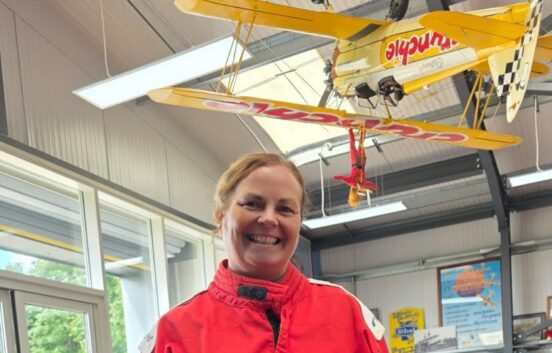
Being strapped to the top of a plane and flying at 120mph at 1,000ft isn’t what most people with a fear of heights would do for fun, but Tracy Ross from Helensburgh isn’t most people.
The 51-year-old thrill-seeker recently did a wing walk for the British Liver Trust, the UK’s leading liver health charity, after being diagnosed with MASLD and cirrhosis last year.
Tracy said: “The diagnosis felt like a ton of bricks crashing on top of me. The liver specialist said MASLD was serious and there was no medication or specific treatment for it! I was dumbfounded because I hardly drink alcohol, unless it’s a special occasion, but thanks to the wealth of information about MASLD on the British Liver Trust’s website, I felt clearer about what it was and how to treat it.”
Tracy has now made changes to her diet to eat more healthily, including swapping fizzy drinks for water.
She said: “Doing a wing walk has always been a dream of mine and the experience was a breeze, quite literally! It was a little surreal to be strapped on top of a plane with the pilot being below and behind me. The views were spectacular, and as I was enjoying the experience so much, the pilot dipped the plane a few times so it felt like I was going to fall (obviously I wouldn’t as it’s completely safe) and he also tipped the plane from side to side. It almost felt like I was on an extreme roller coaster with a difference!
“Being back on the ground felt surreal and like I had just experienced the world’s tallest roller coaster ride and I was pleased to raise £540 for the British Liver Trust while having so much fun. I have vowed to my family and friends that the next time I do a wing walk, I will also loop the loop!”
The wing walk was Tracy’s latest daredevil challenge after being rushed to hospital for emergency life-saving surgery on her bowel in 2023, with 11 major surgical procedures in the 20 years before that. The experiences made her realise life is fragile and short and inspired her to face her fears head-on, including overcoming a phobia of water and sharks by learning to scuba dive, diving with tiger sharks and qualifying as an Ocean Diver.
To find out if you could be at risk of fatty liver disease and how to love your liver back to health, take the British Liver Trust’s online screener.