Check your risk
Find out if you’re at risk of liver disease using our simple at-risk checker for adults.
Find out more

Patient stories
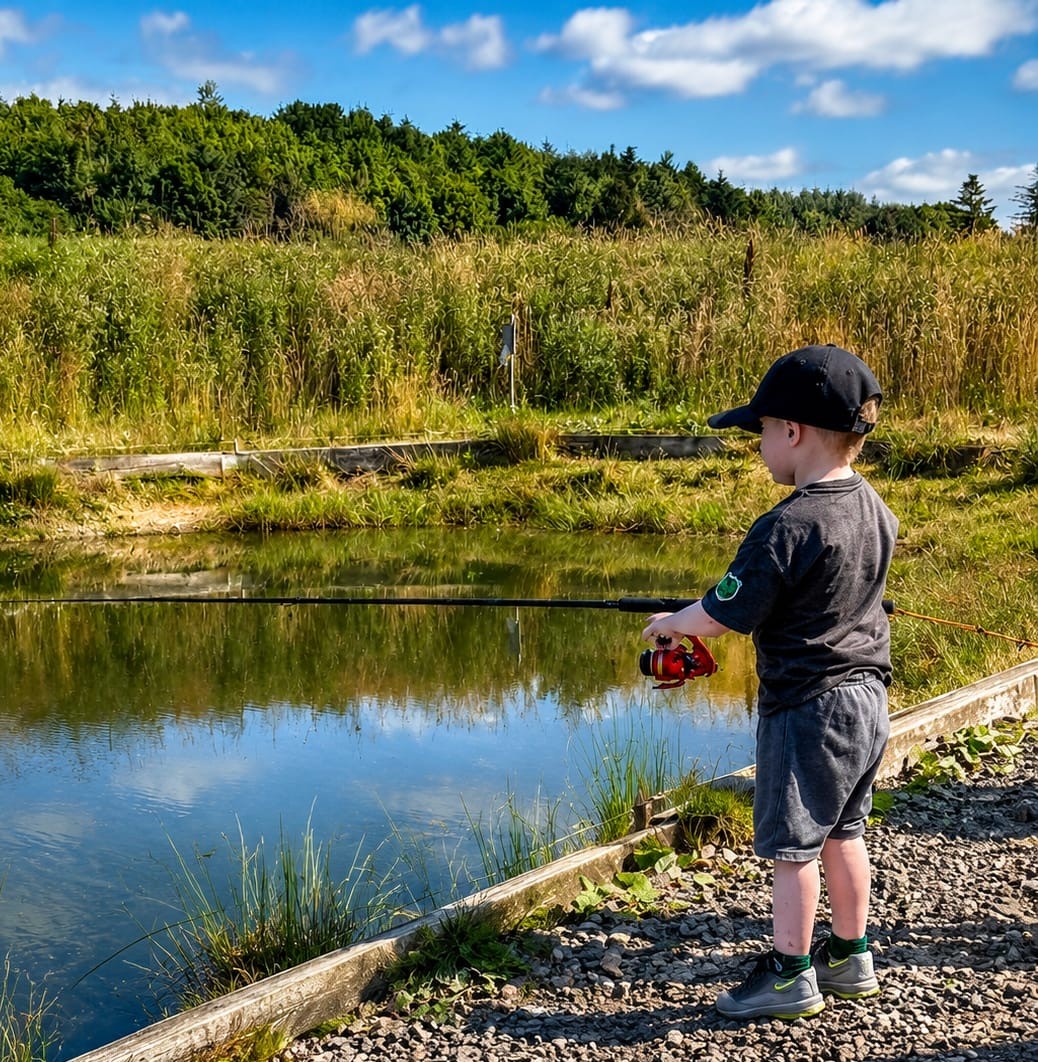
When our son, Leyland, was born in June 2022, we had no idea he was living with a rare genetic condition that would eventually leave him needing a liver transplant.
Looking back, there had been subtle signs that something wasn’t quite right. As a newborn, Leyland had pale stools, poor weight gain and a rash. He was diagnosed with a cow’s milk protein allergy, and once his formula was changed those symptoms quickly settled.
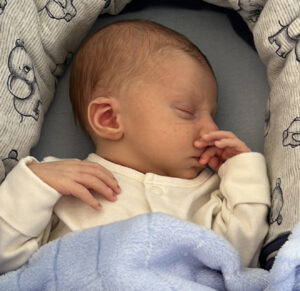
His eyes also remained slightly jaundiced for longer than expected. When I mentioned it, I was reassured that some babies simply take longer for jaundice to disappear. With everything else improving, I had no reason to believe it could be a sign of something far more serious.
For the next year, Leyland was exactly what every parent hopes for—a happy, healthy little boy with endless energy, a huge smile and a mischievous streak that kept us on our toes. There were no obvious signs that his liver was becoming seriously damaged.
Shortly after his first birthday, I became concerned about his tummy. I knew he had an umbilical hernia, but his abdomen seemed unusually swollen. Wanting reassurance, I took him back to our GP. Although the doctor wasn’t particularly worried, he referred us to a paediatrician because he hadn’t seen Leyland regularly and wanted a specialist to assess him. The paediatrician examined Leyland and arranged routine blood tests. Again, no one appeared especially concerned. Then everything changed.
A few days later, we received a phone call to say that Leyland’s liver function tests were abnormal and that he needed an urgent ultrasound scan. I’ll never forget sitting beside him while the sonographer carried out the scan. Halfway through, the room suddenly fell silent. He quietly explained that there was significant scarring on his liver.
That was the moment our world changed. Within days, our local hospital had contacted the Royal Hospital for Children in Edinburgh. We were told that Leyland had cirrhosis and ascites, but nobody knew why. We were asked to bring him in for a week of intensive investigations. One doctor explained: “We’re going to cast our net wide and hope we catch something.”
That week was one of the hardest of our lives. I was around 20 weeks pregnant with our third child, trying to prepare for a new baby while being told that our little boy had end-stage liver disease.
Almost overnight, hospital became Leyland’s world. Every day brought blood tests, scans, examinations and procedures. We were the only familiar faces in an environment that must have felt frightening and confusing.
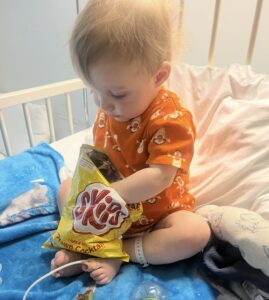
As parents, you’re supposed to protect your child from pain. Instead, we found ourselves holding his hand while doctors and nurses carried out tests he couldn’t possibly understand. We knew every procedure was necessary to find answers and save his life, but to Leyland it must have felt as though the two people he trusted most were helping strangers hurt him. That feeling was heartbreaking.
At the same time, we were desperately trying to protect some normality for his older sister, Isla. Our family life had been turned upside down. We were living apart, spending our days in hospital and trying to come to terms with the possibility that we might lose our little boy. We wanted Isla to feel as secure and loved as possible, even while her whole world was changing too.
The doctors were honest with us. “You have a very happy little boy with a very sick liver.” Another later told me: “If we can’t find out what’s wrong with him, we may just have to make him comfortable.” Those words are impossible to forget.
What made everything even harder was that Leyland still looked like himself. He was smiling, playing and laughing just as he always had. It felt impossible to reconcile the happy little boy in front of us with the severity of what the doctors were telling us.
Then came the phone call that changed everything. “We’ve found out what it is. Come in.”
Further testing confirmed that Leyland had Alpha-1 Antitrypsin Deficiency (PiZZ type). Finally having a diagnosis brought some relief, but we quickly learned that although we now knew the cause of his illness, the damage to his liver was so severe that his only chance of survival was a liver transplant. It was something I had never imagined a child would need. Suddenly we were having conversations about major surgery, lifelong medication and the uncertainty that comes with waiting for an organ.
Although we finally had answers, we were left with countless new questions.
During those overwhelming days, the Children’s Liver Disease Foundation became an invaluable source of support. They provided clear, reliable information about a condition we had never even heard of, helping us begin to understand the journey that lay ahead.
Everything moved incredibly quickly. Leyland was discharged from Edinburgh on the Friday and, by Sunday morning, we were travelling to Birmingham Children’s Hospital for a liver transplant assessment. My mum travelled with Leyland and me while my husband stayed in Scotland to care for Isla and to see his older son Leo. We were to keep as much normality in their lives as possible. We still didn’t know exactly what lay ahead, so we wanted to wait until we had more answers before trying to explain such a frightening and uncertain situation.
Over the following week, we met surgeons, hepatologists, specialist nurses, dietitians, psychologists and transplant coordinators. Every appointment centred on one question: Was Leyland well enough to be accepted onto the transplant waiting list?
We knew a transplant was his only chance of survival, but nothing was guaranteed.
The team at Birmingham were incredible. They explained everything with compassion and honesty, but emotionally it was one of the hardest weeks of my life. I was heavily pregnant, hundreds of miles from home and trying to absorb information no parent ever expects to hear.
When we were told Leyland was suitable for transplantation and would officially be placed on the waiting list four weeks later, it brought a mixture of relief and fear. We finally had a plan, but we also knew we were entering a race against time.
Before we left Birmingham, we also had to find a way to help Isla and her older brother, Leo, understand what was happening. We wanted to protect them, but we knew they couldn’t be shielded from everything. The Children’s Liver Disease Foundation supported us once again. They gave us a copy of Joe’s Liver Transplant Story by Saskie Dorman, a beautifully written children’s book that explains the transplant journey through a child’s eyes. It helped Isla and Leo understand why Leyland was so poorly, what would happen next and why he needed a new liver. It made an impossibly difficult conversation just a little easier.
From the moment Leyland was listed for transplant, life became a waiting game we couldn’t control. After we returned home his health began deteriorating rapidly, resulting in him being admitted back into Edinburgh’s children’s hospital. Despite every effort, he continued to lose weight. Establishing a continuous nasogastric feed proved incredibly difficult, and almost every day brought new medications, new concerns and new setbacks.
Then, within the space of just a few hours, everything changed. Leyland became unresponsive, drifting into an unconscious, sleep-like state. His heart rate fell to a dangerously low level and he was moved to Intensive care where we were told the next 24 to 48 hours would be critical. Plans were immediately put in place to airlift him back to Birmingham.
One memory from that day that has never left me. As we stepped out of the lift on our way to intensive care, a nurse gently took my mum and me into a quiet room and told us someone would come to speak to us. Sitting there in silence, I became convinced we were about to hear the worst news imaginable. My mind raced ahead to how I would tell our family.
Then the nurse came back.”You need to come now… he’s raging. He’s shouting for his mum.”I rushed into the room, and there he was—angry, upset and making as much noise as he possibly could. I remember looking at him and thinking, He’s still fighting. He’s not giving up.
The following evening, Leyland and I were escorted by the incredible ScotSTAR team and transported by ambulance to the airport, where we met the flight crew and specialist medical staff who would accompany us on a private air ambulance to Birmingham. What we thought would be a short admission turned into almost seven weeks.
Those weeks were some of the hardest of our lives. Leyland became so malnourished and unwell that he had to be temporarily suspended from the transplant waiting list. He needed blood transfusions, countless infusions, a Hickman line and total parenteral nutrition (TPN) to stabilise him and give him any chance of becoming strong enough for transplant.
Every day felt uncertain. We never knew whether we were moving closer to transplant or further away. It often felt as though we took one step forward only to be pushed three steps back. Being so far from home made everything even harder.
My husband remained in Scotland while I stayed in Birmingham with Leyland. It was a difficult decision, but one we made together. He continued working, cared for Isla and continued spending time with his older son, Leo, while we carefully planned family life around reducing the risk of infection, always hoping Leyland might be well enough to come home sooner than expected. While I focused on Leyland in Birmingham, Russell carried the weight of keeping everything together at home.
Thankfully, my mum was able to come and stay with us in Birmingham. She became my lifeline during those long weeks. When we realised our stay would be much longer than expected, she made sure we had everything we needed, from clothes and toiletries to the everyday essentials we’d never thought to pack. She took care of everything outside the hospital room so I could focus entirely on Leyland. She made sure I was eating, looked after me as much as she could, and allowed me to stay by Leyland’s side every moment I could. I honestly don’t know how I would have got through those seven weeks without her, and I will always be grateful for everything she did for us.
Leyland couldn’t understand why his whole world had changed so suddenly. He was surrounded by unfamiliar faces, machines and procedures, and more than ever he needed the comfort of someone he trusted. Being his mum became more than simply comforting him. It meant becoming his advocate. I learned and administered every medication orally, gave every NG feed and learned every part of his daily care. I held his hand through blood tests, cannulas, scans and procedures, and whenever the nurses came into his room overnight, I made sure I was awake so that if Leyland opened his eyes, he would always see me beside him and could at least comfort him. I couldn’t take away what he was going through, but I could make sure he never had to face it alone. No matter how poorly he became, his determination never faded. Watching our little boy continue to fight through everything gave us the strength to keep fighting too.
Slowly, after weeks of intensive treatment, things began to change. His TPN feeds were finally established , he started maintaining his weight and, little by little, his blood results began to improve. For the first time in weeks, hope started to return. Eventually, Leyland became well enough to be relisted for a liver transplant. By Halloween, we were finally able to return to Scotland, travelling home by ambulance because I was in the last few weeks of my pregnancy. Leyland was transferred back to Edinburgh before finally being discharged home on 13 November—his late grandad’s birthday. Hearing the words, “You can go home,” felt almost impossible to believe.
After more than eight weeks apart, Leyland was finally reunited with his dad, Isla and Leo. Seeing our family together again felt like a light breaking through the darkest chapter of our lives. But even in those precious moments, we knew our bags had to stay packed. We were still waiting for the phone call that could save our son’s life. For just three precious weeks, we were together as a family. During that time we also welcomed our beautiful daughter, Robin.
Then we received the phone call, the one we had been on our minds for just over 5 months. A suitable liver had become available. It was the call we had longed for, yet when it finally arrived, it brought a completely different kind of fear. This time, my husband and I travelled to Birmingham together while my mum stayed behind to care for Isla and our newborn daughter, Robin. When you’ve spent months waiting for the transplant call, you imagine you’ll feel nothing but relief. The reality is very different. Knowing your child is about to undergo major surgery—the only thing that can save their life—is overwhelming. After the final checks confirmed the transplant could go ahead, we stayed with Leyland until the very last moment. We kissed him, told him how much we loved him and watched as he was taken into theatre. Then all we could do was wait. The hours felt endless.
Just after midnight, we were told the transplant had been successful. A few hours later, at around 3 a.m., we were finally allowed to see him in intensive care.
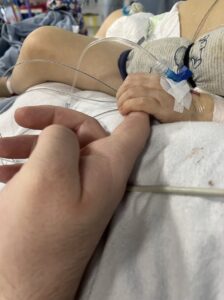
There were tubes, wires and machines everywhere, but none of that mattered. He had made it. The relief we felt in that moment is impossible to put into words. After everything he had endured, our little boy finally had the chance to begin living again.
His recovery was nothing short of remarkable. Just five days later, he was sitting up in a chair. Watching his blood results improve so quickly was almost impossible to believe. The little boy we had watched become desperately ill was finally beginning to heal. Even more incredibly, we were home in time for Christmas. It was the greatest gift our family could have received.
A New Beginning
Although coming home was everything we had hoped for, we quickly realised that a transplant isn’t the end of the journey. It’s the beginning of a new one. The first few months after transplant were intense. Because Leyland’s immune system was heavily suppressed, we isolated as a family to protect him from infection while his new liver recovered. Our lives revolved around medications, feeds, blood tests and hospital appointments.
At one point, Leyland was taking around ten different medications, some several times a day, while still relying on tube feeds. It was a huge adjustment. But after everything we had been through, caring for him at home felt like a privilege.
Those early months also meant everything to Isla. She had accepted that we probably wouldn’t all be home for Christmas. Throughout everything, she had shown incredible strength, never complaining about the weeks we spent apart or how much our family had changed. Just before Leyland’s transplant, she had made one simple wish—that her little brother would receive his new liver before Santa came. Her wish came true.
Life Today
Today, Leyland is a thriving four-year-old with endless energy and an even bigger personality. He’s cheeky, adventurous and happiest when he’s outdoors. Recently, he’s discovered a love of golf and proudly tells everyone he’s going to be a PGA professional when he grows up.
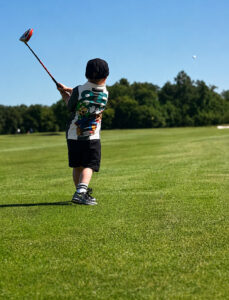
Watching him run, laugh and simply enjoy being a child is something we’ll never take for granted. He knows he has a special liver and understands that he needs to take medicine to help look after it. Blood tests and hospital appointments still aren’t his favourite things, but they are now simply part of our normal life.
Looking back, it’s hard to believe everything our family lived through.
Although Leyland won’t remember much of his illness, the experience has left a lasting impact on all of us. Isla still sometimes worries if I have to leave the house, needing reassurance that I’m coming back. After spending so long apart while Leyland was in hospital, I completely understand why. Those worries have become less frequent with time, but they remind us that serious childhood illness affects the whole family, not just the child receiving treatment.
When the Children’s Liver Disease Foundation later asked for parents to review a new information leaflet about Alpha-1 Antitrypsin Deficiency, I didn’t hesitate to volunteer. Their support had meant so much to us during the darkest period of our lives, and if sharing our experience or helping improve resources can make another family feel even a little less frightened or alone, then it’s something I’m incredibly proud to do.
People often tell us they don’t know how they would have coped in our situation. The truth is, I don’t think any parent knows until they’re faced with it. When it’s your child, you simply do whatever they need you to do. You don’t stop to question whether you’re strong enough—you just keep putting one foot in front of the other because there isn’t another option.
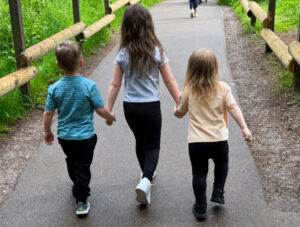
Looking back now, every difficult decision, every journey, every sleepless night and every heartbreaking setback had one purpose: to give our little boy the chance to grow up.
Today, because of the extraordinary generosity of one donor family, he has that chance. We will never be able to thank them enough. During the darkest time in their lives, they made the selfless decision to say yes to organ donation, giving our son the future we once feared he might never have. Because of them, we’ve celebrated birthdays, Christmases and countless ordinary family moments that once felt impossible.
We are equally grateful to every doctor, surgeon, nurse and member of staff who cared for Leyland. Their expertise, compassion and dedication gave our son the future he enjoys today.
Finally, we would like to thank our family for every part they played in helping us through this journey. Whether it was caring for Isla and Leo, supporting us from near or far, helping us prepare for Leyland’s return home, or simply being there when we needed them most, every act of kindness meant more than words can ever express. We will always be grateful.
If sharing Leyland’s story helps just one family feel less alone, encourages someone to learn more about Alpha-1 Antitrypsin Deficiency or inspires another person to support organ donation, then telling our story will have been worthwhile.
There were times when we couldn’t imagine what the future would look like. Today, we know there is hope. There is healing. And there is life after transplant.
Please do not reproduce or republish the patient stories on this website without our express written permission. If you would like to use this content, please email us at [email protected] to discuss. You can view our full website terms and conditions here.
Make a donation
Your donation helps us support people of all ages affected by any type of liver condition, provide trusted information and campaign for better prevention, diagnosis, treatment and care. Together, we can transform lives.
Find out more
Find out more
Find out more