Check your risk
Find out if you’re at risk of liver disease using our simple at-risk checker for adults.
Find out more

Patient stories
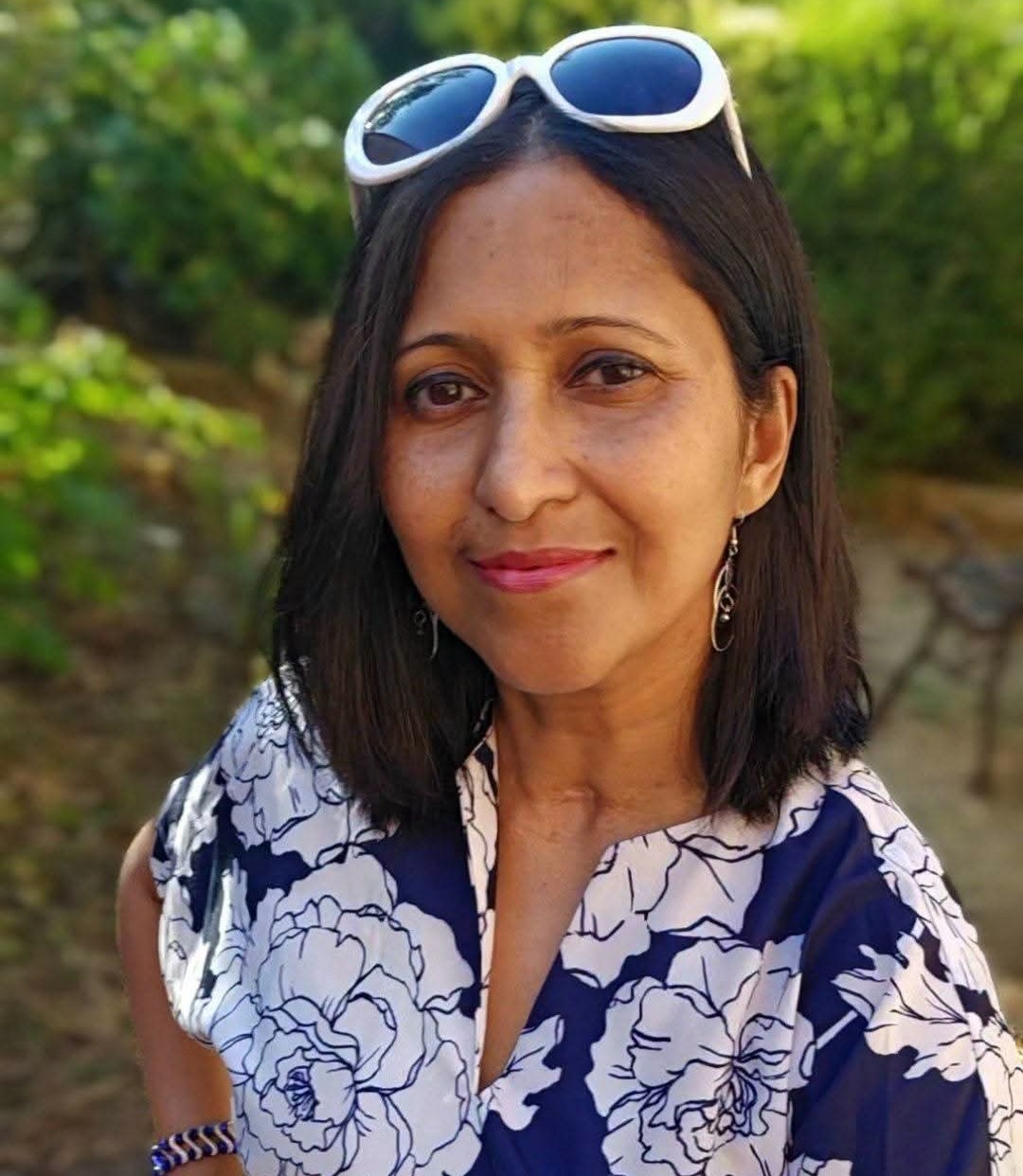
One Tuesday morning, in March 2024, my life changed forever. I had always considered myself active and healthy, but that morning, I woke up feeling slightly off. My husband and I went to our local hospital A&E, and after a couple of tests, I was admitted and told I had cirrhosis. It was a complete shock because I knew nothing about liver disease.
Until then, life had been entirely normal, but within days, my condition worsened rapidly. A liver biopsy led to internal bleeding, and after six days in ICU, I was transferred to Addenbrooke’s Hospital in Cambridge. There, I was stabilised for a while, but conversations soon turned to a liver transplant, followed by assessments to check my eligibility.
I was added to the transplant waiting list and by then, I was visibly jaundiced, with severe fluid build-up and barely able to eat. My condition deteriorated further that very night and I was placed into an induced coma and suffered multiple organ failure. I now became a priority patient under the ACLF (acute on chronic liver failure) pathway—a programme that had only recently been introduced. Previous to this, critically ill patients like me had little hope as transplant was not considered as an option. 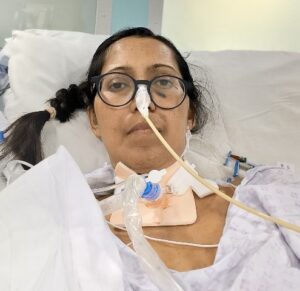
Against all odds, a compatible organ became available in the next two days and the transplant took place on the third day. The surgery itself took three days to complete, with one rest day in between. I had been given a second chance at life, but I couldn’t breathe independently after being taken off the ventilator and required a tracheostomy. I lost my voice completely and was left extremely weak, with significant muscle loss.
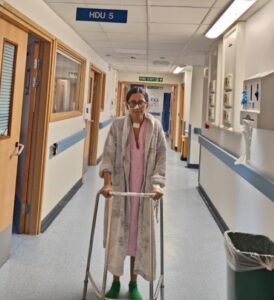
My month in ICU, post transplant, was incredibly challenging. At one point, it took four members of staff just to turn me due to the number of tubes and lines. Over the following weeks, I had to relearn everything – how to walk, talk, eat, and drink. I was on just a feeding tube until just days before discharge. I went home from hospital, after two-and-a-half months, in a wheelchair, frail, underweight and barely able to speak above a whisper. Slowly, I rebuilt my strength.
I later learned that my liver failure had been caused by two rare autoimmune conditions: autoimmune hepatitis and primary biliary cholangitis.
Just as life was beginning to feel normal again, another challenge came in 2025. A biopsy of an ulcer in my mouth revealed post-transplant lymphoproliferative disorder (PTLD) – a form of blood cancer. It was back to hospital visits, scans and treatment. I finished eight rounds of treatment in December 2025.In late January 2026, I received the news I had been hoping for: I was in remission.
Because my transplant happened so suddenly – I went from walking into hospital to being diagnosed and transplanted within three weeks – I didn’t have the time to read up on liver disease or other patients’ stories. It was only after I was discharged that I began to process and understand what had actually happened. That’s when I came across the Liver UK website.
Since then, I’ve been rebuilding once again. And a couple of months later, in March this year, I successfully completed the Cambridge half marathon, representing and fundraising for the very hospital that saved my life and continues to care for me. 
Because my transplant happened so suddenly – I went from walking into hospital to being diagnosed and transplanted within three weeks – I didn’t have the time to read up on liver disease or other patients’ stories. It was only after I was discharged that I began to process and understand what had actually happened. That’s when I came across the Liver UK website (then called British Liver Trust).
Reading through it, learning about the autoimmune conditions I was eventually diagnosed with, gave me much-needed clarity. And reading other patients’ stories gave me hope. Even now, I come across new patient stories on social media and they help in giving a different perspective as everyone’s journey is unique and there is a lot to learn from each other.
During my transplant journey, I also became aware of the stigma around liver disease, with people assuming the cause to be alcohol. Ironically, I have been teetotal my entire life.
Today, I share my own story as much as I can, to raise awareness about chronic, autoimmune illness, and organ donation, and hopefully to help someone going through a similar journey feel a little less alone.
When your life changes almost overnight and you become a shadow of your former self, it can feel truly overwhelming. If you’re able to accept your situation, somehow (and I know for a fact that it’s not easy), and ask yourself “what now?” instead of “why me?”, it can give you the strength to move forward. The progress may not even be visible at first, but it adds up over time. You may not be who you once were, but you can still become the best version of who you are today.
Not a single day goes by without me thinking about my donor and her family. Because of their selfless decision, I’ve been given time I never thought I would have. Two years since I was given a second chance not just at life, but at movement, sunrises, birdsong, birthdays, anniversaries, and the simplest joys with my family and friends. It’s overwhelming to know that a complete stranger, in leaving this world, chose to give someone else a second chance.
To my donor and their family, thank you will never be enough.
Please make sure you share your wishes with your loved ones about organ donation to make it easier for them to decide when the time comes. Without their approval, the donation process cannot go ahead. Organ donation truly gives people a second chance at life.
If you or a loved one are diagnosed with a liver condition, don’t lose hope, even when things feel impossible. My family were told that, despite everyone’s best efforts, I might not survive. Yet here I am.
Please do not reproduce or republish the patient stories on this website without our express written permission. If you would like to use this content, please email us at [email protected] to discuss. You can view our full website terms and conditions here.
Make a donation
Your donation helps us support people of all ages affected by any type of liver condition, provide trusted information and campaign for better prevention, diagnosis, treatment and care. Together, we can transform lives.
Find out more
Find out more
Find out more