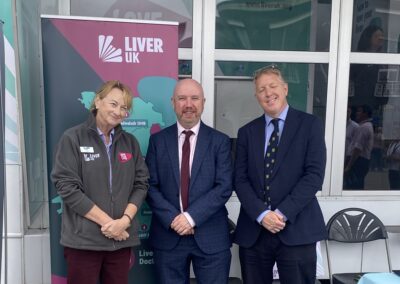
On this World Hepatitis Day, the British Liver Trust unites with the World Hepatitis Alliance and its global network to accelerate the fight against viral hepatitis, which claims a life every 30 seconds globally and calls for urgent action in the UK to address the pressing issue of hepatitis B, a significant risk factor for liver cancer.
A recent World Hepatitis Alliance survey revealed that 42% of people globally are unaware of viral hepatitis as a leading cause of liver cancer. Increased awareness can drive testing and vaccination rates, helping combat this preventable and treatable disease. The report also reveals that individuals living with hepatitis B and C face a “similar or significantly higher risk of developing cancer than someone who actively smokes one pack of cigarettes per day.” Consequently, there are calls for hepatitis B and hepatitis C to be “considered as cancer-causing infections,” urging a revision of international guidelines accordingly.
In the UK, as a result of increased testing and curative treatments, the nation is currently on track to achieve the 2030 elimination goal set by the World Health Organization for hepatitis C. Between 2015 and 2021, there was a 47% decline in hepatitis C cases[i], while it is estimated that only 19% of those affected by hepatitis B in the UK[ii] have received a proper diagnosis.
Vanessa Hebditch, Director of Policy at the British Liver Trust, says: “With more than 200,000[iii] people in the UK affected, with the majority unaware of their condition, shining a spotlight on hepatitis B becomes essential to achieve the same progress made in combating hepatitis C.
“Currently, there is no absolute cure for hepatitis B, but effective treatments can reduce the risk of the virus developing into a more serious liver condition.”
Most people living with hepatitis B in the UK were born in a country where the virus is more common and acquired it there either at birth or as a child. Individuals are also at risk of contracting the virus through any type of sex without a condom or getting a tattoo or piercing with unsterilised equipment.
Vanessa continues: “Both hepatitis B and hepatitis C usually have no symptoms in the early stages, so it is vital to get tested if you have ever been exposed. To find out if you are at risk, take the British Liver Trust’s simple questionnaire.”
Living with Hepatitis B often subjects individuals to daily stigma. False beliefs about hepatitis B persist among both those with and without the infection.
Amanda, who was diagnosed with Hepatitis B in 2019, says: “I’d never heard of Hepatitis B until I was diagnosed, and it was a really, really dark time for me. What worries me is that so many other people are stuck in that darkness too. The important thing to remember is that it can affect anyone, and more than anything I want people to get tested. If I didn’t know I had it and was symptom-free, how many more people are out there living with the infection? I would also tell people not to self-stigmatise and to talk about it.”
To improve detection rates, the UK Government included a blood test for Hepatitis B in its opt out testing pilot for blood-borne viruses in emergency departments. The first year of the scheme has identified more than triple the number of people living with Hepatitis B (1,186) than HIV (465)[1]. Yet there is no commitment to scale up screening and treatment in areas with the highest prevalence of Hepatitis B.
The British Liver Trust urges the public, healthcare professionals and policymakers to unite in the fight against hepatitis B by raising awareness, tackling stigma, improving testing and diagnosis rates and expanding access to treatment and care.
______________________________________________
British LIver Trust hepatitis B pages – Hepatitis B – British Liver Trust
[1] https://www.gov.uk/government/publications/hiv-action-plan-annual-update-to-parliament/hiv-action-plan-annual-update-to-parliament#annex-a-bbv-opt-out-testing-in-emergency-departments-2022-to-2023-by-nhse
[i] https://assets.publishing.service.gov.uk/government/uploads/system/uploads/attachment_data/file/1133731/hepatitis-c-in-the-UK-2023.pdf
[ii] Countries Dashboard – CDA Foundation
[iii] Hepatitis B in England – 2023 report (publishing.service.gov.uk)