Ascites is a build-up of fluid in your tummy (abdomen). It is the most common complication of liver cirrhosis. Ascites can cause severe symptoms such as pain and breathlessness. Initially ascites can be treated with water tablets. But if the liver condition gets worse, then a liver transplant or a shunt in the liver (TIPS procedure) are currently the only treatment options.
But many patients with severe ascites are not able to have a liver transplant or TIPS. In this situation, the aim of treatment is to improve symptoms and quality of life. This is known as palliative care.
Currently the only palliative treatment involves lots of time in hospital. The ascites fluid can be drained through a process called large volume paracentesis (or LVP). But the fluid will build up again after the LVP and so some people will need to have it done every 7-10 days. This is distressing and painful and takes valuable time away from being at home.
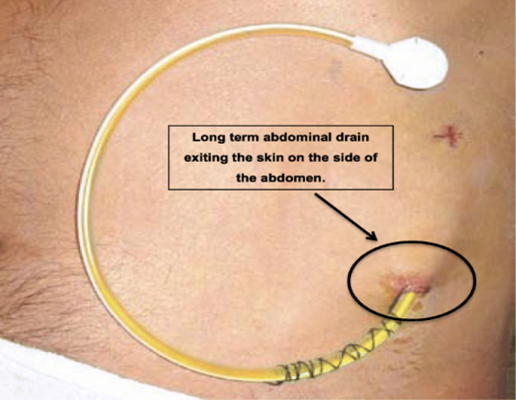
The REDUCe 2 study is looking at long-term abdominal drains (LTADs). Long-term abdominal drains are often used for people with ascites due to advanced cancer. The drain is put in place in hospital. It then allows the ascites fluid to be drained at home. Community nurses, and sometimes family or caregivers can do the home drainage.
The hope is that long-term abdominal drains could reduce symptoms, improve quality of life and mean people spend less time in hospital. They could also make it easier for people to continue with their daily activities.
But it is important that the new drains work safely at home and do not increase the risk of infections. This is why a trial is needed.
The REDUCe 2 study will recruit people who have severe, untreatable ascites, and who are not able to have a liver transplant or TIPS. They will be randomly put into 1 of 2 groups. One group will have normal hospital drainage. The other group will have the long-term abdominal drain fitted and will have their ascites drained at home. The study team will visit patients every two weeks at their homes to collect blood samples for routine tests. They will also do questionnaires to find out about quality of life, symptoms, and if the person has needed to see their healthcare team or go into hospital.
The study will look mostly at quality of life. But it will also look at infections, symptoms, and the cost of long-term abdominal drains.
Currently palliative care does not always do enough for people with advanced liver disease. Many people end up dying in hospital. This study aims to improve palliative care for people with advanced cirrhosis who are not able to have a liver transplant.
Since joining the trial I have become much more mobile. I’ve been planning trips, going to concerts and recently spent a day in London enjoying an afternoon tea. It’s the small things too though as I can now move independently around my home.
Trial participant
This research will take place across 35 sites in England, Wales and Scotland. The study started in Oct 2023 and will run until Sept 2026. It is funded by the NIHR. Professor Verma from Brighton and Sussex University Hospital is the Chief Investigator of the study.
If you think you might be eligible to be part of the trail and would like to find out more, talk to your liver doctor to find out if your hospital is taking part in the trial. The trial number is ISRCTN26993825.
You can find out more about ascites by downloading our booklet here.