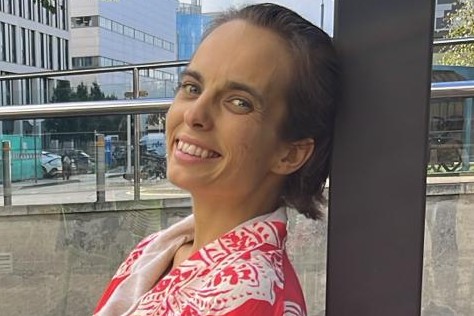
Katie is marking Organ Donation Week (22-28 September) by sharing her remarkable journey with liver disease to highlight the life-saving importance of organ donation.
The 29-year-old began experiencing pain in her ribs while studying at university and needed regular naps to keep up with her friends. The pain got a lot worse after she graduated and Katie also started throwing up every day. She was diagnosed with Primary Sclerosing Cholangitis, a rare autoimmune condition where the bile ducts inside and outside the liver get ever smaller due to inflammation and scarring and Crohn’s Disease.
With the help of medication, Katie lived reasonably well with the condition for a couple of years, albeit with a severely restricted diet, but in the summer of 2024 she became jaundiced and was placed on the liver transplant waiting list not long after.
Over the next few months Katie was in and out of hospital as her health continued to deteriorate. She said: “One night I woke up with an intense pain in my right side and my parents took me to A&E. It was an infection and I was put on a morphine drip. Seeing the word sepsis in the doctor’s report frightened me, but they managed to get it under control.”
The 29-year-old is now too ill to work and the wait for a donor liver has been hard. Katie said: “When I was first put on the transplant list I was optimistic it would happen soon, but I now realise it’s likely to be a longer wait. I stare at my phone, waiting and feeling sad and sometimes frustrated that I’ve not got it yet and the longer you wait, the more time you have to overthink things.
“Seeing their daughter in hospital has scared my parents a lot, but we are learning the language and life of hospital and severe illness together.”
Figures released by NHS Blood and Transplant in July reveal the stark reality that as of 31 March 2025, a record 8,096 patients were on the active transplant waiting list, including 662 people waiting for a liver.
Pamela Healy, chief executive at the British Liver Trust said: “Liver transplantation is a highly successful treatment for end-stage liver disease and the vast majority of people go on to live full and healthy lives. Sadly however, every year hundreds of people die while on the liver transplant waiting list. This is why it’s so important that people register their decision to become an organ donor and share their wishes with their family. No life-saving transplant would be possible without the generosity of donors and their families, they really do give the most precious gift of life.”
Organ Donation Week aims to encourage people to join the organ donor register and to share their decision with their families.