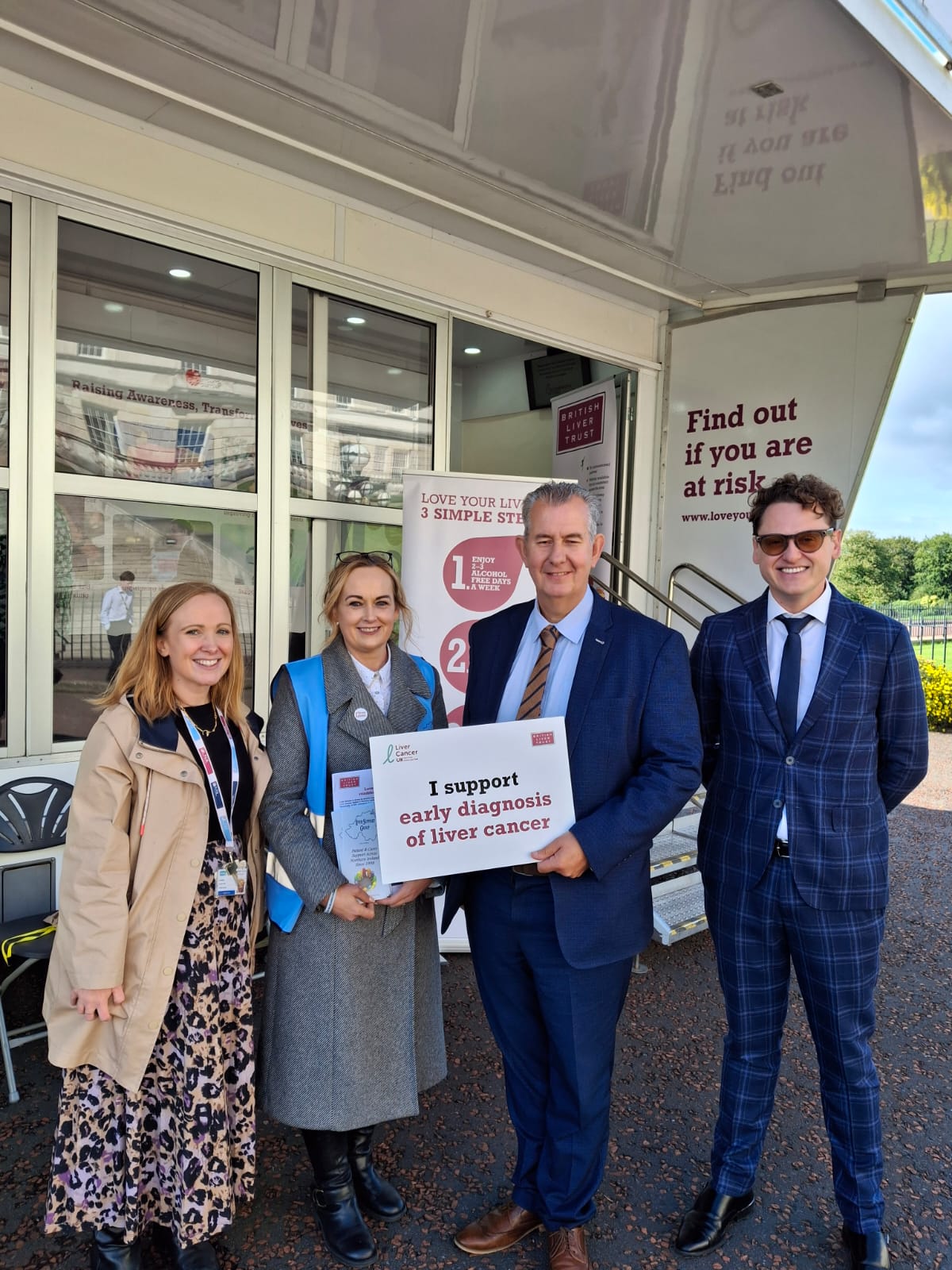
In September, we brought our Love Your Liver roadshow to Stormont, the seat of Northern Ireland’s Assembly, to highlight the importance of prevention, early detection and action on liver disease.
The event was an invaluable opportunity to meet with Members of the Legislative Assembly (MLAs), patients, and clinicians to discuss how Northern Ireland can take urgent steps to improve liver health. Patients from the Royal Victoria Hospital Liver Support Group attended alongside local specialists, sharing lived experiences and clinical expertise
Over the course of the day, we met more than 30 MLAs, MPs, Councillors and members of the media. Many took part in a quick, non-invasive liver scan, with the roadshow team screening 88 politicians and staff in total.
We were especially pleased to welcome the full Health Committee, including Chairperson Philip McGuigan MLA, Deputy Chairperson Danny Donnelly MLA, Alan Chambers MLA, Linda Dillon MLA, Diane Dodds MLA, Órlaithí Flynn MLA, Nuala McAllister MLA, Colin McGrath MLA and Alan Robinson MLA. Ministers Paul Given MLA, Dr Caoimhe Archibald MLA and Liz Kimmins MLA also joined us to show their support.
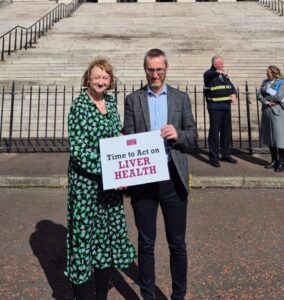
Philip McGuigan MLA, Health Committee Chairperson
Northern Ireland currently has no dedicated liver disease pathways, which leaves patients without clear routes to early diagnosis and treatment. According to our latest UK-wide survey, progress on pathways for fatty liver disease (MASLD) and haemochromatosis has stalled, with Northern Ireland categorised as “red” for readiness.
To address this, we are urging MLAs to back our call for a meeting with Health Minister Mike Nesbitt MLA, NHS leaders and clinicians. Together, we want to ensure better use of existing liver scanning machines and develop new pathways that make early diagnosis routine. The Health Committee has already pledged its support for this next step.
Pamela Healy OBE, Chief Executive of British Liver Trust, who attended the event said: “Northern Ireland is facing a liver disease crisis, with premature liver disease deaths doubling in the last 2 decades. We were pleased to welcome all the MLAs and staff, and particularly all the Health Committee members, who joined us.
“We were calling on Members to support the introduction of minimum unit pricing for alcohol in line with Scotland at 65p and for the full implementation of patient care pathways for the early detection of liver disease, in line with our ‘make early diagnosis of liver disease routine’ campaign. There are currently no full pathways in any of the Health and Social Care Trusts.
“We look forward to meeting with the Minister for Health Mike Nesbitt and progressing our campaign.
“Our Love Your Liver roadshows are a great opportunity for people to find out their risk of liver disease and receive a free liver scan to see if there is any early damage.”