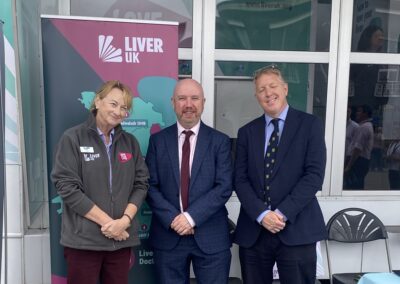
As part of the Alcohol Health Alliance, the British Liver Trust has supported the launch of a new report on alcohol labelling in Parliament.
The analysis of more than 530 alcohol products is the biggest study of its kind ever conducted. It reveals that essential health and nutrition information is routinely missing, inconsistent, or simply inaccessible to consumers. This obscures the ability to make informed decisions around alcohol and can therefore lead to overconsumption.
Vanessa Hebditch, Director of Communication and Policy, said:
Walk down any supermarket aisle and you will find detailed nutritional information on almost every food product. Yet pick up a bottle of wine or a can of beer and you will find almost nothing, despite alcohol being the leading cause of liver disease deaths.
This report makes the case clearly, and we are fully behind its recommendations. People deserve honest, accessible information about what they are drinking.
What the Report Found
The scale of the problem uncovered by the Alcohol Health Alliance is significant. Among the products examined:
- 1 in 5 fail to meet even the minimum voluntary labelling guidelines set by the alcohol industry’s own regulator
- 1 in 4 do not include units per serving
- Full nutritional information was present on just 13.4% of products
- Only 6.7% carry any health warning at all
- A mere 1.3% include specific warnings relating to cancer or liver disease
Alcohol is linked to more than 200 health conditions, including seven types of cancer, yet fewer than 2 in every 100 products carry any warning specific to cancer or liver disease. Under current UK law, a bottle of orange juice is required to display more health and nutrition information than a bottle of wine.
The public has noticed and there is clear demand for change, with 78% of UK adults wanting health and nutrition information displayed clearly on alcohol products.
Beyond the Myths: Alcohol, Stigma, and Liver Disease
At the British Liver Trust, we know that alcohol is one of the biggest causes of liver disease in the UK. Yet the conversation around alcohol is too often obscured by a damaging misconception: that you have to be an alcoholic to develop liver disease. This is simply not true, and reports like this one powerfully reinforce why clear, honest information on every bottle matters so much.
We believe we urgently need to reframe how society understands alcohol dependency and harmful drinking. It is not just the stereotypical image of someone drinking on a park bench. Many of us consume alcohol at levels that quietly damage our health, relationships, and wellbeing, often without realising it. Yet alcohol misuse is too often treated as a moral failing, as a matter of poor choices or weak willpower, rather than the complex medical and psychological issue it truly is. This stigma prevents people from seeking the help they are entitled to – compassionate, evidence-based medical support.
It is also important to understand that risk is not the same for everyone. People who already live with another form of liver condition face a higher risk of alcohol-related harm, as do those with a BMI in the overweight or obese range. Genetics and family history can also play a significant role in whether someone goes on to develop a serious form of alcohol-related liver disease. All of this makes the case for accessible, accurate information on alcohol products not just reasonable, but essential.
Taking the Case to Westminster
The Alcohol Health Alliance launched the report at a parliamentary event last week, speaking to 20 MPs and their staff about the findings and the recommendations for government. The British Liver trust supported the event and encouraged members of our All Party Parliamentary Group to attend.
The Trust is will continue to raise the key recommendations with MPs and policy makers:
- The UK should adopt a mandatory alcohol labelling approach, setting out legal requirements for what can and must be included on labels.
- There should be a UK-wide approach, ensuring consistent consumer protection across all four nations, achieved through coordination with devolved administrations.
- An independent regulator should provide oversight on alcohol labelling and hold the sector to account. This regulator should be free from both industry influence and from alcohol industry funding.