 Scientists have launched a new study that will investigate whether poo transplants could cut the risk of serious complications from advanced liver disease. The exciting research may also have important implications for global health as it could tackle antibiotic resistance.
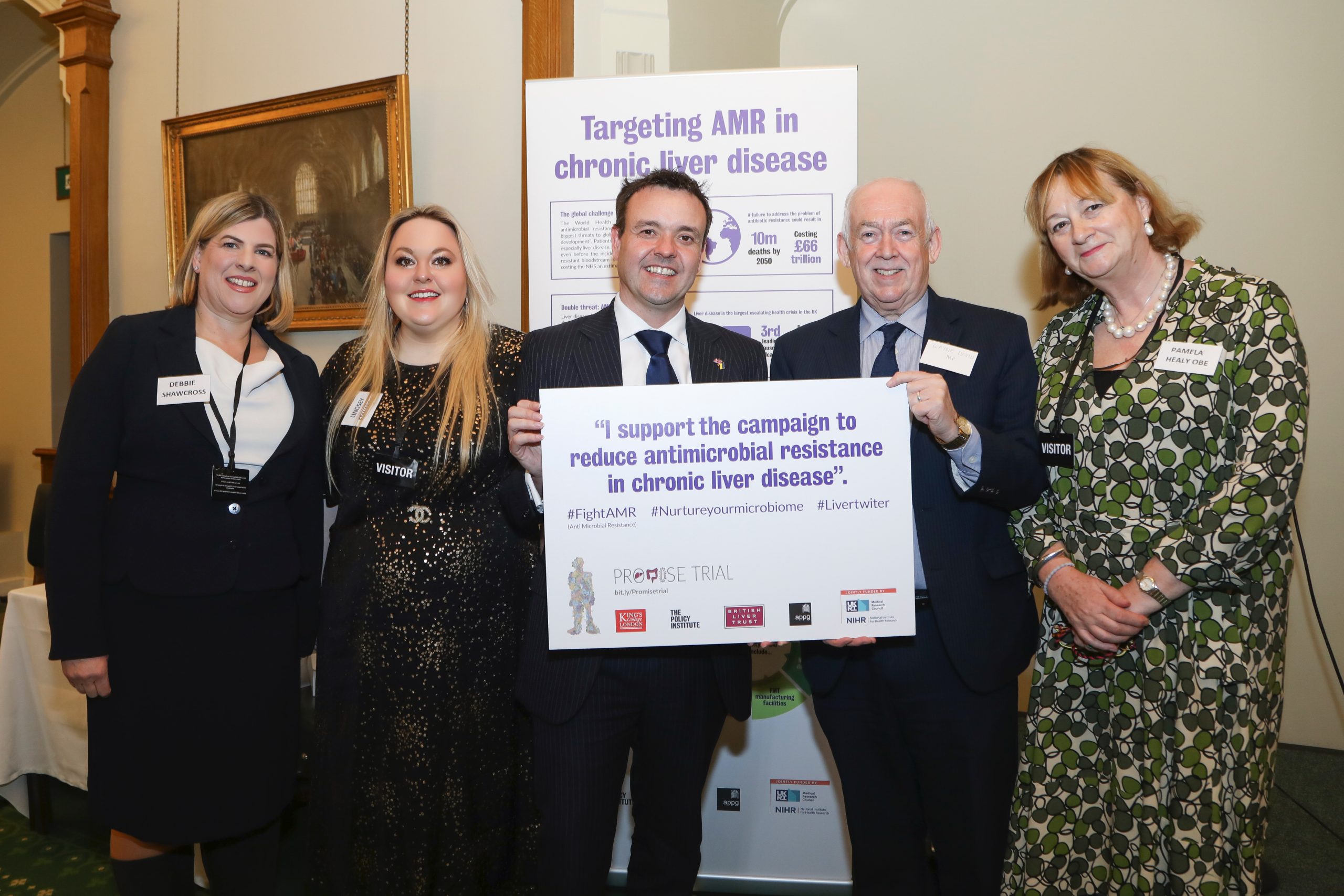
The unique study, funded by the National Institute of Health Research, is being unveiled in the Houses of Parliament today. At the event MPs, policy makers and senior figures from the WHO will hear from leading scientists how capsules containing bacteria from a healthy donor’s stool – known as Faecal Microbiota Transplants (or poo transplants) – to people with liver disease can clear up infections that are resistant to antibiotics.
Stephen McPartland MP, who is hosting the event in parliament, said, “The Lancet published findings in 2022 that drug-resistant infections are now a leading cause of death worldwide, with 1.27 Million alone in 2019. The UK has the potential to be a world leader in this important area. We need politicians to ensure that there is appropriate investment and a national treatment infrastructure so that this important research and other similar studies can continue. “
Professor Debbie Shawcross, Clinician Scientist and Professor of Hepatology and Chronic Liver Failure at King’s College London, who leads the team said, “People with advanced liver disease are more prone to infections especially if the infection is resistant to antibiotics and cannot be treated. Infections are the leading cause of hospitalisation, induce multiple organ failure and potentially death. Patients with liver cirrhosis have more bad than good gut bacteria (an imbalanced microbiome), and a leaky gut that allows bacteria into the blood-stream. This generates inflammation in the blood, which is harmful in excess, and the immune system becomes faulty. All these changes increase the risk of infection in these patients.
“By isolating the bacteria from healthy faecal samples, and putting it into capsules that patients take at outpatient appointments, we hope to see a change in the microbiome in the gut and by doing so reduce the chances of serious infections.”
If the research confirms that poo transplants are an effective way to treat drug-resistant infections in people with cirrhosis, Professor Shawcross hopes this would be the first stage of making them part of the standard treatment.
Professor Shawcross and her team have already run a pilot study with 32 people, which revealed that the poo transplant treatment is safe for patients with cirrhosis. The next stage of the study will be investigating the use of this treatment among a wider number of patients over a course of two years.
The British Liver Trust is supporting the study known as the PROMISE Trial and ensuring that patients are at the heart of the research. The charity worked with researchers to find out patients’ views on using poo transplants in this way so that any barriers to an effective treatment can be understood and overcome.
One patient who took part in the pilot study and also contributed to the patient involvement research said, “I have serious liver disease and I am really proud to have been involved in this research. This helps get the bowel back in balance and can clear up infections by replacing the harmful bacteria that cause them. No infections can be passed on so I would urge anyone who is eligible to get involved and sign up to the study. This has given us hope.”
Pamela Healy, Chief Executive at the British Liver Trust said, “We are delighted to support this exciting innovative research that could become a life-changing treatment for patients. Not only can untreatable infections be serious themselves, they too can trigger further complications such as hepatic encephalopathy or ascites. This exciting new research also has wider implications – potentially in the future it could tackle antimicrobial resistance. Finding new, effective ways to treat resistant bacteria is one of the most important challenges in global medicine and this could provide a solution that could save the NHS millions of pounds.”
For more information on this study or to find out if you are eligible to take part click here.
Full report here: Targeting AMR March 2022 N.D