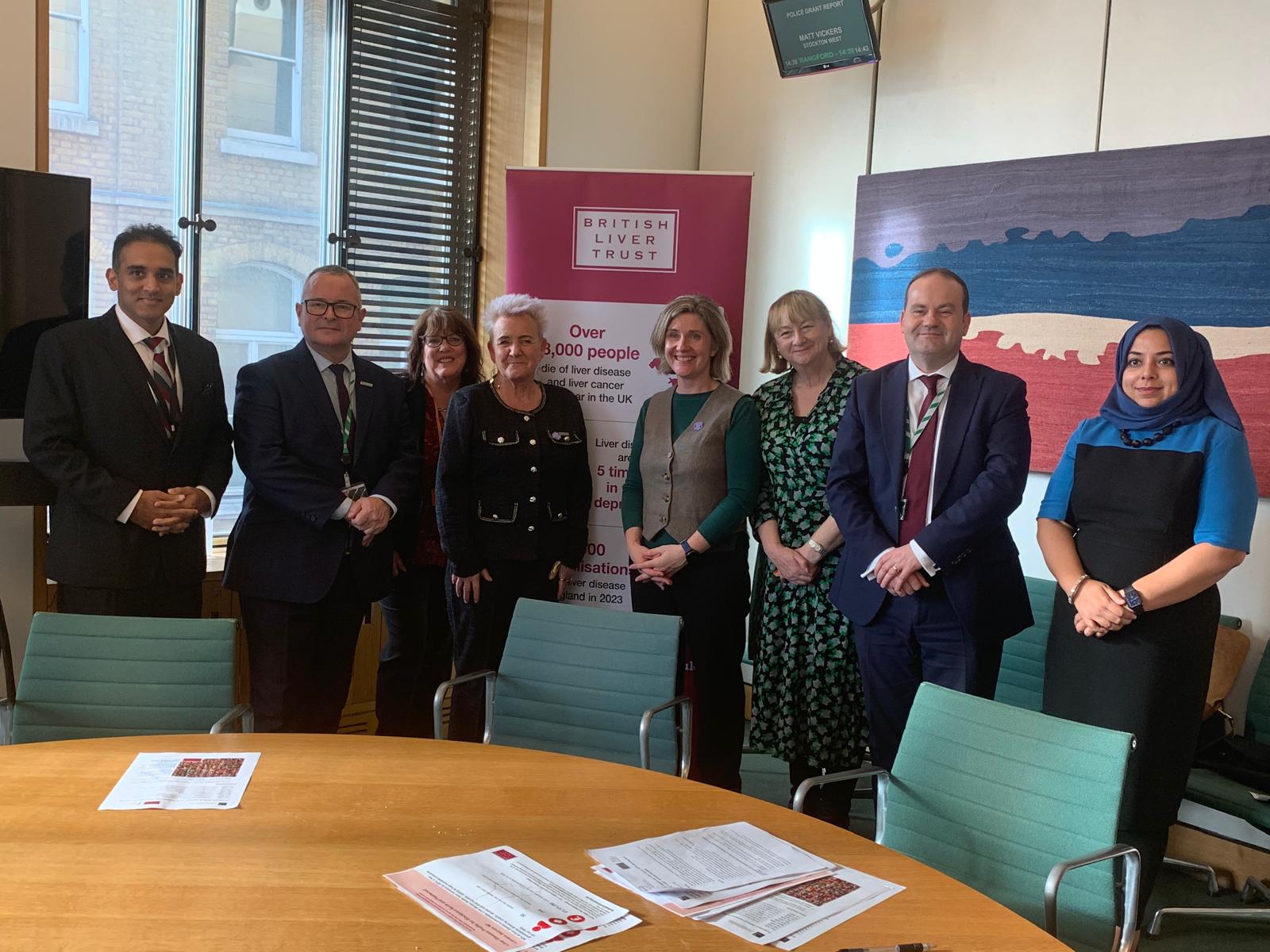
The All-Party Parliamentary Group (APPG) on Liver Disease and Liver Cancer met for its Annual General Meeting (AGM) to reflect on a highly impactful first year and to set priorities for ensuring liver disease and liver cancer remain firmly on the parliamentary agenda.
In its first year, the APPG secured a high-profile parliamentary debate on fatty liver disease, calling for greater NHS preparedness ahead of the anticipated first wave of new medications. The debate marked a significant step forward in raising political awareness of this growing public health challenge.
Co-Chairs Dr Beccy Cooper MP and Lorraine Beavers MP also visited liver units at the Royal Free Hospital and Worthing Hospital, where they heard directly from patients and NHS staff about the transformative work taking place on the frontline of liver care. The APPG’s influence was further strengthened through a series of op-eds authored by the Co-Chairs in key policy publications, helping to raise awareness of critical issues in liver health among decision-makers.
In January 2025, the group hosted a highly successful Love Your Liver scanning day in Parliament, putting early detection of liver disease at the forefront of the Government’s agenda and engaging MPs and peers directly in understanding their own liver health.
Pamela Healy OBE, Chief Executive of the British Liver Trust, who attended the meeting, also reflected on the APPG’s progress:
“We have had a truly impactful first year – from securing the first-ever parliamentary debate on fatty liver disease to visiting liver units at Worthing Hospital and the Royal Free Hospital. Critically, in September the NHSE Liver Transformation Programme started its work, which represents a generational opportunity to reshape liver health.”
The meeting re-elected the APPG’s leadership, with Dr Beccy Cooper MP and Lorraine Beavers MP continuing as Co-Chairs, and Peter Bedford MP and Robin Swann MP serving as Officers.
Looking ahead, the APPG agreed five key priorities for the coming year:
- Making liver disease and liver cancer a priority as national health plans are implemented.
- Improving access to new treatments and ensuring equitable access to clinical trials.
- Promoting early detection through clear local pathways and wider use of non-invasive liver checks.
- Protecting the Liver Transformation Programme as NHS England evolves.
- Campaigning for a comprehensive national alcohol strategy to reduce alcohol-related harm, including looking at preventative measures such as MUP.
With strong parliamentary leadership and growing policy momentum, the APPG is well placed to build on its first year of success and continue driving progress for people affected by liver disease and liver cancer.