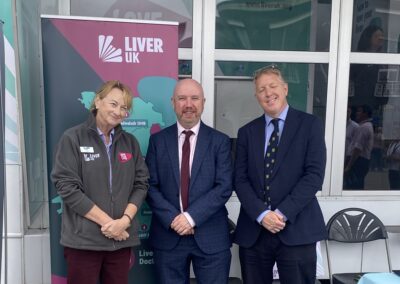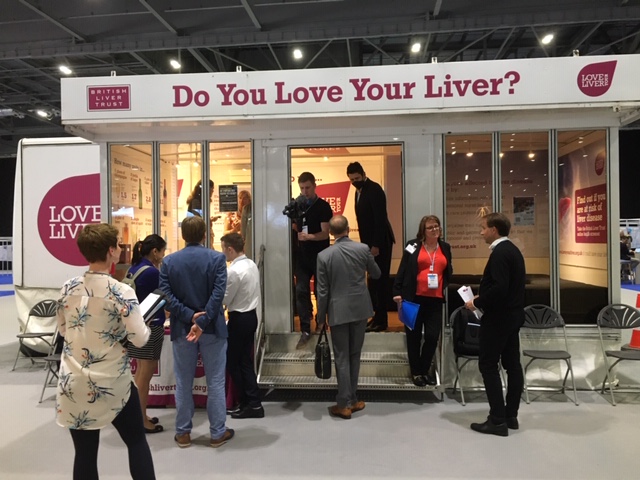
The British Liver Trust’s Love Your Liver roadshow is taking central stage at the world’s premier International Liver congress. The UK’s leading liver disease charity will meet global liver experts at the International Liver Congress, highlighting the importance of early diagnosis to tackle the liver disease epidemic.
EASL’s International Liver Congress is this year taking place in Excel, 22–26 June. Thousands of delegates will present and discuss the latest scientific achievements in liver disease diagnosis and treatment.
Late diagnosis is a worldwide problem for liver disease as it is a silent killer and there are usually no symptoms in the early stages. The Love Your Liver unit will showcase the British Liver Trust’s work and show the innovative ways the UK is promoting awareness and early detection to prevent unnecessary deaths from liver disease. The charity will also be highlighting their Make Early Diagnosis of Liver Disease Routine campaign.
Pamela Healy OBE, Chief Executive of the British Liver Trust, said: “The International Liver Congress offers a unique opportunity to connect with the international liver community to support global work to improve diagnosis, treatment and care for people with liver disease.
“In the UK, people are being diagnosed with liver disease at an alarming rate and deaths from the disease increased by 15% between 2019 and 2020.”
90% of liver disease is preventable and if caught at an early stage, liver damage can be reversed. However, the shocking reality is that three-quarters of people diagnosed with cirrhosis are found when it is too late for effective intervention or treatment and one in four people diagnosed late in hospital sadly die within a couple of months.
Pamela continues: “We are committed to working with healthcare professionals to create greater awareness of the risk factors and provide patients with better access to non-invasive tools to catch liver disease earlier, so they can make lifestyle changes that will help them to prevent further damage and improve the health of their liver.”
The British Liver Trust’s Love Your Liver campaign focuses on three simple steps to Love Your Liver back to health:
- Drink within recommended limits and have three consecutive days off alcohol every week
- Cut down on sugar, carbohydrates and fat, and take more exercise
- Know the risk factors for viral hepatitis and get tested or vaccinated if at risk
The roadshow comprises a mobile unit where people can take a free online screening test and find out if they are at risk and are offered a free liver health scan using a non-invasive device. Healthcare professionals on the unit are also on hand to provide advice on diet, exercise and healthy living.