
Introduction to liver disease
in children

There are over 100 different liver conditions which can affect children. This page is designed to help you understand the basics of liver disease in children.
The information on this page is for:
- Parents of children with liver disease.
- Young people with liver disease.
- Family, friends, carers, and healthcare professionals.
On this page:
What is the liver?
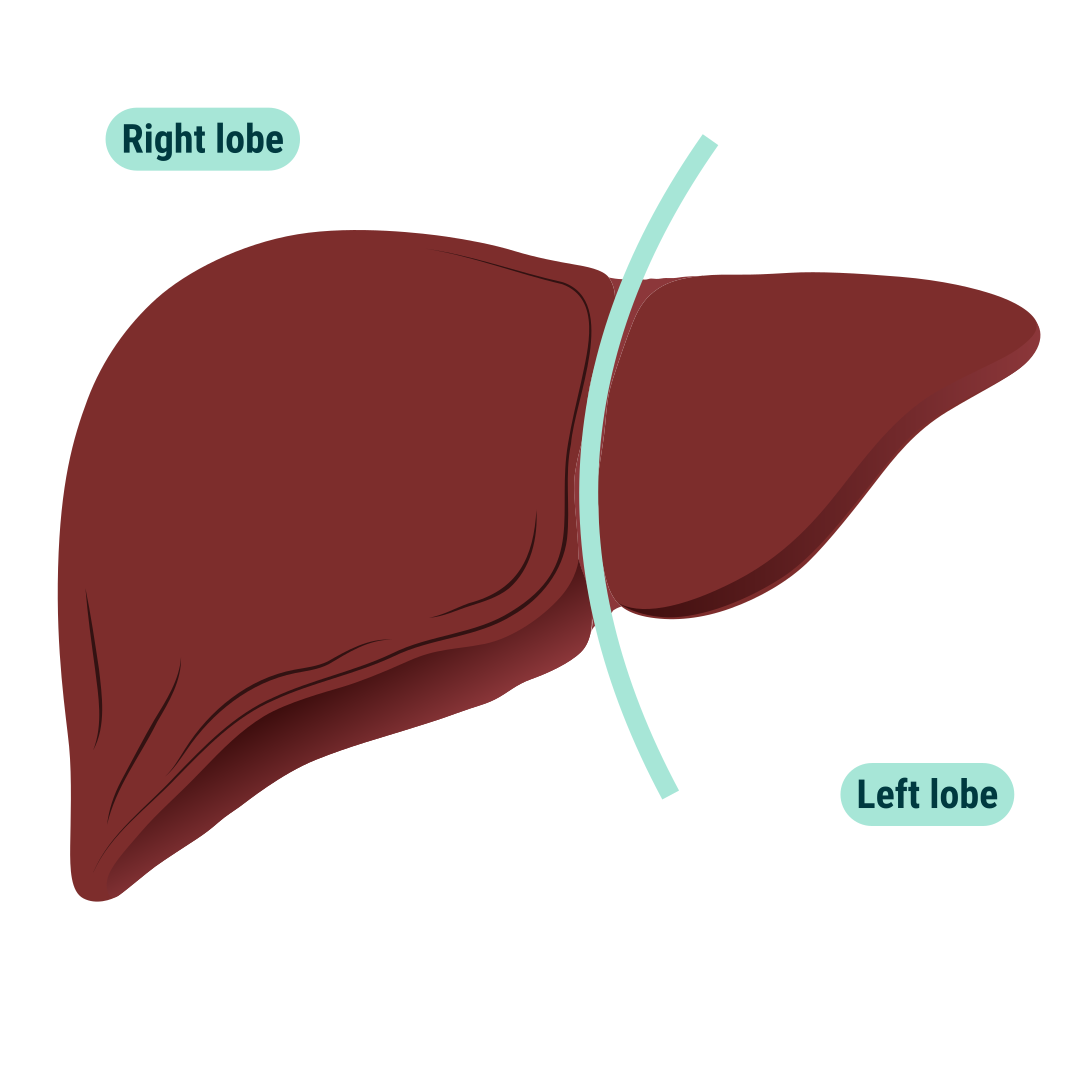
The liver is a large organ found at the top of the abdomen (tummy area) on the right side. It is made up of cells, blood vessels and bile ducts. The main cells in the liver are known as hepatocytes.
The liver is made up of two main parts: the right lobe and the left lobe. The right lobe is large, whilst the left lobe is smaller.
What does the liver do?
The liver is a complex organ. It has lots of different functions which are essential to live healthily.
The liver filters blood
It receives blood from two sources:
- From the heart (via the hepatic artery)
- From the intestine (via the portal vein)
Blood from the liver goes back to the heart through the hepatic vein.
The liver processes and stores nutrients from the blood to allow the body to use them. The blood entering the liver from the intestine contains fats, carbohydrates, vitamins and other nutrients.
Carbohydrates are broken down into sugars which provide energy. Excess sugars are stored in the liver as glycogen, for release when needed.
The liver makes lots of different substances
The liver produces lots of different substances that the body needs including:
- Blood plasma proteins such as albumin – albumin controls how much fluid is in each part of the body
- Clotting factors which help to stop bleeding
- Cholesterol
- Vitamin D
- Immune factors which help to fight infection
- Some hormones
- Bile
What is bile?
The liver produces bile which is a green/yellow liquid. Bile is formed from bilirubin, which comes from old red blood cells which have been broken down in the spleen. Bile helps the body to digest food by breaking fats down so they can be absorbed and enables the absorption of fat-soluble vitamins.
Bile also helps the body get rid of waste products such as bilirubin and excess cholesterol which it passes out into the stool (poo).
After bile has been produced by the liver it is transported to the gall bladder where it is stored. When food is eaten the gallbladder releases bile through bile ducts into the small intestine to help with digestion and remove waste products.
The liver processes waste products
The liver gets rid of waste such as the breakdown products of old red blood cells, ammonia (which comes from proteins), medicines and drugs.
What problems can affect the liver?
Different problems can affect the liver in children and young people:
- The bile flow out of the liver may be blocked
- An infection/virus–this can cause inflammation/swelling
- Metabolic diseases–problems with the way the cells make energy
- Drugs and poisons
- Poor blood supply
- Sometimes the cause is unknown–these are known as idiopathic or cryptogenic
What signs are there that a child may have liver disease?
There are many different signs and symptoms and they depend on the underlying cause. It’s rare for them to all happen at once.
Liver damage can happen slowly over time, but sometimes it can happen very suddenly.
Signs and symptoms include:
- Jaundice (yellowing of the skin and the whites of the eyes)
- Nausea, vomiting and loss of appetite
- Yellow urine in newborns, dark urine in older children
- Pale coloured stools
- Change in sleep patterns in older children
- Vomiting blood or passing blood in the stool
- Tiredness
- Abdominal swelling
- Itching (known as pruritus)
- Poor weight gain or weight loss
- Abdominal pain
- Nosebleeds and bruising easily
What tests are used to diagnose and monitor liver disease?
Blood tests
Liver blood tests (also known as liver function tests / LFTs) are carried out on blood samples in a laboratory. They are a common way of seeing how well the liver is working. They test the levels of particular proteins and enzymes in the liver as well as the level of bilirubin.
Liver blood tests are also used to monitor a child’s liver disease over time to see if the liver is getting healthier, getting worse or staying the same. Other blood tests will also need to be done to diagnose the cause of the liver disease.
Urine and stool
The colour of urine (wee) and stool (poo) can provide information about the liver. As mentioned previously pale stool can be a sign of a problem with the liver, along with dark urine. Sending urine samples to the laboratory can give more information for the diagnosis.
Abdominal ultrasound
This is a scan of the abdomen. It’s the same as the scan that pregnant women have to see their baby and doesn’t hurt at all. The ultrasound can show the size and texture of the liver and other organs such as the gallbladder, bile ducts, spleen and kidneys. It can also show the blood flow into and out of the liver.
Liver biopsy
A liver biopsy may be recommended if tests show that there could be a problem with the liver. The results of the biopsy may indicate if there is a problem with the liver or what it is. A biopsy may not be able to provide a diagnosis but may provide a clue to what other tests may be needed. They can also be used to monitor the condition.
A liver biopsy involves inserting a very thin needle through the tummy and into the liver. The needle takes a very small sample of the liver. That sample of liver tissue is then sent to the laboratory to be examined under a microscope.
Children may either have the procedure done with a local anaesthetic or with general anaesthetic (so they are asleep). When young people move to adult services they will have the biopsy done whilst they are awake using a local anaesthetic.
Liver blood tests explained
It’s important to note that every child will have their own ‘normal’ and whilst these levels are a guide, it doesn’t necessarily mean a result outside of these ranges is dangerous. Always talk to your child’s medical team if you have any worries about test results.
Liver blood tests show the amount of inflammation in the liver, whether the bile ducts are affected and how well the liver is functioning.
How well the liver is functioning is assessed by measuring what the liver is making, for example, albumin (a type of protein) and clotting factors all of which are made by the liver.
Bilirubin (SBR)
Normal range:
- Total bilirubin: 3-20 mmol/l
- Conjugated bilirubin: less than 7 mmol/l
What does this show?
The total bilirubin level corresponds to the level of jaundice present.
The amount of conjugated bilirubin compared to the unconjugated bilirubin can show whether jaundice is caused by red blood cells breaking up too quickly (not a liver disease) or is due to a reduced flow of bile out of the liver.
Conjugated means that a sugar has been added to the bilirubin.
Aspartate Aminotransferase (AST) / Alanine Aminotransferase (ALT)
Normal range: 10 – 40 IU/I
What does this show?
High levels can mean there is liver inflammation present.
Gamma-Glutamyl Transferase (GGT, gGT or Gamma GT)
Normal range: 5-55 IU/L
What does this show?
High levels can mean bile duct inflammation or obstruction. The result can sometimes give information about bile production.
Alkaline Phosphatase (ALP)
Normal range: Less than 350 IU/L
What does this show?
High levels can mean there is bile duct inflammation but ALP is not specific to the liver as it is also produced in other organs e.g. bones. Therefore, abnormal levels can be due to processes occurring in other parts of the body.
Total Protein
Normal range: 60 – 80 g/l
What does this show?
High and low levels can be used in consideration with the other LFT results.
Albumin
Normal range: 35 – 50 g/l
What does this show?
Low levels can mean the liver is not making enough, that protein is being lost through the stool or a child is not well nourished.
Another blood test which is helpful to assess how the liver is working is a blood clotting test. Blood is taken, chemicals are added to it in the lab and the time taken for blood to clot is measured.
Blood Clotting (Coagulation) Test
Normal range:
- PT (Prothrombin time): 12 – 15 seconds
- INR (International normalised ratio*): 0.9 – 1.2
What does this show?
The liver produces substances needed for blood to clot. Raised levels can mean there is less Vitamin K due to a reduced bile flow. If Vitamin K is given and the result is still raised, it may mean there is damage to the liver.
*INR is a standardised version of the PT for comparison, they both measure the same thing.
Other blood tests include:
Full blood count (FBC)
What is measured:
- Haemoglobin (Hb)
- White blood cell count (WBC)
- Platelets (Plt) – levels can fall in liver disease if the spleen is enlarged
Urea and electrolytes
What is measured:
-
Urea and creatinine are waste products removed by the kidneys.
-
Electrolytes include sodium, chloride and calcium.
Blood glucose
A high or low level of sugar in the blood can sometimes be a sign of liver damage or a metabolic liver disease.
Ammonia
Ammonia is a waste product. It is converted into urea in the liver and is then removed in urine.
A higher level than usual may mean there is damage to the liver or an underlying metabolic condition.
Some of these tests may be used to monitor the effects of medications on the body.
What treatments are available?
There are treatments which can control and support the liver. Treatment will depend on the specific liver disease and the age and condition of the child but they can include:
- Medicines
- Special diets
- Operations
- Exercise or lifestyle change
- Liver transplantation
Support
How Liver UK can help
A diagnosis of liver disease can be worrying, and you may have a lot of questions.
We're here for you and for your family and friends. Whether you have questions or just need someone to listen, we can help.

Your feedback
This content was last reviewed: December 2020
Our expert reviewers:
We would like to thank everyone who helped with creating and reviewing this page. This information has been produced with input from the three specialist paediatric liver centres in the UK. And with parents and families.
Find out how we make our patient information.
Everyone’s experience of liver disease will be different. Always talk to your specialist medical team for personal advice.
More from Liver UK

Check your risk
Find out more

Support us
Find out more
Keep up to date
Find out more