Two years ago, Doroti wrote a blog about growing up as the older sibling to her brother who received a liver transplant. Doroti shared in her blog that honest communication and opportunity for creative expression can make a significant positive difference to siblings’ experiences. Now she is studying English at the University of St Andrews, we’re delighted to catch up with her again.
I have continued to find inspiration for both academic research and creative writing from my experiences as a sibling. I was recently accepted onto the Laidlaw Scholars Leadership & Research Programme, which involves conducting fully funded research on a topic of my choice under the supervision of an academic. Influenced by seeing my brother transition from children’s to adult hospital services, I will be researching the following project over a six-week period: ‘Self-Advocate and Listen: Examining the Importance of Contemporary Poetry to Improving Communication between Medical Professionals and Young Adult Patients.’
Last month, I also represented St Andrews at Uni-Slam, a national spoken word poetry competition. One of the poems I performed, titled ‘First Do Listen’, similarly addresses the need for improved communication in medical settings (you can find it at the end of the blog). This is an issue that I believe deserves more attention and action – empathetic listening should take greater priority in medical care, and young people should be better supported to confidently self-advocate.
I am grateful for every opportunity that attending university has given me so far. Moving away from home has been a positive and formative experience, allowing me to meet friends from all over the world and share every success (even the less successful cooking attempts) with my family. We call regularly and I love coming home in holiday time.
One aspect of university life that I also want to mention is the drinking culture. Due to both my upbringing and sense of responsibility to set a sensible example for my brother, I don’t drink. I would like both young people with liver conditions and their families to know that university life can be fulfilling and fun without alcohol.
Thank you so much to CLDF for continuing to share the sibling perspective – it is always a pleasure to make a small contribution to the important work you do. I hope we can encourage more siblings to share their own experiences.
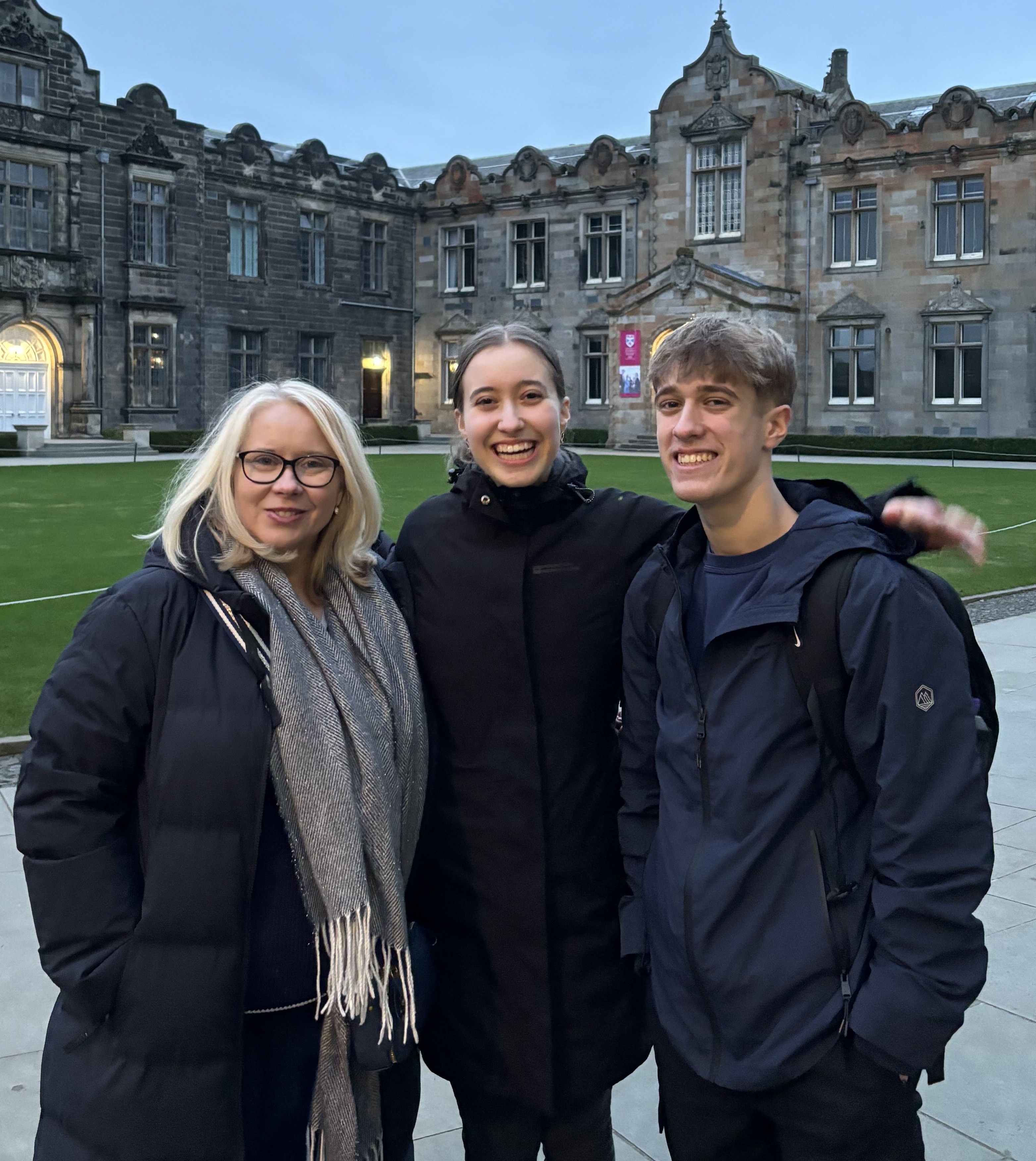
 Doroti, pictured with her brother, Kristof and mum, Erika.
First Do Listen
When a young person arrives for an appointment
(their first, perhaps, without their mum or dad,
where they are directed to a waiting room
filled with people decades older, who turn to one another,
whispering ‘that one looks too young to be here’)
and you have glanced over their medical history,
matched symptoms to a textbook, aligned side effects
with statistics – and they look you in the eyes,
raising their voice though anxious inside, telling you
something that you have not considered – listen to them.
It is true, they do not have a degree in medicine,
nor worked overtime to commit to this career,
but without a choice, without a break, every day,
they try understanding a body that continues to fail them –
observing what cannot be crammed onto shelves,
building courage to advocate for themselves.
So, when they challenge something
you have said, or raise an alternative
that you have already ruled irrelevant – still listen.
There lies no shame in not knowing, but in letting pride
leave the impression that care has been forgotten.
And though you will hear it said often that ‘we are used to it’,
do not let that lead belief that it is okay. Listen –
communication cannot continue to fail. The truth is,
sometimes, the first step to first do no harm
is first do listen. So, every time a young person leaves
an appointment (another, of countless, without someone
by their side, where they are directed to go
and get on with their lives, meet with friends
who don’t understand, who turn to one another,
wondering why they have cancelled plans)
just know you could have glanced over their medical history,
combined their concerns with the textbook,
asked for a second opinion, a third, even,
considered their lived experience – and looked
them in the eyes, reassuring them that they are
not too young, not wrong for wanting to live
with less pain, that you won’t let this happen again –
that when they voice something outside of your plans
you will do everything you can – to listen. To ensure
that care is not lost the moment a child grows up