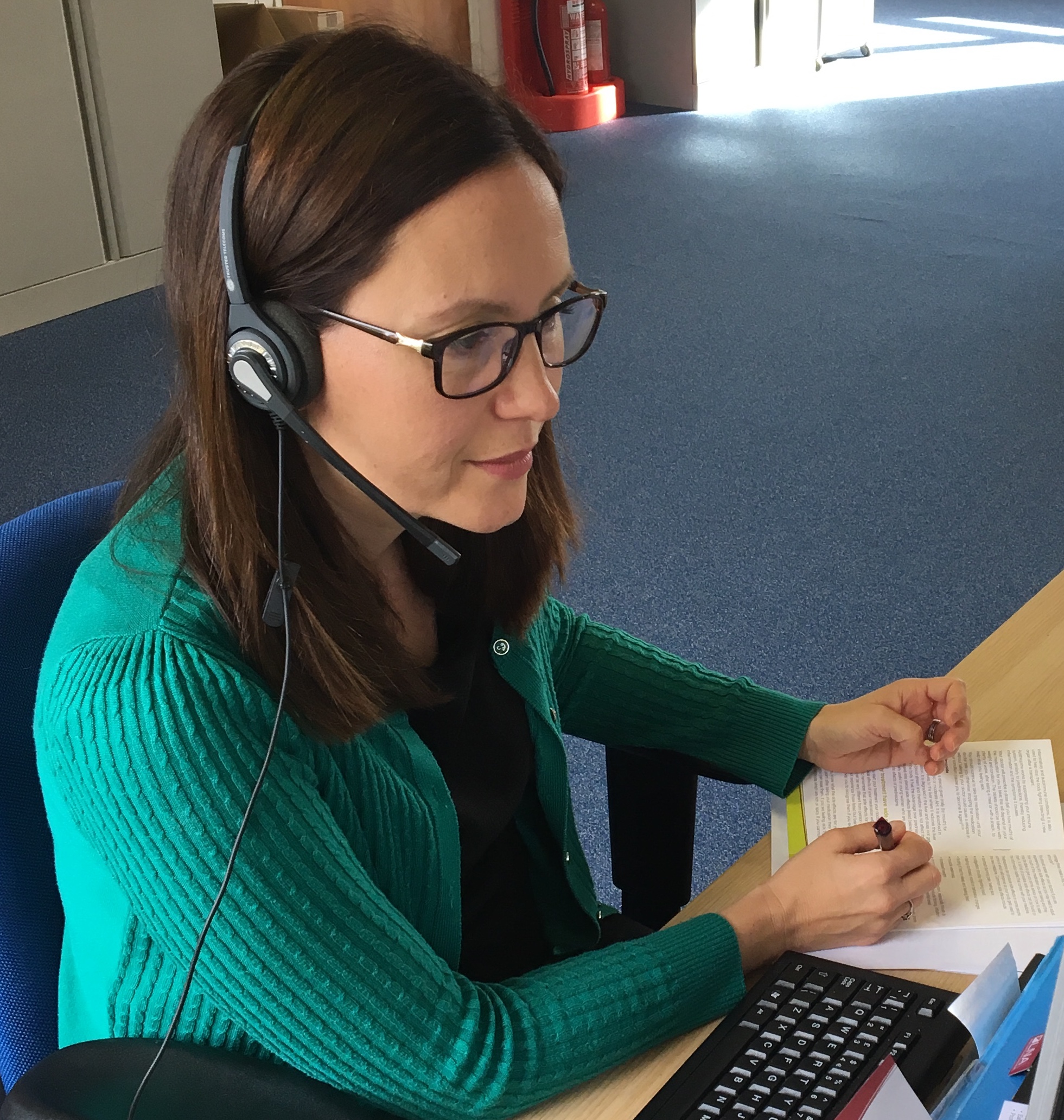
My name is Rebecca, and I am proud to manage the British Liver Trust’s nurse-led helpline. We are here for everyone with any type of liver condition or liver cancer.
It may be a call from the patient, or from a family member who is trying to work out what to do for the best after speaking to a healthcare professional. We are here to listen and support. And if you or a loved one has called us, you’ll know that we are very good listeners.
We listen for red flags. You might think, how do you listen for a red flag? Well, we are on the look-out for things shared by the caller that needs further discussion.
How the person is feeling is just the start. They may describe symptoms, they may be struggling to get the support they need from healthcare professionals, or upset as a loved one is struggling to manage day-to-day. We are here to listen for those red flags and provide the right support and help.
The caller might have multiple health conditions. They might have a loved one with a life-limiting condition, who has not been told how poorly they are. This would be a red flag.
We may also need to discuss hospice care for the first time, how to manage a patient’s symptoms and best support their quality of life.
We respond professionally and with empathy to every single call.
Before joining the British Liver Trust Helpline, my team and I all worked as liver nurses in the NHS. In our previous roles, we had our patients right in front of us, we could see their symptoms, any physical changes or emotional struggles. Now, over the phone, we are skilled at letting the caller talk, prompting, and then sensitively asking the right questions to find out what’s really going on.
Katy’s* story
Katy’s* husband Brian* was diagnosed with cirrhosis on 4th August of this year. The only advice they were given was to ‘think about a liver transplant’.
On 24th August Katy rang our helpline and spoke to Gill, one of our senior nurses.
Katy described the advice she received as a ‘pivotal point’. She realised Brian needed to be on the list for a transplant, and Gill’s advice was key.
On 31st August Brian vomited blood and Katy called 999. Brian was admitted to hospital for over two weeks and is now getting the treatment and care he needs.
In a letter to the British Liver Trust Katy wrote: “Without Gill’s advice, I think Brian would have died at home. Because of her I rang 999.
“We want to express our gratitude for the vital conversation with Gill. We are now getting the help we so badly needed from the doctors and specialists at the hospital
Names have been changed