People are often surprised to learn that what they eat and how much they weigh can affect their risk of liver disease.
It’s estimated that up to 1 in 5 people in the UK could be affected by metabolic dysfunction-associated steatotic liver disease or MASLD (which was formerly known as non-alcohol related fatty liver disease or NAFLD).
People who are overweight, obese or have type 2 diabetes are at the most risk of developing MASLD because it happens when fat begins to build up in the liver and prevents it from working properly.
Although most cases of MASLD are linked to excess weight, there are some cases where you may still develop the disease if you are at a healthy weight. This is because a diet with too many unhealthy foods and drinks and low levels of physical activity or spending a lot of time sitting down can also put you at risk of MASLD.
That’s why it’s important to make healthy food choices and be more physically active, regardless of what your weight is.
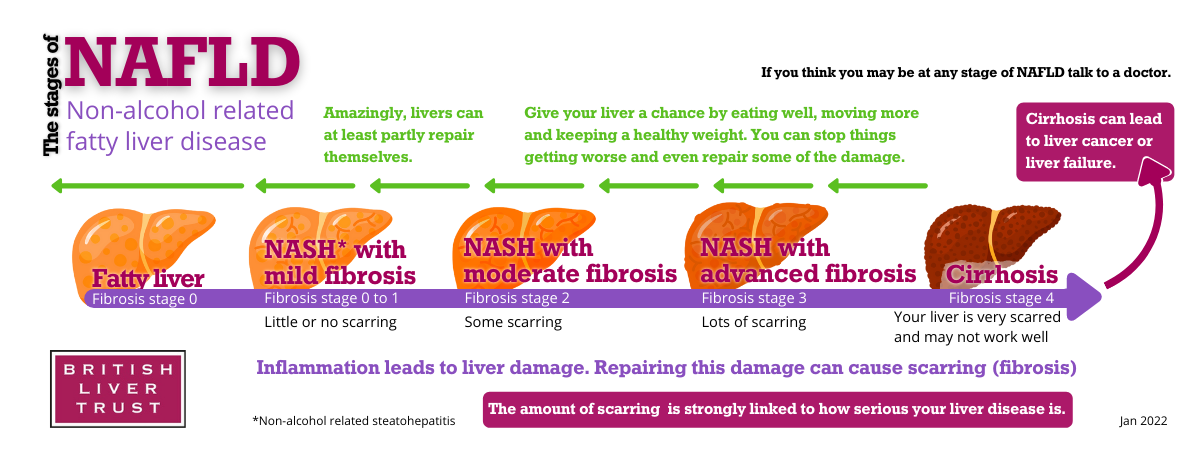
Stages of MASLD
The liver is able to regenerate itself, this means that by adopting an healthy diet, exercising more and losing weight you can slow or even reverse MASLD, especially if it is in an earlier stage.
How can diet and exercise prevent and treat MASLD?
No matter how much you weigh, eating healthy and being active can help prevent and reduce liver fat and improve a MASLD diagnosis. Because fat in the liver is the main cause of MASLD, when the fat is reduced the liver is less strained and can then try to repair itself. Research shows the best way to prevent, stop and even reverse MASLD is to maintain a healthy weight. If you are at a healthy weight, it is important to not gain weight as this can put you at risk of MALSD or even make an existing MASLD diagnosis worse. The best way to maintain a healthy weight it to:
- Eat a balanced diet
Everything we eat and drink has different types and amounts of nutrients like proteins, fats, carbohydrates, vitamins, and minerals. Some foods and drinks have more nutrients that are good for our body, and other food (like processed food and sugary drinks) will be less nutritional. It’s important to make sure that you get a good balance of nutrients in your diet to keep your liver and overall body healthy.
- Be more physically active
Not only is exercise good for your heart, mental health, and energy levels, it helps reduce your risk of developing MASLD. The NHS recommends doing at least 2½ hours of moderate cardio each week and strengthening exercises twice every week. Activities like taking a brisk walk, playing team sports, swimming and dancing are great ways to get moving.
For more information on how to get started with physical activity download our factsheet with tips and tricks.
You can take a pledge to Love Your Liver by eating 5 fruit and vegetables a day, committing to a fitness challenge or ditching takeaways and sugar.