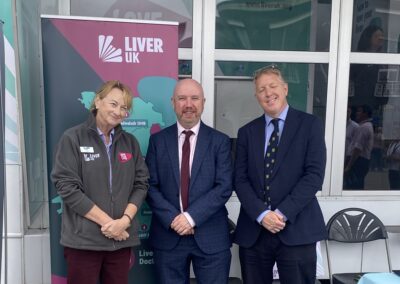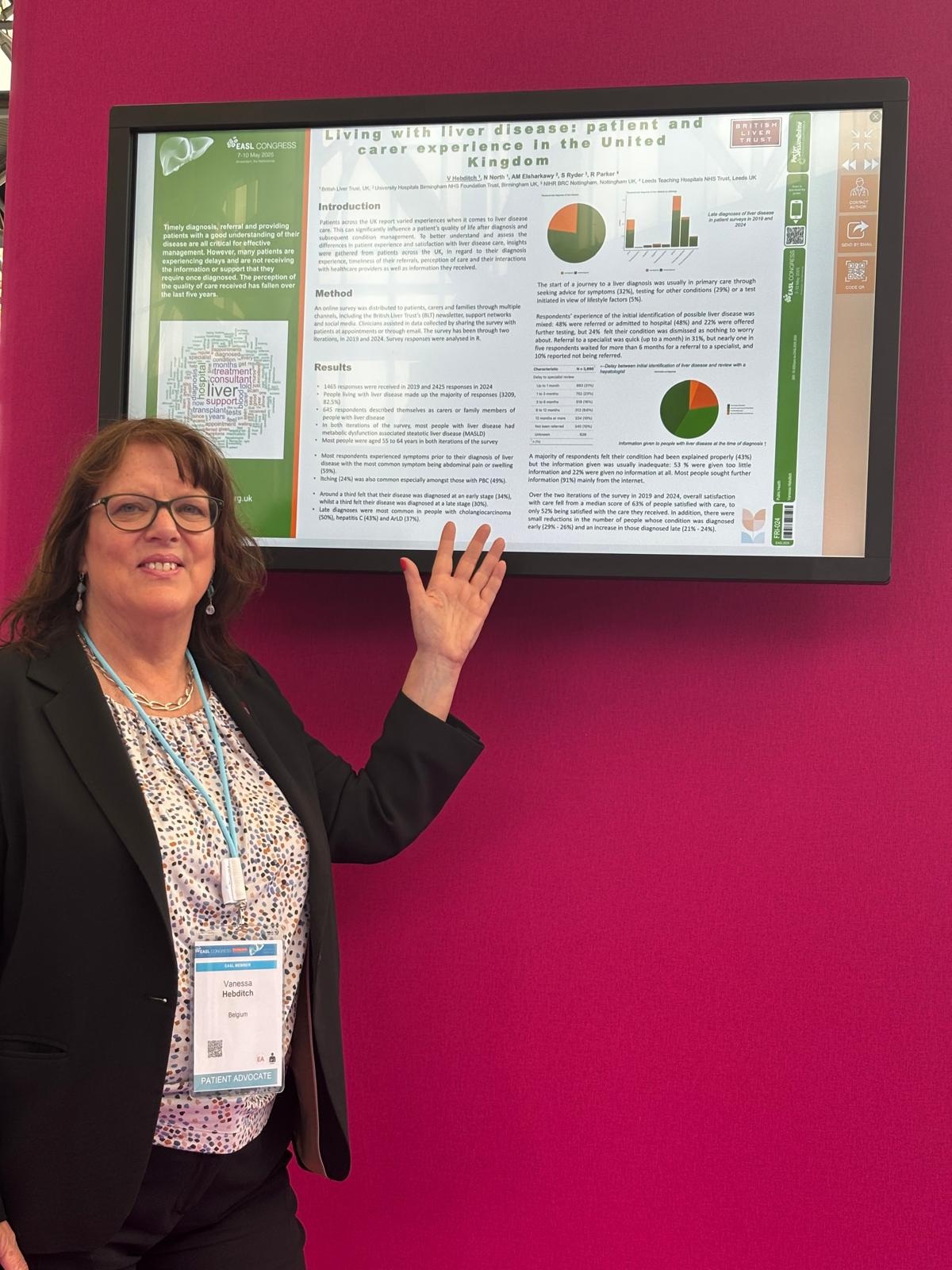
At the European Association for the Study of the Liver (EASL) congress 2025 this week, we were pleased to share the latest results from our British Liver Trust patient survey 2024, which captured the experiences of over 2,400 people living with liver disease and liver cancer across the UK. Presented in poster format, this research represents one of the most comprehensive insights into liver disease patient perspectives to date. It’s only by truly listening to your voices that we can develop services that reflect your needs and help raise the standard of liver care.
The responses provided us with invaluable insights into the patient journey, highlighting both positive experiences and areas where significant challenges and discrepancies in care persist. Patients generously shared their stories, offering a detailed picture of how liver disease is diagnosed, explained, and managed in the UK. The key findings we presented at EASL show a system that is doing some things well but too often falling short at critical stages of the care pathway.
Delays and missed opportunities in diagnosis
The journey to diagnosis frequently begins in primary care – most often when patients seek advice for troubling symptoms (32%), undergo tests for unrelated conditions (29%), or are screened due to lifestyle risk factors (5%). But the initial experience is often mixed: 24% of patients reported that their concerns were dismissed or downplayed. Only 31% were referred to a specialist within a month, while nearly one in five waited more than six months, and 10% of respondents were not referred at all.
Between the 2019 and 2024 surveys, the percentage of patients diagnosed early dropped slightly (from 29% to 26%), while late diagnoses increased (from 21% to 24%). These figures point to a persistent problem in early identification of liver disease.
Falling satisfaction with care
Between our 2019 patient survey and 2024 patient survey, there has been an overall decline in satisfaction with care. In 2019, 63% of patients said they were satisfied with the care they received. By 2024, that number had dropped to just 52%, which may reveal a systemic gap in communication, support, and consistency in care provision.
Positive feedback from some patients demonstrates what optimal care can look like:
“Excellent consultant support when needed and consistency – seeing the same doctor every appointment.”
“From the time my condition worsened, I was able to access prompt assessment and care leading to a transplant.”
These experiences highlight that timely referrals and consistent care from the same healthcare professionals can lead to greater satisfaction.
Information gaps
Another recurring theme was the lack of information provided to patients at the time of diagnosis. While 43% felt their condition had been properly explained, over half (53%) said they received too little information, and 22% were given none at all. With limited information at the point of diagnosis, 91% of patients turned to the internet to learn more about their condition, which is a clear indication that more needs to be done to support people from the very start of their journey.
The importance of the patient voice
This survey reinforces how vital patient feedback is in shaping better care. It highlights the need for faster referrals, clearer communication, and greater empathy throughout the patient journey. As we move forward, we remain committed to using these insights to inform practice, policy, and education and to ensure that every person living with liver disease receives the timely, compassionate, and effective care they deserve.
Thank you to everyone who took the time to respond to the survey and share your experiences. Read more here: Patient survey 2024 – initial findings – British Liver Trust