
What causes
Budd-Chiari syndrome?
The information on this page is for:
- Adults with Budd-Chiari syndome or suspected Budd-Chiari syndrome
- Family, friends, carers, and healthcare professionals.
On this page:
What happens normally?
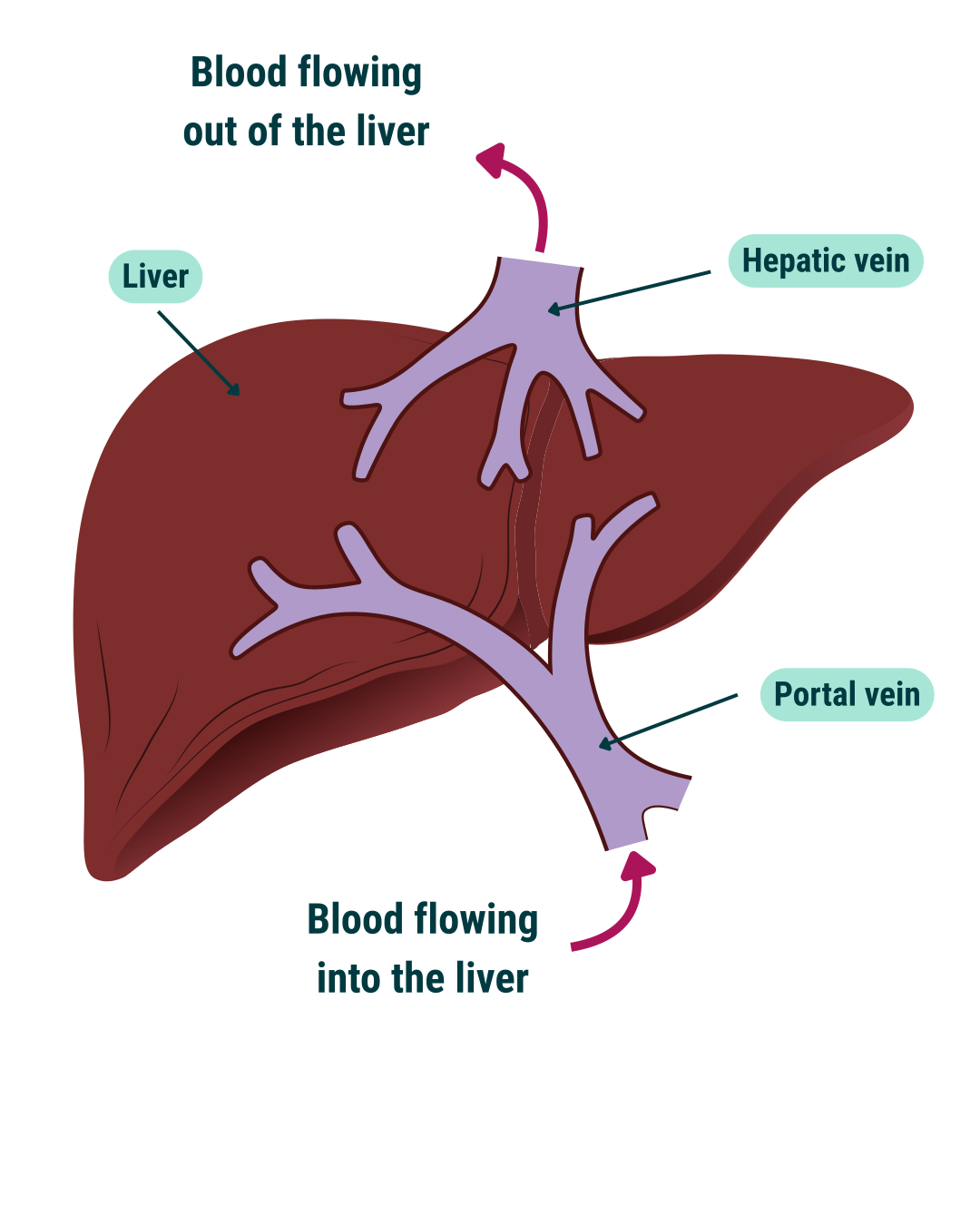
A lot of blood passes through the liver. It flows out through the hepatic veins and into the inferior vena cava. This is a large blood vessel that carries blood back to the heart.
What goes wrong in Budd-Chiari syndrome?
In Budd-Chiari syndrome, the blood flow out of the liver is partially blocked. This is sometimes called ‘an obstruction of hepatic venous outflow’.
This means blood is flowing into the liver faster than it can flow out. So blood build-ups (congestion) in the liver. The liver becomes swollen, and this can cause tenderness or pain. It can also cause complications such as ascites (swelling of the tummy caused by fluid build-up).
What causes Budd-Chiari syndrome?
There are two types of Budd-Chiari syndrome.
Primary Budd-Chiari syndrome
Primary Budd-Chiari syndrome is caused by a problem with blood clotting. Or by inflammation of the blood vessels.
Your blood needs to be able to flow freely through your body. But it also needs to form clots quickly when you get a cut or bruise.
A complicated system balances these two different needs. It has lots of different parts and usually they work well together. But a problem with any one of them could affect the whole system.
In some cases, this can mean there are dangerous blood clots where they are not needed. This is called thrombotic disease. Clots in blood vessels are called thromboses.
There are lots of different causes of thrombotic disease. In some cases, it might be a problem in the genes passed down in the family. Finding the cause might be helpful for treatment. But it is not always possible.
Some inflammatory conditions are also linked to Budd-Chiari syndrome. This includes:
- Behçet disease
- Sjögren syndrome
-
inflammatory bowel disease (IBD)
Secondary Budd-Chiari syndrome
The other type of Budd-Chiari syndrome is called secondary Budd-Chiari. This is caused by something pushing on the veins from outside.
This can include:
- a type of liver cancer called hepatocellular carcinoma (HCC)
- very large liver cysts or abscesses
- large benign liver tumours
A number of other conditions or factors are linked to BCS, including:
- pregnancy
- high-dose oestrogen from using oral contraception.
But in some cases the cause of Budd-Chiari syndrome is unknown.
Support
How Liver UK can help
A diagnosis of liver disease can be worrying, and you may have a lot of questions.
We're here for you and for your family and friends. Whether you have questions or just need someone to listen, we can help.

Your feedback
This content was last reviewed: March 2026
Our expert reviewers:
We would like to thank everyone who helped with creating and reviewing this page. Including Prof. John F Dillon, Professor of Hepatology and Gastroenterology, School of Medicine, University of Dundee. And all our patient reviewers.
Find out how we make our patient information.
Everyone’s experience of liver disease will be different. Always talk to your specialist medical team for personal advice.

More from Liver UK

Check your risk
Find out more

Support us
Find out more

Keep up to date
Find out more