
Choledochal cysts
in adults
Quick Summary
- Choledochal cysts are very rare.
- They are swellings in your bile ducts that start before you are born.
- The condition is usually diagnosed in children.
- Choledochal cysts are treated with surgery.
- Early treatment reduces your risk of bile duct cancer.
Find out more about choledochal cysts in adults on this page.
Useful words
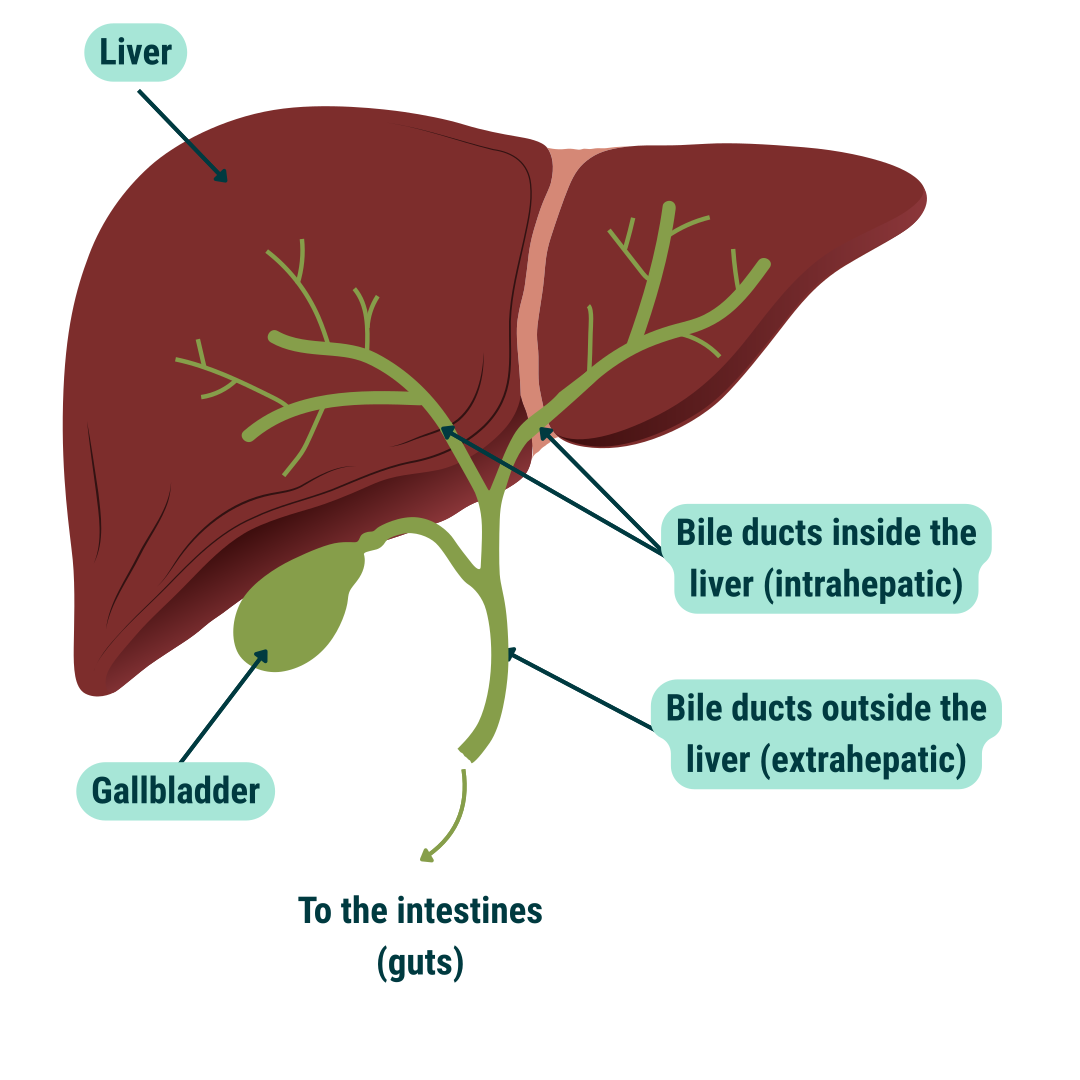
Bile A liquid produced in your liver. It helps you to digest fat in your food.
Bile ducts The tubes that carry bile from your liver to your gallbladder and your intestines (your guts).
Biliary tree Another name for bile ducts.
Intrahepatic bile ducts The bile ducts that are inside your liver.
Extrahepatic bile duct The bile duct that is outside your liver.
Common bile duct Another name for the bile duct that is outside your liver.
Gallbladder A sac where bile is stored before going to your intestines
What causes choledochal cysts?
Choledochal cysts start to form before you are born. They are part of a group of conditions called fibrocystic liver conditions .
Some people have more than one of these conditions. They are caused by a problem with the way your liver starts to grow before you are born. Doctors might call this a “ductal plate malformation”.
In choledochal cysts, it is thought that there is a problem with the way the tubes from your pancreas are attached to your bile ducts. This can cause digestive juices from your pancreas to go the wrong way, into the bile ducts. When this happens, it can damage your bile ducts and they can get weak and swell up.
Choledochal cysts might run in families, but it is likely other things also play a part in who will get them.
Choledochal cysts are usually found in babies and young children. They are more common in girls and in people with an east Asian family background.
Types of choledochal cyst
Type I (1)
- A cyst in the bile duct outside your liver.
- This is the most common type of choledochal cyst. It looks like your bile duct has swollen up like a tiny balloon.
Type II (2)
- A cyst that develops as a sac. It comes off the side of the bile duct outside your liver.
Type III (3)
- A cyst at the end of the bile duct, outside your liver, where it joins your intestines.
- This cyst may be inside your intestines. It is sometimes called a choledochocele.
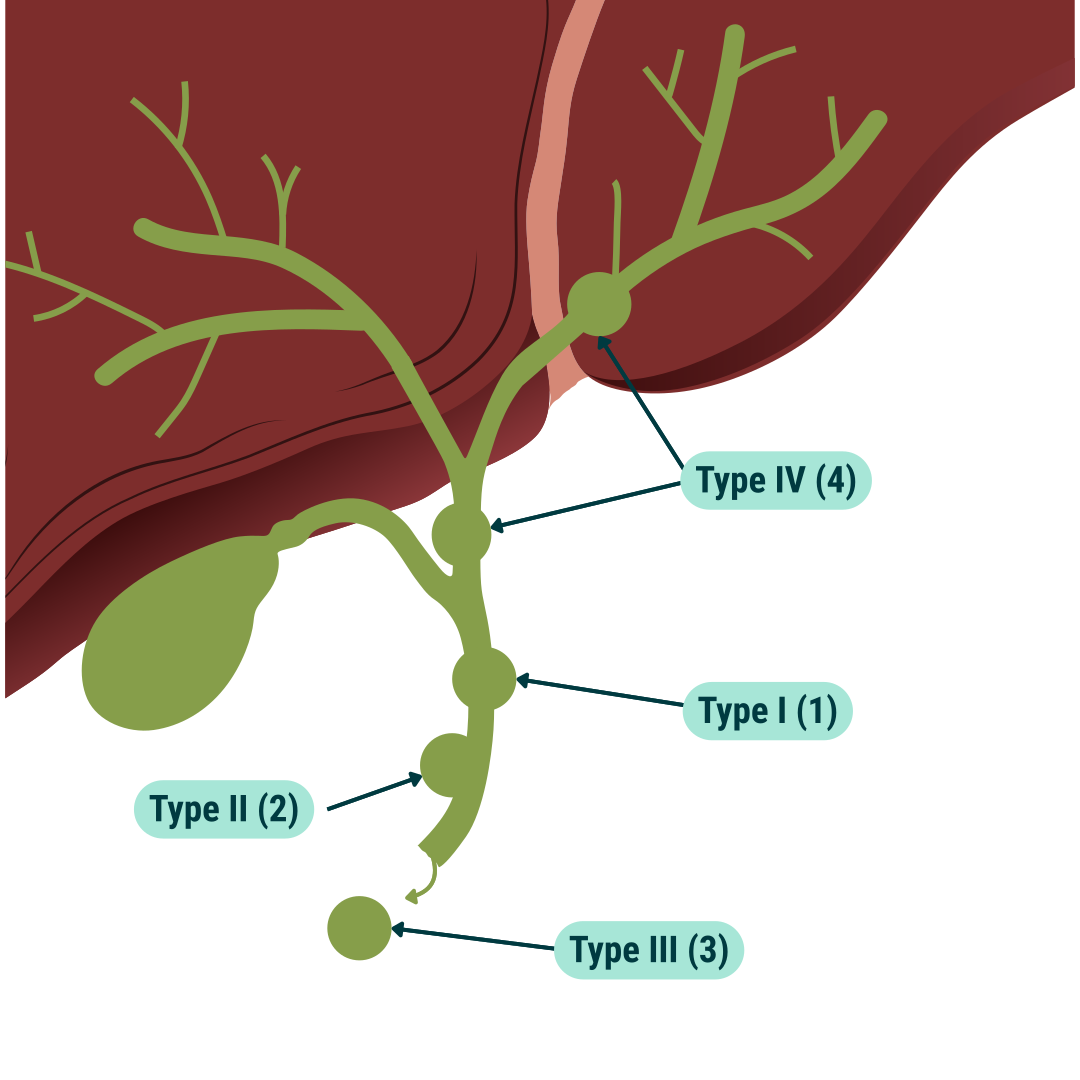
Type IV (4)
- Cysts in the bile ducts inside and outside your liver.
- Like type 1 cysts, these are caused by the tubes swelling up.
Type V (5)
- For more information on type V cysts go to our page on Caroli disease.
What are the symptoms of choledochal cysts?
The symptoms of choledochal cysts vary from person to person. The most common symptoms are:
- Tummy pain
- Feeling bloated
- A swollen tummy
- Jaundice (a yellow colour to the skin or eyes)
- Pale coloured poo
Tests for choledochal cysts
In some cases, choledochal cysts can be found before a baby is born. Usually during the routine 20 week ultrasound scan. Most people with choledochal cysts will be diagnosed before they are 10 years old.
Choledochal cysts are sometimes found in adults, but this is very rare.
The symptoms of choledochal cysts in adults are very similar to other liver and bile duct problems. So, you will probably have tests to rule out more common problems.
The first tests will be a blood test and an ultrasound scan. This will help doctors find out if you have cysts in your bile ducts.
You might then have an MRI, MRCP or CT scan to get a better look at the problem.
You might have a test called an ERCP. This is a type of endoscopy; it uses a small camera inside your body.
You can find out more information about these tests in the drop-down boxes below.
Ultrasound scan
An ultrasound scan can look at your liver and bile ducts. This will help doctors to see if you have a cyst, how big it is, and where it is. This will help them to work out which type of choledochal cysts you have. You can find out more about ultrasound scans here.
MRI scan
An MRI scan uses magnets and radio waves to build up a picture of the inside of your body. It does not use x-rays and is very good at looking at the soft parts of your body, such as your liver.
An MRI scan usually takes about half an hour. The scanner is a tube. You will lie on a bed that moves into the tube. The scanner can be very loud, so you will be asked to wear headphones.
MRCP scan
MRCP stands for Magnetic Resonance CholangioPancreatography
It is a type of MRI scan. You will have some pictures taken in the MRI scanner. Some dye will then be injected into your blood using a little tube (a catheter) put into a vein on the back of your hand. You will then have more pictures taken. The dye will help doctors to get a good look at your bile ducts and any cysts that might be there.
An MRCP scan usually takes about 45 minutes.
CT scan
A CT scan will take a series of X-rays and use a computer to put them together to make a detailed picture.
A CT scan takes about half an hour. The scanner looks like a ring doughnut. You will lie on a bed that will move in and out of the hole in the middle of the ring.
ERCP
ERCP stands for Endoscopic Retrograde CholangioPancreatography.
ERCP is a type of endoscopy procedure. An endoscopy is where a long bendy tube with a tiny camera on it is put into your body. Usually through your mouth and down your throat.
ERCP can be used in lots of different ways. If doctors are looking for choledochal cysts, they might use the ERCP tube to put a dye into your bile ducts. They can then take an X -ray and the dye will help any cysts to show up on the X-ray.
You will be given pain relief and medicine to make you feel sleepy (a sedative). Or you might be given a general anaesthetic, so you are asleep during the procedure.
Treatment for choledochal cysts
If you have choledochal cysts, you should be referred to a specialist. It is rare for an adult to be diagnosed with choledochal cysts so ask to see a surgeon with experience of this.
If the cysts are not treated, they can lead to serious complications. These include liver damage, gallstones, inflammation, and an increased risk of bile duct cancer.
The treatment for choledochal cysts is surgery. The type of surgery you will have will depend on several things, including where the cysts are.
Ask your doctors to explain the operation they are suggesting and what the risks are. These will be a bit different for everyone. It might help to make a list of questions you would like to ask. Or ask the doctor if you can record your conversation on your phone to make it easier to remember later.
You can also ask if there are any other options. Or what the risks are of not having an operation.
You can find information about the different types of surgery for choledochal cysts in the drop-down boxes below. This is just a guide, some of these options might not be right for you.
Keyhole surgery for cysts outside your liver
Most choledochal cysts are in the part of your bile duct that is outside your liver. These cysts can usually be removed using keyhole surgery (laparoscopic surgery).
The operation
The surgeon will make several small holes in your abdomen (tummy). They will put a tool called a laparoscope through one of these holes. A laparoscope is a thin bendy tube with a camera and a light at the end of it. Some gas will be put into your tummy to make more space for the surgery.
The surgeon will use long thin tools to remove the section of bile duct that has a cyst. Then join your bile duct back to your intestine. So that bile can still flow, and help you digest food normally.
The medical team will then let the gas out of your tummy and stitch up the small holes.
After the operation
Because this type of surgery only uses small openings in your tummy, it is usually easier to recover from than standard surgery.
You may need to stay in hospital after the operation. Usually just for one or two days.
You will be encouraged to start moving about as soon as you can. This will help you to recover quicker.
You will be given long socks to wear. These will help prevent clots in your veins. You might also be given injections to prevent clots.
It is normal to feel bloated after the operation because of the gas used. It is also normal to feel some pain or discomfort. Ask for more painkillers if you need them. It is better for your recovery to get pain under control than to put up with it.
This type of surgery is medically called a surgery is medically called a Roux-en-Y hepaticojejunostomy.
ERCP treatment for type 3 cysts
Type 3 cysts form where your bile duct joins your intestines. These can sometimes be treated during an ERCP. You might hear this called an “biliary endoscopic sphincterectomy”.
It is very like having an ERCP test. But doctors will also use special tools in the bendy endoscope tube to remove the cyst.
Surgery for choledochal cysts inside your liver
If you have cysts in the bile ducts inside your liver, you may need to have surgery. Your doctor might call this a liver resection.
This is an operation to remove the part of your liver where the damaged bile ducts are.
Removing part of your liver is a big operation. You will have a general anaesthetic so that you are asleep and do not feel anything during the operation. You will probably have to stay in hospital for a few days afterwards. This is to make sure that you are recovering and have not got an infection.
You will probably find it difficult to move around and do all your normal activities for a few weeks after the operation. Before you leave the hospital make sure you talk to your doctors about pain relief and what you should and should not be doing. If possible, have some help lined up for when you get home.
Your liver has an amazing ability to repair itself. So, if the rest of your liver is healthy it should be able to get back to its normal size after a few months.
Living with choledochal cysts
Most choledochal cysts are found in young children. Children usually recover well after surgery to remove the cysts. And will grow up without any more problems.
If choledochal cysts are not found until adulthood, they can be more difficult. Surgery still works very well. But there is a greater risk that having the condition for a long time has caused other problems. You may need to be tested for inflammation of your bile ducts (cholangitis) or bile duct cancer.
It is always difficult to be told you have a liver condition. It can be even harder if it is very rare. It is normal to want to find out more. Unfortunately, there is not a lot of information online about choledochal cysts in adults. You will mostly find information written for doctors in complicated medical language. If there is anything you are not sure about, your specialist will be the best person to ask.
You can also find out about the ways we can support you, including our nurse-led helpline, below.
Diet and supplements
There are no special diets for choledochal cysts and no particular foods to avoid. But if your cysts are very severe you might find it hard to digest fatty food. Always speak to your doctor or a registered NHS dietician if you think this is happening. They might recommend a high protein diet to make sure you don’t lose too much weight.
There are no alternative treatments or supplements that have been shown to help with choledochal cysts. You can find out more about supplements and complementary or alternative medicines here.
Support
How Liver UK can help
A diagnosis of liver disease can be worrying, and you may have a lot of questions.
We're here for you and for your family and friends. Whether you have questions or just need someone to listen, we can help.

Your feedback
This content was last reviewed: August 2023
Our expert reviewers:
We would like to thank everyone who helped with creating and reviewing this information. Including Dr Abid Suddle, King’s College hospital NHS foundation trust. And all our patient reviewers.
Find out how we make our patient information.
Everyone’s experience of liver disease will be different. Always talk to your specialist medical team for personal advice.
More from Liver UK

Check your risk
Find out more
Support us
Find out more
Keep up to date
Find out more