
Portal hypertension
Portal hypertension happens when pressure builds up in a major vein coming into your liver.
It is a complication of liver cirrhosis and can cause other serious complications. In some cases it can be treated with a surgical procedure.
Also called: portal vein hypertension.
The information on this page is for:
- Adults with cirrhosis or suspected cirrhosis.
- Family, friends, carers, and healthcare professionals.
On this page:
What causes portal hypertension?
What happens normally?
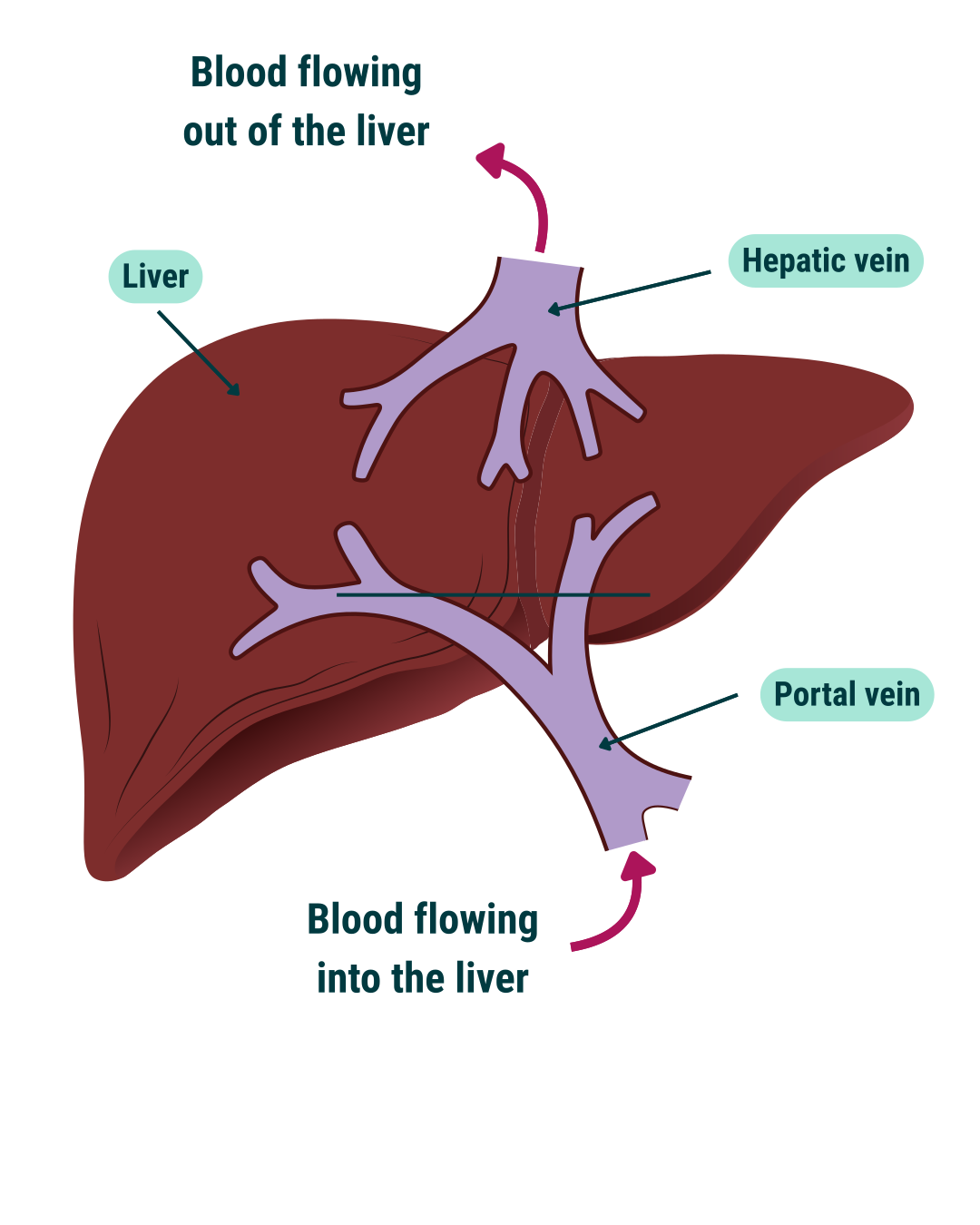
A lot of blood goes through your liver, from digestive system. It comes into your liver through your portal vein, flows through your liver and comes out through the hepatic vein, then back up to your heart.
What happens in portal hypertension?
If you have serious liver scarring (cirrhosis) this normal pattern of blood flow can become more difficult.
Scarring makes your liver stiff and lumpy. So it is hard for all the blood to get through. This means pressure builds up in your portal vein as the blood tries to get into your liver.
It is a bit like a blocked motorway. Lots of blood wants to get through your liver. But scarring can make it hard for the blood to flow through easily. Instead the blood tries to find different routes through smaller veins. Like cars trying to find a way around a blocked motorway by using small side roads. The smaller veins do not usually carry so much blood. This causes problems in those veins and in other parts of your body.
In rare cases portal hypertension can be caused by other conditions, for example ones that affect your blood and circulatory system. that are not liver disease.
What are the symptoms of portal hypertension?
There are usually no symptoms of portal hypertension in the early stages.
But if it causes other complications, you will usually have symptoms of these.
What are the complications caused by portal hypertension?
There are 2 main complications of portal hypertension. They can both be treated and managed. Treatments for the portal hypertension itself can also help. You can find out about this in the next section.
Varices
Varices are enlarged veins, most commonly in your food pipe (oesophagus) or stomach.
They happen when portal hypertension has a knock-on effect on veins that lead to the portal vein. Varices can sometimes leak or burst causing bleeding. If this happens suddenly it can be very serious.
If you have cirrhosis you should have a test to check for varices. This aims to find and treat varices before they cause any bleeding.
Ascites
Ascites is swelling in your tummy caused by a build-up of fluid.
It can be treated with medicines or by draining the fluid.
How is portal hypertension treated?
Medicines
Beta-blockers
You may be given a type of medicine called a beta-blocker. Especially if you have varices. This medicine can reduce the pressure in your blood vessels.
TIPS procedure
The TIPS procedure can reduce portal hypertension by giving your blood an easier way to get through your liver.
You usually have a general anaesthetic for the TIPS procedure. The doctor will then put a small tube called a shunt or stent into your liver. This tube will give your blood an easy route from your portal vein to your hepatic vein.
You will need to talk to your medical team about the risks and benefits of TIPS in your case. Having this procedure can increase your risk of another cirrhosis complication called hepatic encephalopathy (HE)
Living with portal hypertension
Many people with cirrhosis also live with portal hypertension. It does not cause obvious symptoms. But knowing about the possible complications can make sure you get help if you ever need it.
What you can do now if you have cirrhosis:
- Find out about the symptoms of varices and ascites
- Find out who to contact if you are worried
- Ask your medical team about screening for varices
Taking small steps to improve your overall health can also help your liver. Whatever the cause of your liver condition you should not drinkalcohol if you have portal hypertension.
Alcohol FAQs for people with a liver condition
Staying active and eating a healthy balanced diet can also help. If you have ascites or you are struggling to eat enough ask to be referred to a registered dietitian. They can give you advice on what the best diet is for you.
Support
How Liver UK can help
A diagnosis of liver disease can be worrying, and you may have a lot of questions.
We're here for you and for your family and friends. Whether you have questions or just need someone to listen, we can help.
Your feedback
This content was last reviewed: February 2025
Our expert reviewers:
We would like to thank everyone who helped with creating and reviewing this page. Including Dr Victoria Kronsten, Senior Clinical Research Fellow in Hepatology, King’s College Hospital, Katharine Caddick, Consultant Nurse, North Bristol Trust, Maria-Emanuela Maxan, Senior Clinical Research Fellow in Hepatology, King’s College Hospital and Dr Vishal Patel, Consultant Hepatologist, Kings College hospital. And all our patient reviewers.
Find out how we make our patient information.
Everyone’s experience of liver disease will be different. Always talk to your specialist medical team for personal advice.
More from Liver UK

Check your risk
Find out more

Support us
Find out more
Keep up to date
Find out more