
Being more physically active helps reduce the fat that can build up in your liver. This helps to prevent liver conditions caused by fat. It can also improve liver health if you are already diagnosed.
The more physically active you are, the better. But don’t let that put you off if just getting started feels like a struggle. Remember that any activity is better than none.
The information on this page is for:
- Adults who want to improve their liver health
Find things you enjoy doing and that suit your level of fitness and any symptoms you have, like fatigue. You don’t have to join a gym or run a marathon – you can be active by walking and when sitting down. Speak to your doctor to get suggestions or for a referral to local services like walking groups and free classes.
A burst of activity doesn’t just help your physical health. It brightens your mood and helps your mental health too. Mix and match these ideas to get started or add some of your own.

Walk or cycle part of a Journey
Park your car a bit further away. Or get off the bus a stop early and walk.
Go for a walk around the block.
Take the time to notice anything new or things that make you smile.
Shake off the day with yoga or Pilates when you get home.
The NHS has free online videos to guide you.
Take a movement break when the TV ads come on.
Walk to another room and back. Or do some seated stretches.
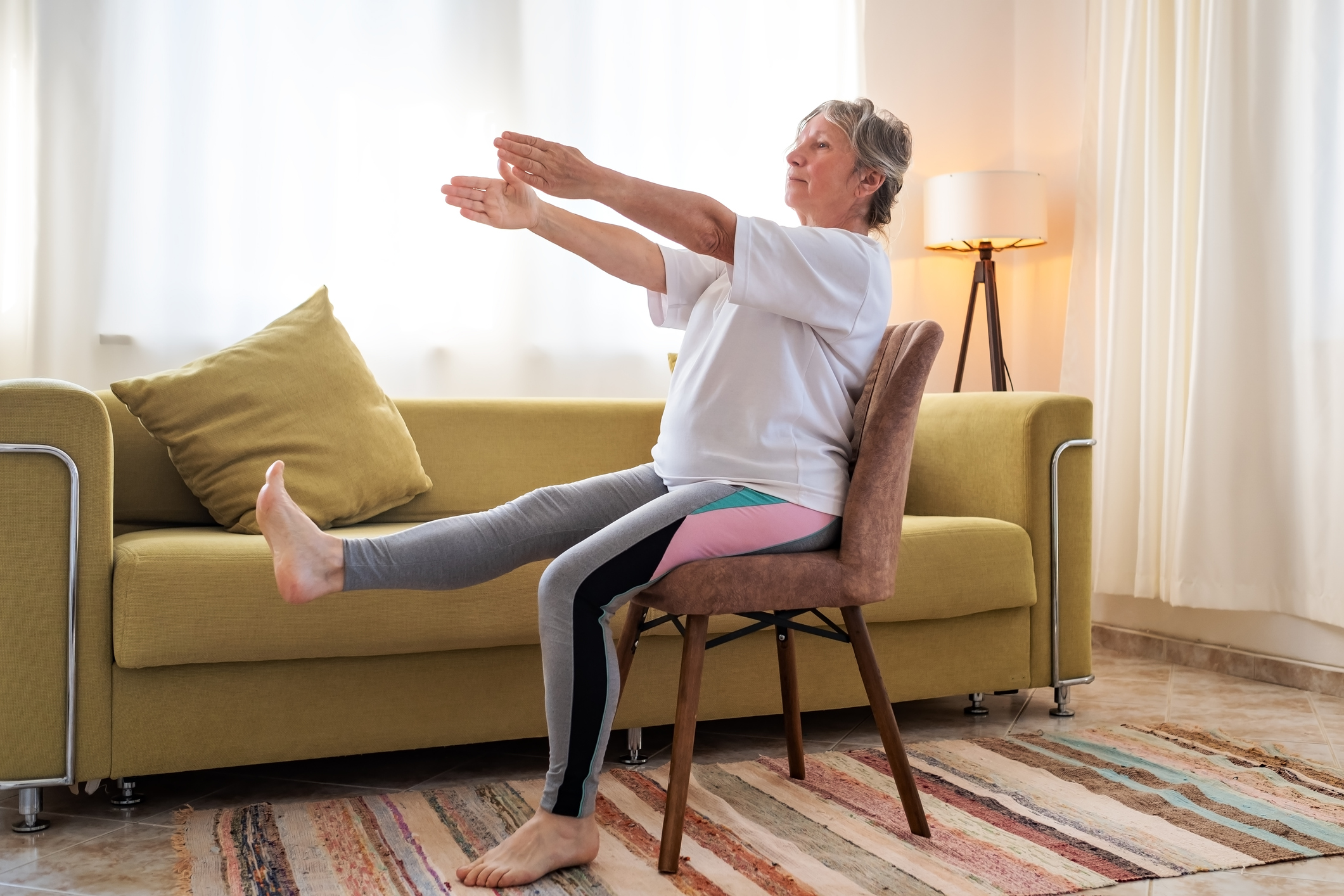
Seated excercise
you can be more active while sitting down if you need. Try seated arm raises or hip marches.
For seated exercises use a strong stable chair that does not have wheels.
Seated arm raises
Sit up straight with your arms by your sides.
Raise your arms out to the side, palms facing forwards, as high as
feels comfortable.
Then bring them back down.
Repeat 5 times.
Seated hip marches
Sit up straight without leaning back and hold on to the sides of the chair.
Lift your left leg up then slowly put it back down.
Now do your right.
Repeat 5 times on each side.
How much physical activity should I aim to do?
The NHS recommends doing 2 different types of activity – moderate aerobic activity (‘cardio’) and strengthening exercises. Both of these can help with liver health.
Aim for 150 minutes of moderate physical activity a week. That’s the same as doing 30 minutes on 5 days of the week. You can break it up however you like – just 10 minutes at a time counts. You should feel a bit out of breath and warmer.
Do strengthening exercises that work all your major muscle groups (legs, hips, back, abdomen, chest, shoulders and arms) on at least 2 days a week.
If you can’t do the recommended amount at the moment, don’t worry. Make a start by doing what you can. As your body gets used to being more active, build up your activity levels by pushing yourself a bit harder or keeping going for longer.
Tracking how much you do can help you see your progress and stay motivated.
Moderate aerobic activities or ‘cardio’ include:
- brisk walking
- dancing
- hiking
- riding a bike
- pushing a lawn mower
Vigorous aerobic activities include:
- swimming
- running
- aerobics classes
- team sports such as football
1 minute of vigorous activity counts as 2 mins of the 150 min weekly goal.
Strengthening exercises include:
- yoga, pilates or tai chi
- exercises with weights or a resistance band
- exercises like push-ups or squats
- heavy gardening such as digging
 It can be hard to get more active, especially if you’re not feeling well. So be proud of yourself for trying. Simple seated exercises or walking a short distance are a good start.
– Dr Kate Hallsworth, Senior Research Physiotherapist, Newcastle University
Where to get help with getting active
- Ask your doctor if they can refer you to physical activity specialist or to a local group like a walking club.
- Visit nhs.uk/better-health for activities and exercises for all levels, including beginners.
- Talk to your family and friends, they can encourage you and you might find
buddy to get more active with. - Help yourself by thinking about when
and where you could fit a bit of activity in and planning how you’ll do it.
Find out more about eating, drinking and keeping active.

More information

Download the factsheet

Thinking about
eating more healthily?

Thinking about
cutting down on alcohol?
Support
How Liver UK can help
A diagnosis of liver disease can be worrying, and you may have a lot of questions.
We're here for you and for your family and friends. Whether you have questions or just need someone to listen, we can help.

Your feedback
This content was last reviewed: MONTH YEAR
Our expert reviewers:
We would like to thank everyone who helped with creating and reviewing this page. Including DR NAME, Job, Hospital. And all our patient reviewers.
Find out how we make our patient information.
More from Liver UK

Check your risk
Find out more
Support us
Find out more
Keep up to date
Find out more