
A CT scan is a special type of X-ray. It can take detailed pictures of the inside of your body. You might have a CT scan to help doctors diagnose your liver condition. They can also be used to monitor you, check for other problems and see how well treatments are working.
CT stands for: computerised tomography
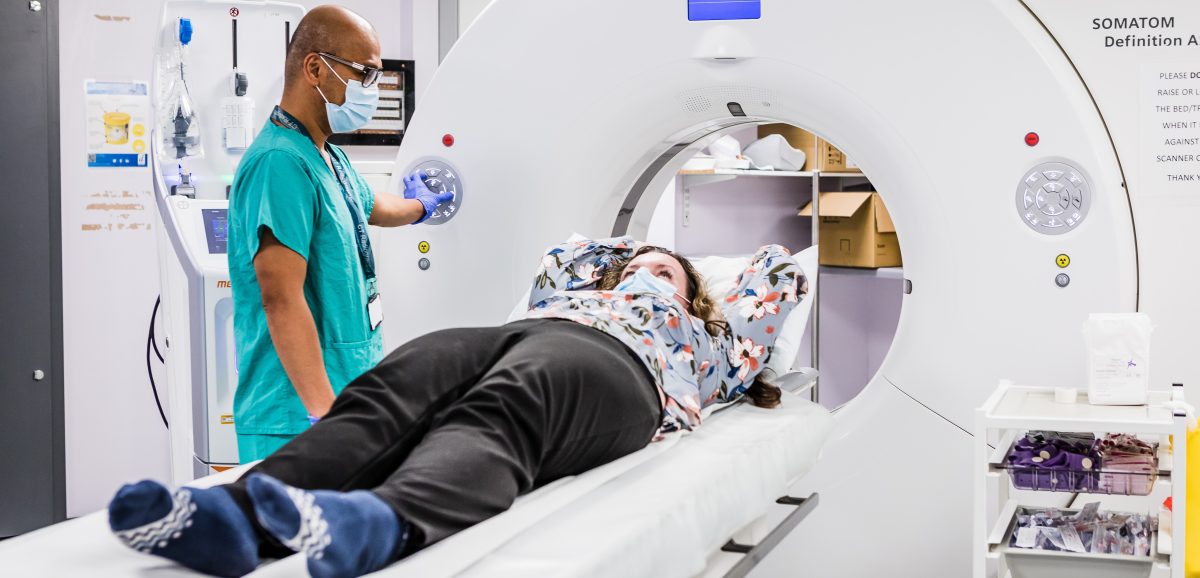
A CT scanner looks like a big ring doughnut. To have the scan you lie on a bed that moves through the hole in the middle. Only a small part of you is in the scanner at any one time.
It is different to an MRI scan where you have to lie inside a small tunnel. Find out more about MRI scans.
Having a CT scan does not hurt, and most people can have one. Even if you have metal implants in your body.
CT scans use x-ray radiation. This means they will give you a very small increase in your risk of getting cancer at some point in the future. But lots of things can increase and decrease your risk of cancer. A CT scan will only make a very small difference. If you need to have a CT scan, then the benefits should be much bigger than the risks.
On this page:
How does a CT scan work?
A CT scanner is a type of X-ray machine. For a normal X-ray, for example if you break a bone, an x-ray tube will send x-rays in one direction, into the area doctors want to look at. Some of the x-rays pass right through your body. These are picked up on the other side and turned into a picture.
A CT scanner is shaped like a ring. It contains an x-ray tube and a detector. These are opposite each other. When the machine is working, the x-ray tube and the detector will spin around the ring. The x-ray tube will send x-rays into your body from all angles and those that pass through will be picked up by the detector. The detector then sends signals to a computer which makes a picture.
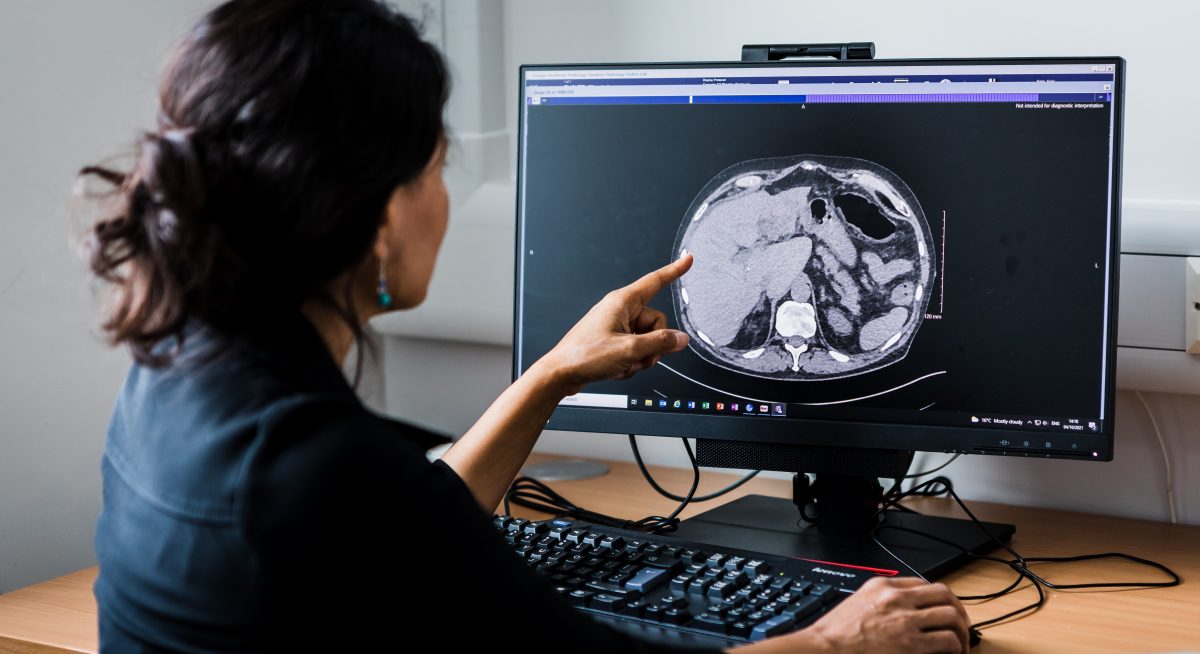
Each picture looks like a thin slice through your belly. The CT scanner will make lots of these pictures, up and down your belly. Then put them together to make a 3D picture of the whole area.
Dye (contrast medium)
A dye might also be used during a CT scan. This helps the scan to get clearer pictures of a particular part of your body. It is good for looking at blood vessels. You might hear this dye called a “contrast medium”.
You might be given the dye as a drink. Or as an injection into a tube (canula) in your hand or arm. After your scan the dye will come out in your pee.
The dye can sometimes have side effects. These are usually mild and do not last very long. They include:
- a rash
- a headache
- feeling dizzy
- feeling or being sick
The dye can sometimes cause an allergic reaction. This is very rare. But let your medical team know before your scan if you have a history of allergic reactions.
Before the scan
Most people can have a CT scan. But in some cases you might need extra checks first. If your doctor says you need a CT scan always tell them if:
You are pregnant or breastfeeding
Doctors are usually extra cautious about X-rays and CT scans if you are pregnant. This is to protect your baby from x-ray radiation. So always let your medical team know if you are pregnant or might be pregnant.
In some cases special precautions can be taken to reduce the risk. This might be done if it is very important for you to have the CT scan. Or you might be offered a different type of test or asked to wait until after your baby is born.
Ask your medical team what your options are, and what the risks and benefits are of each of them.
You have any medical devices or metal in your body
It is not dangerous to have metal in your body when you have a CT scan. But it can make it hard to get a clear picture. So tell your medical team if there is any chance you might have some metal in your tummy area (abdomen).
This includes:
- metal plates, rods and screws used to mend broken bones
- artificial joints used in eg. hip replacements
- pacemakers
- clips, shunts and stents implanted during surgical procedures for example TIPS
- “coil” contraceptives (IUD)
If you have diabetes
Before a liver or gallbladder CT scan you will probably be asked to fast (not eat) for 4 hours. Let your medical team know if this could be difficult for you because of your diabetes.
If you have ever had kidney problems
If you have a CT scan for liver or gallbladder problems, you often have a dye injected during the scan. In rare cases the dye can be a problem if you have a kidney condition. This does not always mean you cannot have the dye. But you might need a blood test first to check on your kidneys.
You have a history of severe allergic reactions
In very rare cases the dye used in some CT scans can cause an allergic reaction. Tell your medical team if you have a history of severe allergic reactions so they can work out if a CT with dye is a safe option for you.

Questions to ask the doctor
- Why do I need a CT scan?
- How will having the scan change my treatment?
- Will a dye be used in my scan? How will I be given it?
- Do I need to fast before my scan? How long for?
- Can I drink before my scan? What can I drink?
On the day of the scan
This is general advice, but sometimes you might be asked to do something different. Always check your appointment letter or message for any special instructions. If you are not sure, contact the scanning department. The contact information should be on your appointment letter.
Eating and drinking
You will probably need to fast for around 4 hours before a liver or gallbladder CT scan.
This usually means you should not have any:
- Food
- Juice
- Drinks with sugar in
- Milk or drinks with milk in
- Fizzy drinks
You may be able to drink water, tea, or coffee but you cannot add milk or sugar to them.
If you are not sure, check with your medical team or contact the scanning department where you will have your test.
What to wear
You may need to take off metal items before you have your CT scan
This includes:
- All jewellery and piercings
- Any clothes that could contain metal, for example belts and bras
- Wigs
- Most types of glucose monitors and insulin pumps
Wear comfortable clothes that are easy to change in and out of. You may need to change into a hospital gown for the scan.
You might have other tests on the same day. It is easiest to wear a separate top and bottom. This means doctors can examine your belly just by lifting up your top.
Wear short or loose sleeves in case you need a blood test.
Scan appointments do not always run on time. It is a good idea to take a bottle of water with you and a book, phone, or something else to pass the time. You could also take a snack for after the scan.
You can read our advice about coping with the stress of appointments here. It includes some simple techniques to help you cope with anxiety in the waiting room.
Having a CT scan
Preparation
CT scans are usually done by a scanning specialist called a radiographer.
If you are going to have a dye injected a small tube called a canula will be put into one of your veins. This is usually in the back of your hand.
The radiographer will explain the test to you and make sure you are as comfortable as possible on the bed.
You cannot have someone else in the room with you because of the X-ray radiation. So the person doing the scan will go to a separate room to operate the scanner. But they will be able to see you all the time through a window or on a screen. They will also be able to hear you, talk to you, and give you instructions.
If you have any questions or worries, you can talk to the person doing the scan at any time.
During the scan
CT scans are usually very quick. Each scan takes about 10 – 20 seconds.
If you are having a dye injected, you might have more than one scan. For example, a scan before the dye and then more scans to get pictures of the dye moving through your blood vessels. This should still only take a few minutes.
You might feel the dye going in, this can be cold or warm. Some people get a warm feeling in their bladder. This can make it feel like you have wet yourself, but it is just the dye moving through your body.
The CT scanner is not very loud so you will not need to wear headphones. But you might hear a whirring sound while the pictures are being taken.
After the scan
When the scan has finished the radiographer will come back into the room and you will be able to get off the bed.
If you had dye injected, you will have the canula removed. You will be asked to wait in the scanning department for 15 to 20 minutes so that the medical team can be sure you will not have a reaction. Allergic reactions to the dye are very rare so this is just to be on the safe side.
After your scan you can go back to all your normal activities and eat and drink as normal.
Questions to ask the doctor
- How long is my scan likely to take?
- How and when will I get my results?
Getting your results
If you are having other tests as well, your medical team will usually wait until they have all the results so that they can look at them all together.
If you do not have a follow up appointment booked, contact your liver medical team to find out how and when you will get your results.
Your results might give your medical team enough information to make a diagnosis. If you have been diagnosed with a liver condition you can find out more information about it here.
Or you might need to have more tests such as an MRI scan or a liver biopsy.
Questions to ask the doctor
- What did my test results show?
- What does this mean for me and how certain are you about this?
- Do I need to have any other tests?
- What are the possible next steps?
- When will I have another appointment and who will it be with?
- Who can I contact if I have more questions or need help before my next appointment?
- What is the best way to contact them?
Support
How Liver UK can help
A diagnosis of liver disease can be worrying, and you may have a lot of questions.
We're here for you and for your family and friends. Whether you have questions or just need someone to listen, we can help.

Your feedback
This content was last reviewed: May 2025
Our expert reviewers:
We would like to thank everyone who helped with creating and reviewing this page. Including Professor Stephen Ryder, Consultant Hepatologist at Nottingham University Hospitals NHS trust and Dr Christopher Clarke, Consultant Abdominal Radiologist, Nottingham University Hospitals NHS Trust. And all our patient reviewers.
Find out how we make our patient information.
Everyone’s experience of liver disease will be different. Always talk to your specialist medical team for personal advice.
More from Liver UK

Check your risk
Find out more

Support us
Find out more
Keep up to date
Find out more