
What causes gallstones?
Gallstones are hard lumps of cholesterol or bile that form slowly in the gallbladder. They are more common in people with certain medical conditions, and in those who are over 40, female, or overweight. Most gallstones do not cause problems, but some can cause pain or complications.
The information on this page is for:
- Adults and children with gallstones or suspected gallstones.
- Family, friends, carers, and healthcare professionals.
On this page:
What is the gallbladder?
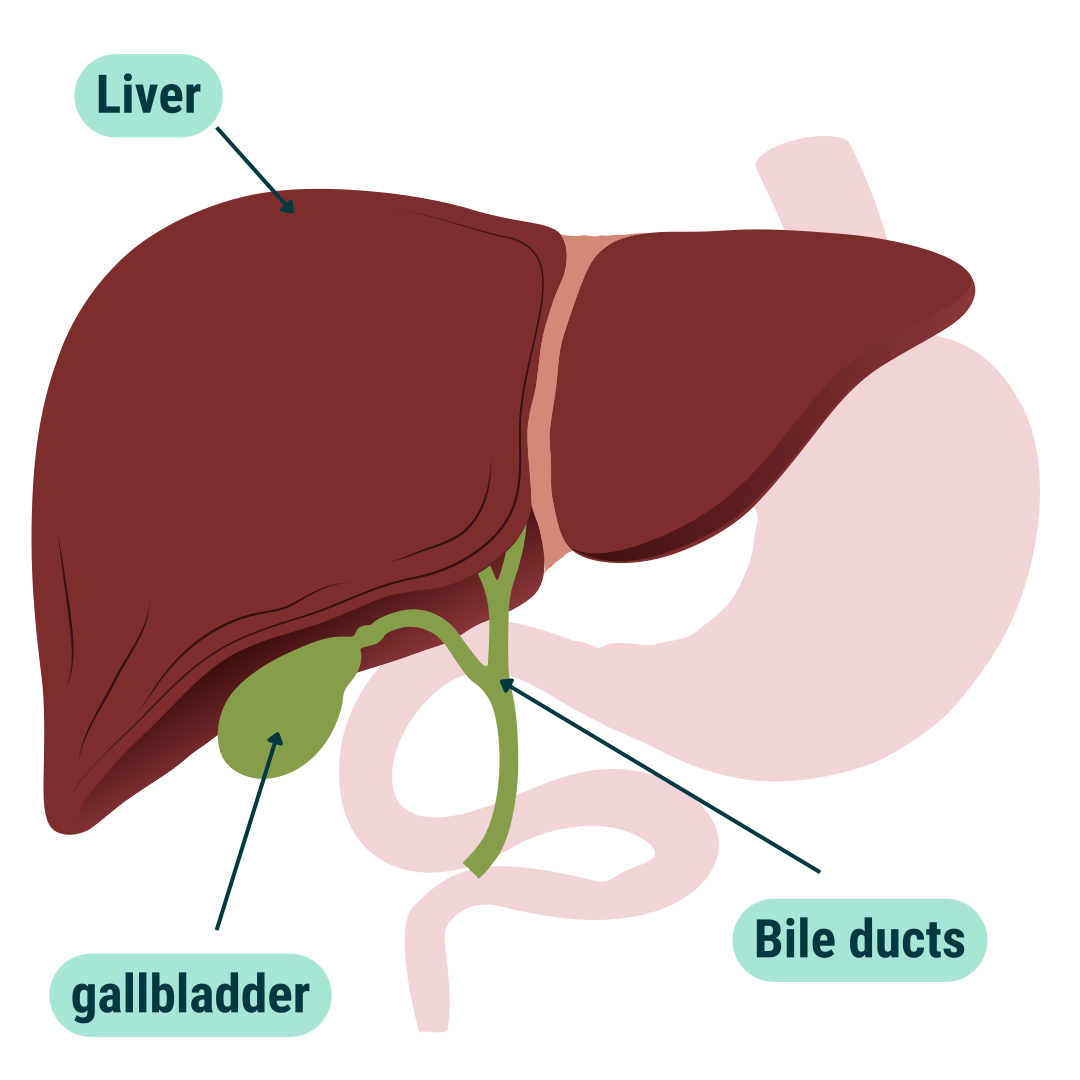
The gallbladder is a small muscular bag that sits just under the liver.
It stores a liquid called bile and squeezes (contracts) to release the bile when needed.
What is bile?
Bile helps you to digest food. It also takes some waste products out of the body.
Bile is mostly water, it also contains:
- Bile salts –these help to break down fat from food.
- Bilirubin – a waste product that the body makes when it breaks down old red blood cells.
- Cholesterol- bile takes cholesterol out of the body.
- Phospholipids – these help to move fat from food to where it is needed.
- Other waste products.
The liver makes bile. The gallbladder stores the bile and squeezes it out when you eat. Then, the bile travels through the bile ducts to the intestines.
Bile carries waste products from the liver through the intestines. The waste products come out in poo.
Bile used to be called gall. This is where the name gallstones comes from.
What causes gallstones?
What are gallstones?
Gallstones are hard lumps of cholesterol or bile. They build up very slowly in the gallbladder.
How are gallstones formed?
Bile can form tiny crystals when it sits in the gallbladder waiting to be used. These crystals can get pushed out when the bile comes out of the gallbladder.
But sometimes they stay in the gallbladder. More bile then sticks to them. So they slowly get bigger.
We are not quite sure what causes this. It is thought that sometimes the liver makes too much of one of the things that goes into bile.
- About 4 in 5 gallstones are made of cholesterol
- About 1 in 5 gallstones are made of bilirubin
It can take 10 – 20 years for gallstones to form. Often several gallstones form at the same time. But in some cases, there is only 1.
Who gets gallstones?
Anyone can get gallstones but because they take so long to form, they are more common in people aged 40 or older.
Gallstones are also more likely in people who:
- are overweight or obese
- are female
- have a close family member who has gallstones
- have had surgery to remove part of the bowel
- take certain medicines
- have recently lost a lot of weight very quickly
- have Crohn’s disease, diabetes, or some liver conditions
It is thought that female hormones can increase the risk of gallstones. Pregnancy, HRT and the combined contraceptive pill seem to increase the risk.
The leaflet that comes with a medicine will say if it increases the chance of getting gallstones. You can also ask a pharmacist.
Other liver conditions and gallstones
Some other liver conditions can affect how bile moves through the liver, gallbladder and bile ducts. This can increase the chance of developing gallstones.
In adults this includes:
- Primary sclerosing cholangitis (PSC)
- Intrahepatic cholestasis of pregnancy (ICP) Also known as obstetric cholestasis (OC)
Some liver conditions that start in childhood can also cause gallstones. The gallstones might not cause any problems until adulthood.
Find out about gallstones in children
Cirrhosis is a late stage in most types of liver disease. Having cirrhosis increases the risk of getting gallstones.
Gilbert’s syndrome. There is some evidence that Gilbert’s syndrome also increases the risk of gallstones.
Why are gallstones a problem?
Gallstones often aren’t a problem. They can just stay sitting in the gallbladder and you may never know they are there.
In some cases they can get stuck in the opening of the gallbladder making it hard for bile to get out. This can cause pain that comes and goes. The pain can be severe. You might hear doctors call this pain “biliary colic”.
Find out more about the symptoms of gallstones on the next page.
Serious complications of gallstones are rare. But they can need urgent treatment.
Blocked bile ducts
Gallstones can sometimes move out of the gallbladder and into the bile ducts.
If a stone gets stuck in the bile ducts it stops the normal flow of bile out of the gallbladder and into the intestines. The body will try to push bile past the blockage. It does this by strongly squeezing the gallbladder and bile ducts. This can cause pain which can be very severe.
Jaundice
If bile cannot get out of the body, then the waste products in it can build up. This can cause jaundice. Jaundice is a yellow colour to the eyes or skin.
Inflammation
Gallstones in the gallbladder can sometimes irritate it. This causes inflammation. Doctors call this cholecystitis.
Gallstones can also sometimes cause inflammation of the pancreas. This is called pancreatitis.
Infection
Blocked bile ducts can cause infections. These need urgent treatment with antibiotics.
Support
How Liver UK can help
A diagnosis of liver disease can be worrying, and you may have a lot of questions.
We're here for you and for your family and friends. Whether you have questions or just need someone to listen, we can help.

Your feedback
This content was last reviewed: June 2026
Our expert reviewers:
We would like to thank everyone who helped with creating and reviewing this page. Including Professor Stephen Ryder, consultant hepatologist at Nottingham University Hospitals NHS trust. And all our patient reviewers.
Find out how we make our patient information.
Everyone’s experience of liver disease will be different. Always talk to your specialist medical team for personal advice.
More from Liver UK

Check your risk
Find out more

Support us
Find out more
Keep up to date
Find out more