
MASLD in children

MASLD happens when too much fat is stored in liver cells. It is a chronic liver disease. This means it is a long-term health condition that develops slowly and may get worse over time. It is the most common cause of chronic liver disease in children and young people.
Also called: Non-alcohol related fatty liver disease (NAFLD)
The information on this page is for:
- Parents of children and young people with MASLD or at risk of MASLD.
- Young people with MASLD
- Family, friends, carers, and healthcare professionals.
How to say it:
Metabolic = met-uh-BOL-ik
Dysfunction = dis-func-tion
Steatotic = Stee-uh-TOT-ik
People say MASLD as one word that rhymes with ‘dazzled’
MASLD can also affect adults. See our information for adults.
On this page:
Quick Summary
- MASLD, NAFLD and fatty liver disease are different names for the same condition
- MASLD happens when too much fat is stored in liver cells.
- MASLD is divided into different stages.
- MASLD is the most common cause of chronic liver disease in children and young people.
- Most cases of MASLD are linked to excess food intake and lack of exercise. However, environmental, genetic, and hormonal factors can play a part.
- There are no specific tests for MASLD. Most children are diagnosed after having tests for another health problem.
- Most children and young people with MASLD show no signs or symptoms.
- It is not always possible to prevent your child from getting MASLD. But you can lower their chances by helping them eat a healthy diet and encouraging them to get enough exercise.
- In most cases, changes to daily life can reverse MASLD completely.
Find out more about MASLD in children and young people using the links below.
What is MASLD?
MASLD happens when too much fat is stored in liver cells. It is a chronic liver disease. This means it is a long-term health condition that develops slowly and may get worse over time.
The liver is a large organ found at the top of the tummy (abdomen) on the right side. It is made up of cells (hepatocytes), blood vessels and bile ducts. The liver has many important jobs in the body including:
- cleaning (filtering the blood)
- making blood plasma proteins, clotting factors, cholesterol, vitamin D, hormones and bile
- processing waste products
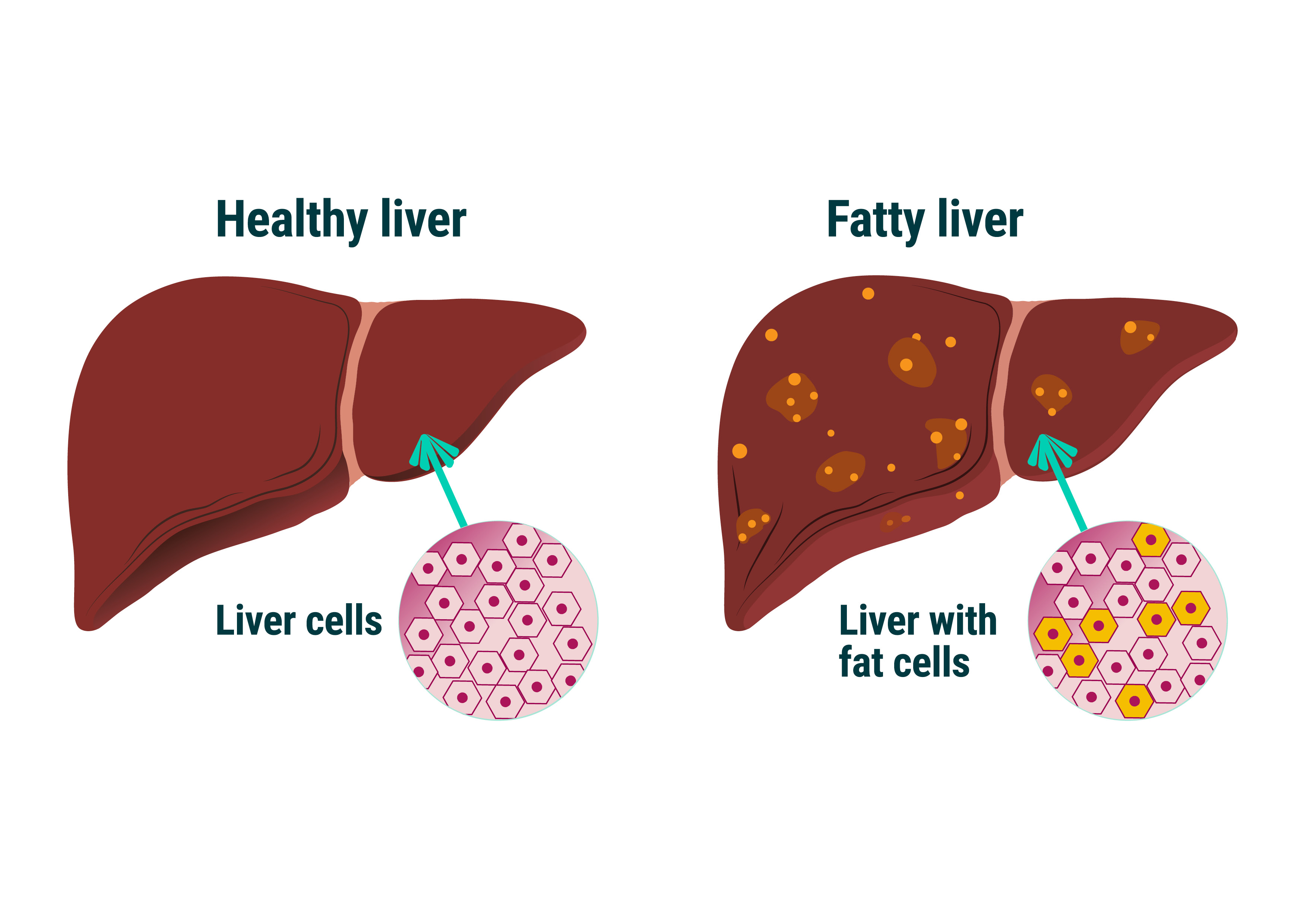
It is not the liver’s job to store excess energy in the form of fat. If this happens, the fat can cause inflammation (irritation and swelling) in the liver. This can damage liver cells and may lead to scarring (fibrosis) of the liver over time.
What are the stages of MASLD?
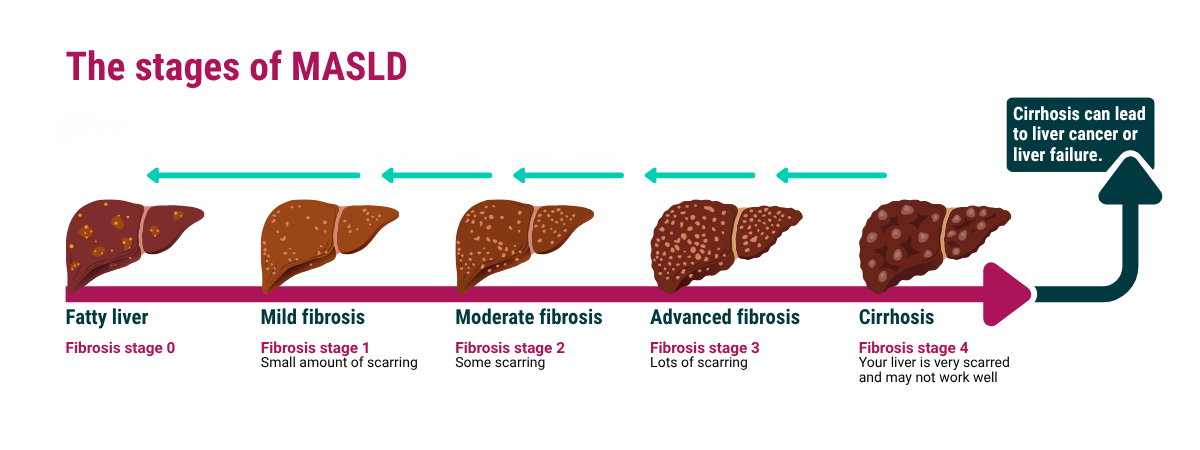
MASLD is divided into different stages. Doctors measure the amount of scarring (fibrosis) in the liver to decide the stage of the disease.
Having one stage does not mean your child will definitely develop the next one. It is also possible to slow or even reverse the damage, especially if it is at an early stage.
Most children and young people will only develop stage 0. In a small number of cases, it can progress to more advanced stages if not found and managed.
| Stage | |
| Fibrosis stage 0: Fatty liver | This is a build-up of fat in liver cells. The extra fat does not affect how well your child’s liver works. At this stage the liver is not damaged and there is no scarring. |
| Fibrosis stage 1: MASLD with mild fibrosis | At this stage, the build-up of fat causes inflammation (irritation and swelling) in the liver. But there is little or no scarring. In most cases, healthy living can undo the damage and reverse the condition. |
| Fibrosis stage 2: MASLD with moderate fibrosis | At this stage the inflammation has caused some scarring. Your child’s liver will still be working well and most of the damage can be repaired. |
|
Fibrosis stage 3: MASLD with advanced fibrosis
|
At this stage, the inflammation has started to cause more scarring. The liver will probably still be working well and most of the damage can be repaired. But it is important to take steps to stop any further damage. If more scarring occurs it could lead to cirrhosis and liver failure in adulthood. |
|
Fibrosis stage 4: Cirrhosis
|
This is usually the result of long-term damage to the liver. Large parts of the liver become damaged and scarred. The liver may keep working, but if too much of the liver becomes scarred, it may not be able to do its job properly. This damage is usually permanent and can lead to liver failure and liver cancer. |
How common is MASLD in children?
There are no exact figures on the number of children and young people with MASLD. This is because doctors diagnose the condition in different ways. There will also be children who have the condition but show no signs or symptoms.
We do know that there has been a dramatic rise in MASLD in recent years. It is estimated that at least 5 in 100 children have some stage of the condition. It is now the most common cause of chronic liver disease in children and young people. MASLD is a lot more common in children who are overweight or obese. It is estimated that 1 in 3 children with obesity will have a fatty liver.
What causes MASLD?
Research into why children and young people develop MASLD is growing. But the exact causes are still not fully understood. Most cases are linked to excess food intake and lack of exercise. But we know that environmental, genetic and hormonal factors can also play a part. Children and young people can still develop the disease if they are a healthy weight.
It is still not clear why fat builds up in the liver in some people and not in others. We also don’t know why some people go on to develop more severe liver disease. Children and young people may be at higher risk of developing MASLD if they:
- are overweight or obese
- have a diet with too many unhealthy foods and drinks
- get little exercise or spend a lot of time sitting down
- have high levels of insulin (a hormone that controls blood sugar levels)
- have type 2 diabetes
- have high levels of cholesterol or fats in the bloodstream (dyslipidaemia)
- have certain changes in their genes
Research suggests that the following factors may also play a part in some cases:
- health and lifestyle of their mother during pregnancy
- bacteria that live in the gut (gut microbiota)
There are also other diseases that could make your child’s liver fatty. This may happen directly, or as a side effect of some medicines.
How is MASLD diagnosed?
There are no specific tests for MASLD. Most children are diagnosed after having tests for another health problem. In a small number of cases, MASLD is diagnosed when the disease has become more serious. At this stage it may present with significant signs and symptoms.
As part of making the correct diagnosis, your child’s doctor will need to rule out other causes of liver disease. They will ask you questions about your child’s diet and lifestyle. Older children will be asked if they drink alcohol or use recreational drugs.
They will also ask about any other medical conditions they have. It is important to tell the medical team about any medicines or alternative remedies your child uses. The doctor will also ask if there is any family history of liver disease.
The following tests may be used to help with the diagnosis. Some of these tests can only be carried out at the specialist paediatric liver centres. The tests needed may differ from child to child.
Physical examination
The medical team will check your child’s:
- height and weight
- body mass index (BMI)
- waist size
- blood pressure
A doctor will also check your child’s body for the following:
- swelling of the liver (hepatomegaly)
- swelling of the spleen (splenomegaly)
- visible veins in the tummy (abdominal) wall
- yellowing of the skin and the whites of the eyes (jaundice)
Blood tests
Blood tests can help the doctor assess your child’s general health. They are also a good way of seeing if the liver is injured and how well it is working. The tests are also used to monitor liver disease over time.
Wee (urine) test
Your child may be asked to give a wee (urine) sample. This will be tested in a laboratory. This test can help rule out other possible causes of liver disease.
Glucose tolerance test
This is a type of blood test to check how well your child’s body processes sugar. It is used to check for insulin resistance and type 2 diabetes. This test is sometimes replaced with a blood test called HbA1c.
Ultrasound scans
An ultrasound scan uses sound waves to create a picture of the inside of the body. It may be used to check and monitor:
- the size and texture of the liver
- the size of the spleen
- blood flow into and out of the liver
Liver stiffness measurements
The medical team use special scans to check the amount of stiffness in the liver. Healthy liver tissue is soft, so stiffness shows that damage has occurred. You may hear this type of scan called a FibroScan or transient elastography.
Magnetic resonance imaging (MRI) / magnetic resonance elastography (MRE)
These scans use strong magnets and radio waves to make pictures of the internal organs. MRI and MRE scans are not used very often.
Liver biopsy
In some cases, blood tests and scans won’t be enough to make a diagnosis and work out the stage of the disease. A liver biopsy may also be used.
During this test a very thin needle is inserted through the tummy (abdominal) wall and into the liver. The needle takes a small sample of liver tissue. This is sent to a laboratory to be studied under a microscope.
What are the symptoms of MASLD?
Most children and young people with MASLD show no signs or symptoms in the early stages. Symptoms usually only appear once more advanced liver damage has occurred.
Possible symptoms in the earlier stages may include:
- tummy (abdominal) pain
- tiredness (fatigue)
- irritability
- headaches
- difficulty concentrating
- low mood and anxiety
- changes to skin colour where two areas of skin touch or around joints
It is rare for children and young people to develop cirrhosis (the most advanced stage). But if it does develop, the following symptoms may be present:
- yellowing of the skin and the whites of the eyes (jaundice)
- dark wee (urine)
- itchy skin (pruritus)
- swelling of the lower tummy (ascites)
- swelling of the legs, ankles or feet (oedema)
- bruising
- dark black tarry poo (stool)
- throwing up (vomiting) blood
Can MASLD be prevented?
It is not always possible to prevent MASLD from happening. This is because genetic and environmental factors can play a part.
But MASLD usually develops alongside being overweight or obese, when the body takes in more energy than it burns. The distribution of fat is also important. Some children who have a normal weight but carry fat around their middle can develop a fatty liver.
It is possible to lower the chances of your child developing MASLD. The best way to do this is by helping them eat a healthy diet and encouraging them to get enough exercise. Helping your child control existing medical conditions can also help.

What happens if my child is diagnosed with MASLD?
If MASLD is found and managed early, it is possible to reduce the amount of fat in the liver. This can slow down, or even stop, liver damage. It will also allow the liver to recover.
In most cases, changes to daily life can reverse MASLD. This usually involves a big focus on healthy eating and increasing activity levels.
It is rare for children and young people to develop or present with advanced liver disease (cirrhosis). But it is important to manage the condition early to make sure they do not develop cirrhosis as adults.
Your child may be more at risk of the disease getting worse if they:
- are overweight or obese
- have type 2 diabetes
Children and young people with MASLD will be monitored regularly. If MASLD has progressed to a later stage, you will be given specific advice and treatment.
It is important to remember:
- Children and young people with MASLD are at higher risk of developing heart disease and cancer later in life. Manging the condition early will help prevent these conditions.
- Children and young people with MASLD are at higher risk of developing type 2 diabetes. Treatments for fatty liver will also reduce the risk of getting diabetes.
How is MASLD treated?
There are currently no medicines recommended for treating MASLD in children and young people. But there is a lot of research being done to develop some.
Current treatment for MASLD has two main aims:
- to stop the condition getting worse
- to help the liver repair itself
The main treatments for MASLD are:
- having a healthy diet
- being more physically active
- losing weight (if needed)
Healthy changes to try
As a parent, there’s lots you can do to help your child eat a healthy diet and be more active. We know that it is not always easy and requires commitment from the whole family. Here are some handy tips to get you started:
- Follow a healthy portion-controlled diet and avoid adult-sized portions.
- For younger children, serve their meals on a child sized plate. This makes it easier to give your child the correct portion size.
- Lots of foods have hidden fat, sugar and salt. Check the labels on food. Many products have traffic light labels on the front of packs. Pick items with more greens and ambers and cut down on ones with any reds.
- Swap sugary drinks for water, milk, zero sugar or low-calorie drinks.
- Swap sugar-coated breakfast cereals for wholegrain or brown cereals. Alternatively, mix cereals such as rice cereals with wheat-based biscuits.
- Include beans and lentils in cooking to increase fibre intake. Replacing some meat in a casserole with these options will reduce the fat content too.
- Try to grill, bake or poach food rather than frying.
- Aim for five portions of fruit and vegetables a day.
- Avoid eating in front of the TV or when using an electronic device because it’s easy to eat more without noticing. Encourage family meals and remove distractions during mealtimes.
- Sleep is important. Ensure your child gets enough sleep with a prompt, regular bedtime. Limiting screen time and doing more physical activities will help too.
- Children should have at least 60 minutes of physical activity a day. Make use of school clubs and local parks. Try out a new sport. Try walking, cycling or scooting to school instead of driving.
- Alcohol and smoking can be dangerous, particularly for those with liver problems. Speak to a member of your medical team about the risks and the support available.
Help and support with diet and lifestyle
One of the key people you should see is a registered NHS dietitian. They can advise you and your child on making achievable healthy choices. Help and support is also available from your GP. They will know about local weight management and activity programmes.
There are lots of resources available with ideas for eating a healthy diet and getting active:
Better Health
https://www.nhs.uk/healthier-families/
A website with food facts, recipes, and ideas for getting children more active.
Complementary and alternative medicines
Complementary and alternative medicines are not recommended for children with MASLD. They have not been through strict testing and, in some cases, they could even be harmful. It is always important to seek advice from the medical team. These professionals are regulated to provide health advice specific to your child.
Weight loss (bariatric) surgery
Weight loss surgery is not a general treatment for MASLD. It will only be considered in very limited cases to manage extreme obesity.
Liver transplant
A liver transplant is an operation to remove a liver that does not work. It is replaced with a healthy liver from another person (donor). Liver transplants are rare in children and young people with MASLD. They are only used if all other treatments have failed and if damage to the liver cannot be reversed.

It can feel overwhelming to look at what changes might be needed to help your child. Nutrition and diet advice will be given by members of your child’s team. We are here to help support you emotionally to make these changes.

Support
How Liver UK can help
A diagnosis of liver disease can be worrying, and you may have a lot of questions.
We're here for you and for your family and friends. Whether you have questions or just need someone to listen, we can help.

Your feedback
This content was last reviewed: January 2025
Our expert reviewers:
We would like to thank everyone who helped with creating and reviewing this page. This information has been produced with input from the three specialist paediatric liver centres in the UK. And with parents and families.
Find out how we make our patient information.

More from Liver UK

Check your risk
Find out more

Support us
Find out more
Keep up to date
Find out more