
Genetic and inherited liver conditions
Some liver conditions are inherited. Find out how genes can cause or increase the risk of liver disease, and which liver conditions can run in families.
The information on this page is for:
- Adults and children with a genetic liver condition or suspected genetic liver condition.
- Family, friends, carers, and healthcare professionals.
In adults, most liver conditions are caused by things from outside our bodies. Like what we eat, alcohol, or viruses. But sometimes our genes are involved. In children it can be much harder to work out the cause of liver disease. But genes often play a part.
Scientists still have a lot of work to do to understand how genes can affect liver disease.
This page explains some of what we know about genetic and inherited liver diseases. You can find out more by looking at the information pages for inherited conditions.
On this page:
What are genes?
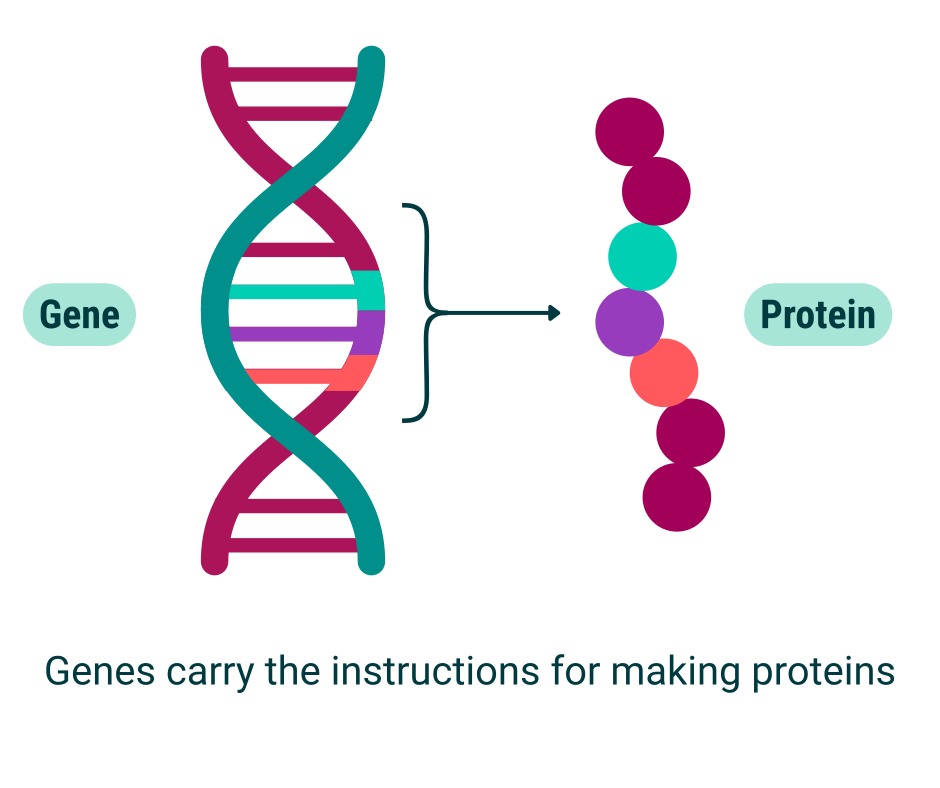
Genes are short sections of DNA that carry instructions to help your body function.
Proteins are the building blocks of organs and muscles. They also help our bodies carry out lots of the functions they need to do every day.
Our genes are the instructions for making these proteins.
When a cell wants to make a protein, it reads the instructions to find out how to put it together.
We all have thousands of different genes. We have 2 copies of each of them. We get one copy from our mother and one from our father.
Most of our cells have a full set of all our genes. But each cell only uses the genes it needs.
What is DNA?
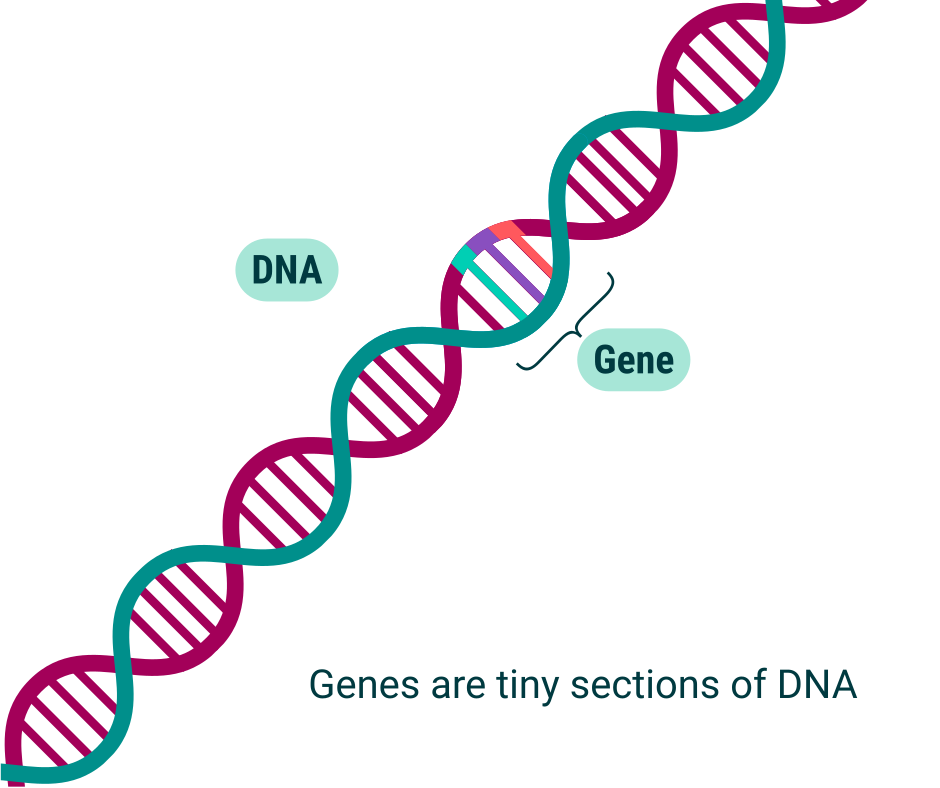
Genes are tiny sections of DNA. As well as having instructions for proteins, DNA has lots of other jobs. This includes telling cells where and when to make a protein and when to stop.
What goes wrong in genetic and inherited conditions?
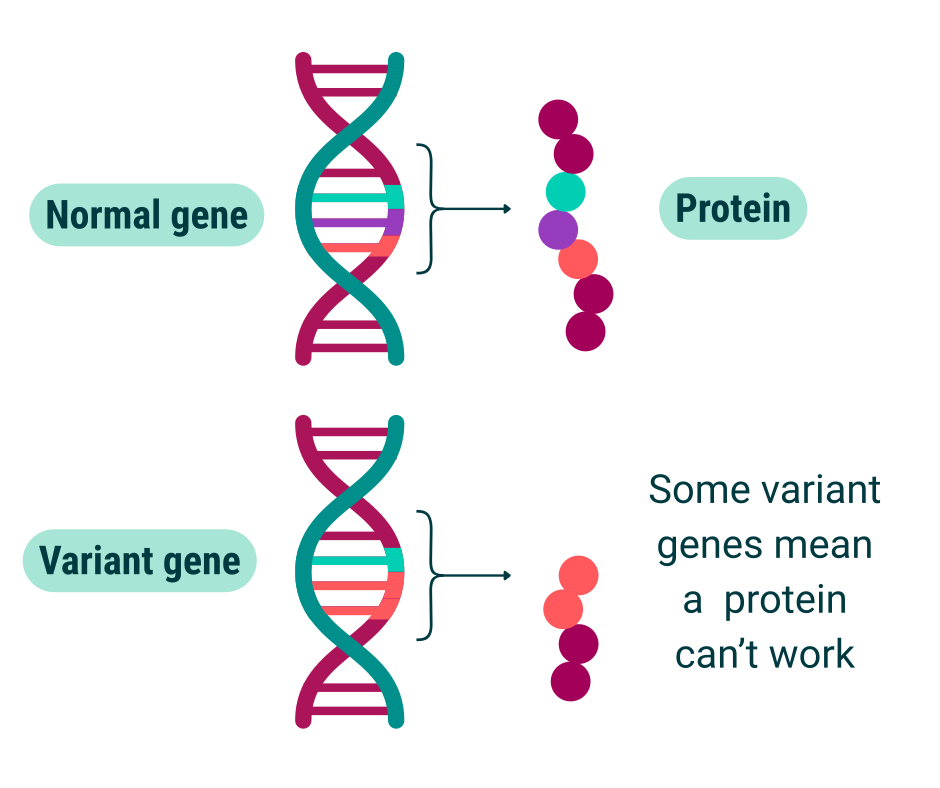
Most gene changes do not cause problems, but some stop proteins working. This can lead to genetic and inherited liver conditions.
Our bodies make billions of new cells every day. Most cells get a copy of all our genes.
Making the copies is usually a very reliable process but sometimes a mistake can happen.
This mistake creates a slightly different version of the gene. We are going to call this a gene variant because it is a variation of the normal gene.
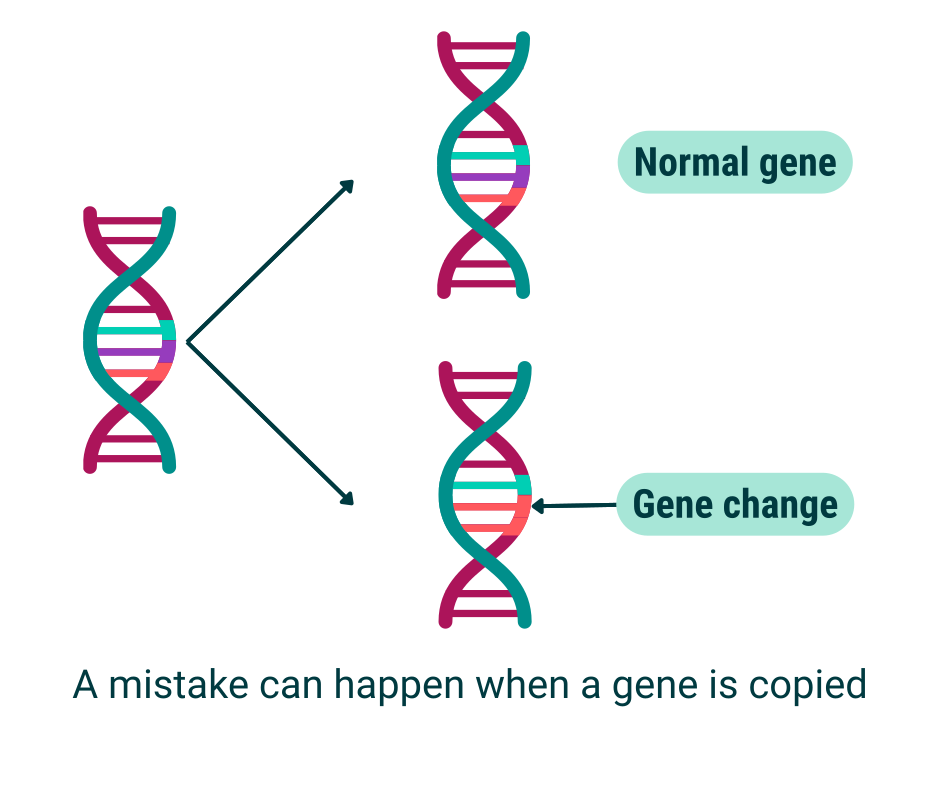
Often the mistake doesn’t matter. It’s like making a slight spelling mistake. The cells can still understand the instructions, or a different gene can take over and make the protein.
But sometimes, the mistake stops the protein from being made or working and there are no other genes that can step in. You might hear a variant that causes a problem called a “mutation”, “change”, or “fault”.
If a gene variant causes a medical condition, it is called a genetic condition.
Some genetic conditions can be passed on from parents to children. These are called inherited conditions.
For many conditions, there are lots of different possible variant versions. Some conditions can be caused by changes to more than one gene.
How are liver conditions passed from parents to children?
There are lots of different ways that inherited conditions can be passed on. Two examples are dominant and recessive inheritance.
Autosomal dominant inheritance
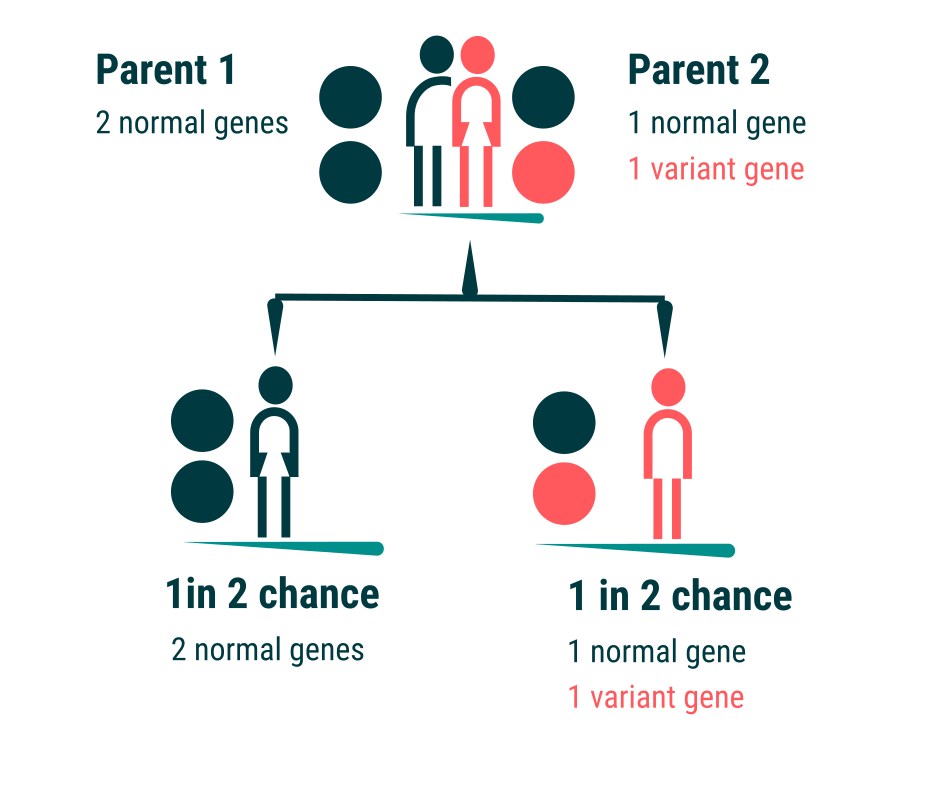
Some inherited conditions happen if you inherit a variant gene from just one parent.
This is called an “autosomal dominant” or dominant condition.
People who inherit a dominant gene variant can become unwell. This can occur even if they get a normal gene copy from their other parent.
Autosomal recessive inheritance
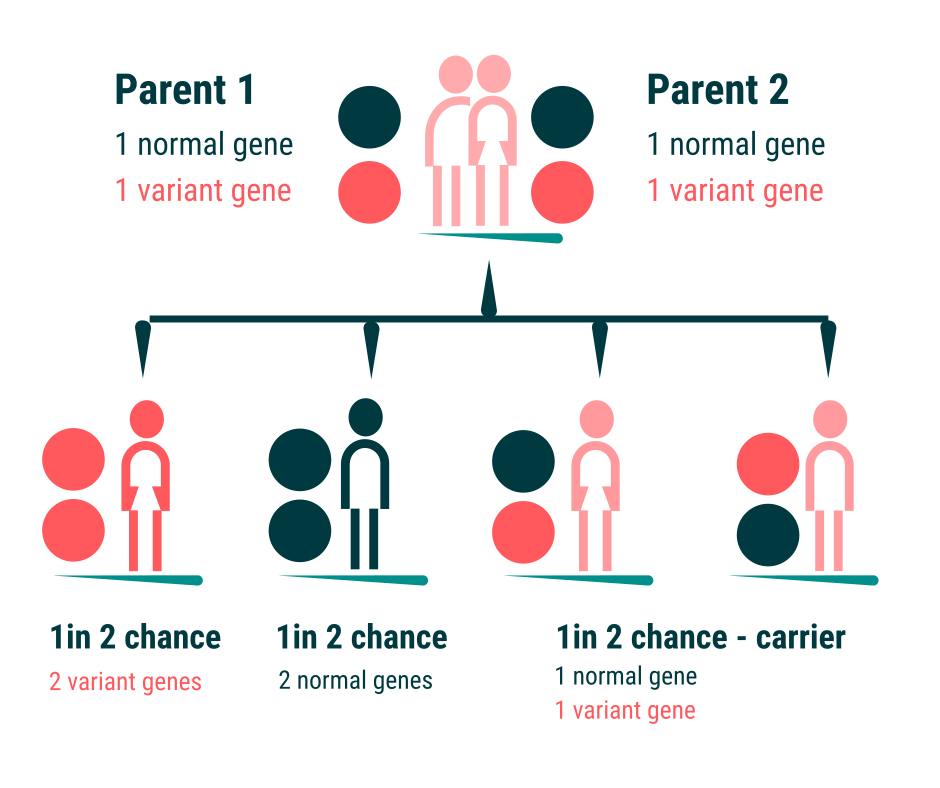
Some inherited conditions occur only when a person gets 2 copies of a variant gene.
To have the condition, a person must inherit the variant from both their mother and father.
This type of inherited condition is called an “autosomal recessive” condition.
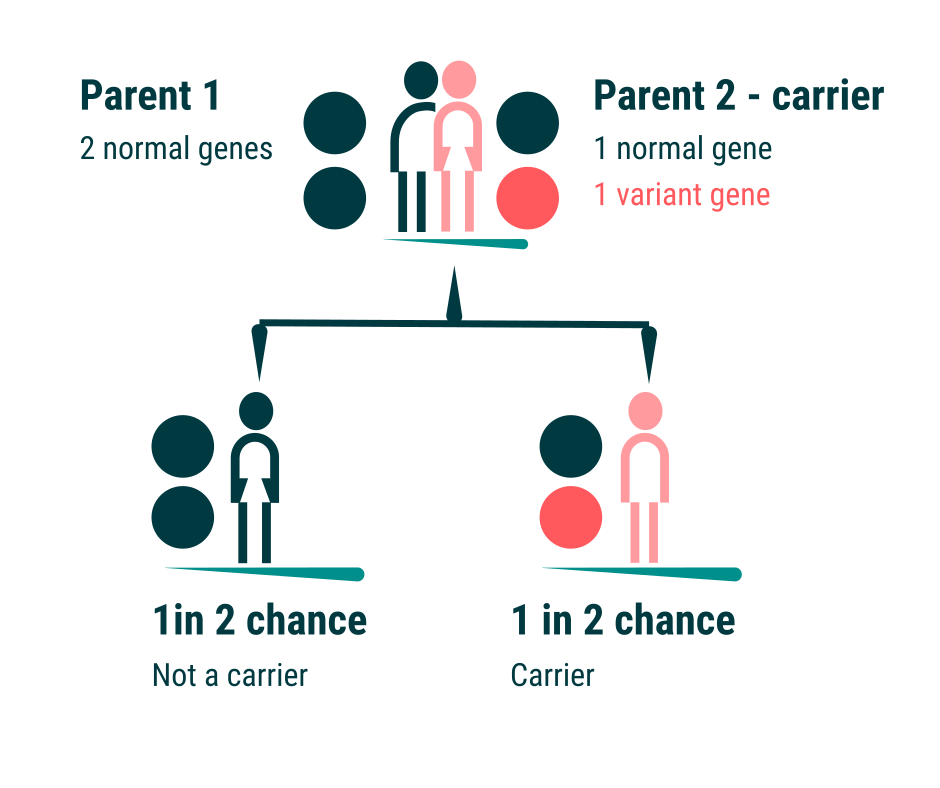
If a person inherits one variant gene and one normal gene, they won’t have the recessive condition. But they will be a carrier.
What are carriers?
A carrier is someone who:
- has a copy of the variant gene for a condition, and
- can pass the variant gene on if they have children, but
- does not have that condition themselves
For example, if a person inherits 1 variant gene for a recessive condition, they won’t have the condition. But they will be a carrier.
Some inherited conditions occur only when a person gets 2 copies of a variant gene.
To have the condition, a person must inherit the variant from both their mother and father.
This type of inherited condition is called an “autosomal recessive” condition.
If a person inherits one variant gene and one normal gene, they won’t have the recessive condition. But they will be a carrier.
Does inheriting the gene mean someone will always get the condition?
Having a gene variant does not always mean someone will get thecondition. Other things in the body or environment can also play a role. You might hear this called gene penetrance.
For most types of liver disease, genes on their own do not always cause the condition. They just increase the risk.
“Gene penetrance” is the difference between the number of people who have a variant gene and the number of people with that variant who get the condition.
For example, we know that adult haemochromatosis is caused by gene variants. But some people with a variant for it never get any symptoms.
We do not fully understand why this is.
It could be that something else is needed to trigger the condition. For example, some conditions are more common in women so female hormones could play a role.
It may be that a combination of things from the body and environment are needed.
Often it is impossible to work out why some people get a liver condition, and others don’t. And for many liver conditions it is possible to become unwell even if someone has no known gene changes for it.
Which liver conditions are inherited?
We know that some liver conditions are inherited and can run in families.
This is a list of liver conditions that we know can be inherited. In some cases there are also types of the condition that are not inherited. Use these links to go to information about that condition.
- Adult haemochromatosis
- Alpha-1 antitrypsin deficiency
- Cystic fibrosis
- Gilbert’s syndrome
- Juvenile haemochromatosis
- Polycystic liver disease
- Progressive familial intrahepatic cholestasis (PFIC)
- Wilson’s disease
For other liver conditions, it is less clear. The main cause of most liver conditions in adults are things like diet, alcohol and viruses. But we still have a lot to learn about our genes. It is possible that they could change how someone is affected by these things. Or how well some treatments work.
Could I pass an inherited liver condition on to my children?
The chance of passing on a condition depends on the type of condition, your partner’s genes, and whether the gene variant always causes disease.
If you have an inherited liver condition, then it is possible that you could pass it on to your children.
If you have a child with an inherited liver condition, there’s a chance your next child could have it too.
But this does not always happen. How likely it is will depend on:
- the condition
- how it is passed on
- if your child’s other parent has the gene variant too
- if the gene variant always causes the condition, or if other things are needed as well
You can find out more about how different conditions are passed on, on the page for that condition.
Many people feel guilty if they pass on a gene variant to their child. But we have no control over what genes we have or which copy of a gene we pass on. It is totally random every time. Just like we cannot choose exactly how tall a child will be or the colour of their eyes.
Most of the time, a gene change is just one of the things that can change a child’s risk of a liver condition. Often, there are other things that will make a much bigger difference to their health.
So even if you pass a gene variant on to them, they may not develop the condition. And if they do, it could be more or less severe than it is for you or other family members.
If you are worried about passing on an inherited liver condition, talk to your medical team for personal advice. You can also ask them if genetic testing could help.
Could genetic testing help?
Genetic tests are not needed for most adult liver conditions. They can help for some inherited conditions by confirming diagnosis and checking family risk.
For most adults with a liver condition, there is no benefit in having a genetic test. It will not change how you are treated or tell you how your condition might progress.
But there are tests for some inherited liver conditions. Doctors might suggest a DNA test if:
- they are not sure about the cause of someone’s liver condition
- they think the condition is genetic and want to confirm this
- there is an inherited condition in the family, and it is important to find out who is at risk
Getting more information and support
If you or someone in your family may have an inherited liver condition, reliable information and support can help you understand risks and what to look out for.
For some conditions it is easier to manage them if they are found early. So you can find out about the signs and symptoms to look out for.
Make sure you get your information from a reliable source. All our patient information is made alongside patients, families, and NHS medical experts.
Some people may not show any symptoms when they are diagnosed with an inherited liver condition. Ask your medical team if there is anything you should look out for and what to do if it happens.
We all need to look after our livers. For those at higher risk of an inherited liver condition, this is even more important. Keeping active, eating a healthy balanced diet, avoiding or reducing alcohol, and not smoking can all help.
You can also find out more about our support services using the link further down this page.
Useful words
Autosomal dominant An inherited condition that happens when you have 1 changed copy of a gene and 1 normal copy
Autosomal recessive An inherited condition that happens when you have 2 changed copies of the same gene
Carrier Someone who has a gene change and could pass it on to their children but does not have the condition it causes.
Chromosome A structure that carries genes in DNA
Compound heterozygous Having two different variant versions of the same gene
DNA – Deoxyribonucleic acid The genetic instructions in your cells. DNA has lots of jobs including telling your body how to make proteins.
Gene A small section of DNA which carries instructions to help your body work
Genetic condition A medical condition caused by a change in one or more of your genes
Genotype The genes you have, including any gene changes
Heterozygous Having two different versions of the same gene, such as 1 normal version and 1 variant version
Homozygous When both copies of a gene are the same, either both are normal, or both are the same variant version.
Inherited condition A genetic condition that is passed on from parents to children
Likely pathogenic variant A gene variant that is likely to cause a medical problem but there is not yet enough evidence to be completely sure.
Mutant/ mutation A gene change or variant that can cause a medical problem.
Pathogenic variant A gene variant that is known to cause a medical problem
Penetrance The difference between the number of people with a gene variant and the number of people who actually have the condition it causes.
Phenotype Your characteristics which are the result of a combination of your genes and your environment.
Protein A molecule that can form part of the body or help the body carry out its functions.
RNA – Ribonucleic acid A type of genetic material. In humans RNA is important copying the information from DNA and using this to make proteins. Some genetic treatments work on the RNA.
Variant A scientific word for a gene change or mutation.
Variant of unknown significance A term used when a gene variant is found but it is not known if the variant can cause a problem, or what the problem is.
Support
How Liver UK can help
A diagnosis of liver disease can be worrying, and you may have a lot of questions.
We're here for you and for your family and friends. Whether you have questions or just need someone to listen, we can help.

Your feedback
This content was last reviewed: December 2025
Our expert reviewers:
We would like to thank everyone who helped with creating and reviewing this page. Including Dr William Griffiths, consultant hepatologist, Cambridge University Hospitals NHS foundation trust. And all our patient reviewers.
Find out how we make our patient information.
Everyone’s experience of liver disease will be different. Always talk to your specialist medical team for personal advice.
More from Liver UK

Check your risk
Find out more

Support us
Find out more
Keep up to date
Find out more