
Doing regular physical activity or exercise is important for everyone’s health. It helps reduce the risk of developing other serious conditions including type 2 diabetes and heart and circulatory diseases. And it’s good for your mood and mental wellbeing too.
This page has lots of information to help get you started.
The information on this page is for:
- Adults with a liver condition or at risk of a liver condition.
- Family, friends, carers, and healthcare professionals.
On this page:
Getting started with physical activity
Doing regular physical activity is important for everyone’s health and helps reduce the risk of developing conditions such as type 2 diabetes and heart disease. Physical activity also has direct links with metabolic dysfunction-associated steatotic liver disease (MASLD).
Along with eating a well-balanced diet and keeping to a healthy weight, physical activity is one of the main treatments for MASLD. And all these things can also reduce the risk of developing MASLD, including for people who already have a different type of liver disease.
The NHS recommends doing at least 2½ hours of moderate aerobic activity (cardio) each week and strengthening exercises on 2 days each week. Don’t worry if that’s too much for you at the moment. Make a start by doing what you can.
Start gently and build up how active you are slowly over time. Walking and seated exercises are good places to start, especially if you have symptoms like being easily tired (fatigue). Try to do some activity every day – even 10 minutes counts.
If you aren’t sure what type of activity is good for you to try, speak to your doctor and they can give you personalized advice. They may also be able to refer you to local services that can help you get more active, like a walking group or community gym.
Top tips for making moving a habit
It helps to make being physically active part of your daily routine. That way it becomes automatic and you don’t have to remember to do it.
Try these hacks and tricks to build movement into your day:
- Walk or cycle for local trips instead of using the car or public transport.
- Make walking a bigger part of regular journeys – like your commute by getting on a stop later or off a stop earlier.
- Get you friends and family involved – you can help each other stick to your plans and meet your goals.
- Don’t forget your kit! Pack your bag the night before and leave it by the front door, ready to go.
Aerobic activity (cardio)
Moderate activity is anything that gets your heart beating faster. It makes you feel slightly out of breath and a bit warmer. You might also hear the name ‘cardio’ for this type of physical activity.
Aim to do 150 minutes (2½ hours) a week. You can break that down however you like, for example doing 30 minutes on 5 days of the week. If that’s a bit much, try doing 10 minute chunks.
Remember that it’s best to build up slowly and not push yourself too hard or for too long at first. Even if you don’t reach the goal amount, doing some activity is much better for your health than not doing any.
Examples of moderate aerobic activity include:
- brisk walking
- dancing
- hiking
- riding a bike
- pushing a lawn mower
- water aerobics
Vigorous activity
You can turn most types of moderate activity into vigorous activity by working harder. It makes you breathe hard and fast, so you can’t say more than a few words at a time. If you aren’t active at all, it’s best to work up to vigorous activity over time.
Because you are working harder, you don’t need to do as much vigorous activity to meet the weekly cardio goal. 75 minutes of vigorous activity counts the same as 150 minutes of moderate activity. Or you can do a bit of both – for example 1 hour (60 minutes) of moderate activity and 45 minutes of vigorous activity each week.
You don’t need to do vigorous activity to meet the weekly physical activity goals, unless you want to. It includes lots of popular sports such as:
- swimming
- running
- aerobics classes
- team sports such as football
Very vigorous activities are exercises you do in short, intense bursts. This is also called High Intensity Interval Training (HIIT) and includes specially designed HIIT workouts or circuit classes, as well as things like running up stairs, spin classes and lifting heavy weights.
Strengthening exercises
Do strengthening exercises that work all your major muscle groups (legs, hips, back, abdomen, chest, shoulders and arms) on 2 days a week. Do these exercises to the point where you need a short rest before you could do them again.
There are lots of ways to do strengthening activities – at home or in the gym. If you are just getting started try seated exercises using a strong, stable chair that does not have wheels.
Examples of strengthening exercises include:
- exercises with weights or a resistance band
- exercises like push-ups or squats
- heavy gardening such as digging
Exercise for cirrhosis
Advanced liver disease (cirrhosis) can lead to muscle wasting and people can become frail at an earlier age. Being physically active is an important way to help keep your muscles and body strong. Do what you can manage each day – doing something, even something small, is much better than nothing.
More resources
Where can I get ideas, information and instructions for doing different exercises?
For simple ideas to get started with cardio and strengthening activities, download our advice sheet Being more active and MASLD – getting started.
Your doctor might be able to refer you to local services such as walking groups. They can give you personalised advice that takes account of your situation and any medical conditions or symptoms.
Try looking on your council website or keep an eye out for posters in your local community centre or library.
There is also lots of good information and advice available online, including step-by-step instructions and recorded classes you can follow.
- For inspiration on getting active for people living with a health condition, visit the We Are Undefeatable website.
- Get free ideas and step-by-step instructions for simple activities to do at home from the NHS Better Health website.
- If you’d like to start running, try the free NHS Couch to 5k programme. It builds up slowly over 9 weeks.
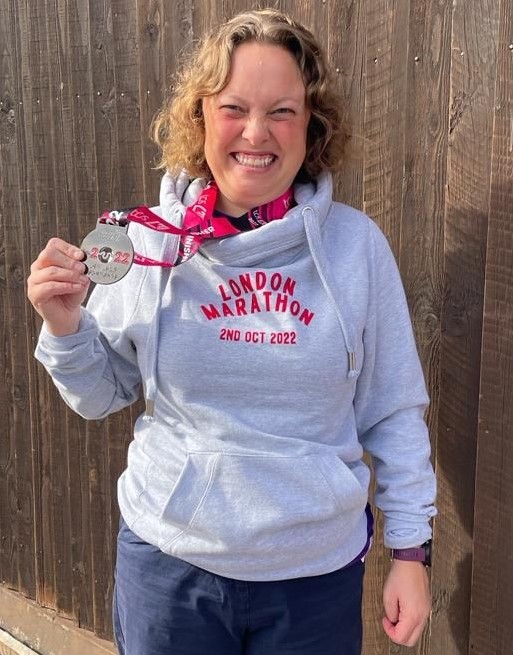
“The first year after being out of hospital I walked everywhere… I knew I wouldn’t be able to run the whole London Marathon… but I had no need to run it and decided to walk instead.
I completed the London Marathon in 6 hours 21 minutes and nine seconds and I walked the lot of it… There were times when it was hard, but it was an amazing day and I would definitely do it again.
If I have a full-on week or do too much, I perhaps feel tired for the next week or so, but I don’t let my conditions rule my life. Liver disease won’t stop me achieving what I want to achieve. I’m not going to think I can’t do this anymore. Whatever your goal, if you take small steps towards it, you’ll get there.”
Support
How Liver UK can help
A diagnosis of liver disease can be worrying, and you may have a lot of questions.
We're here for you and for your family and friends. Whether you have questions or just need someone to listen, we can help.

Your feedback
Our expert reviewers:
We would like to thank everyone who helped with creating and reviewing this information including all our clinical and patient reviewers.
Find out how we make our patient information.
More from Liver UK

Check your risk
Find out more
Support us
Find out more
Keep up to date
Find out more