
Treatment
for gallstones
Treatment for gallstones depends on the problem they are causing. Surgery can remove the gallbladder, ERCP can clear blocked bile ducts, and pain relief or antibiotics may be needed to manage symptoms.
The information on this page is for:
- Adults with gallstones or suspected gallstones.
- Family, friends, carers, and healthcare professionals.
Information about gallstones in children
If someone has a serious complication of gallstones, they will need urgent medical treatment.
But this is rare, and often gallstones do not cause a serious problem. So you should weigh up the risks and benefits of treatment.
If the gallstones are in the gallbladder, the main treatment is surgery to remove it.
If gallstones block the bile ducts or pancreatic duct, an ERCP might be offered. This is a type of endoscopy that will treat the blockage. After this, doctors might suggest surgery to remove the gallbladder. This helps prevent another blockage.
You can find out more about treatment options and the risks and benefits on this page.
On this page:
Deciding about treatment for gallstones
The main treatments for gallstones are surgery and endoscopy. Like all procedures these have risks. So you may need to weigh up the risks compared to the benefits. These will be a bit different for everyone.
If someone has a serious complication of gallstones then the risks of having the treatment are usually a lot lower than the risks of not having it.
But this is not always the case if someone has gallstones but no serious complications. For some, the best choice is to leave gallstones alone unless they cause more symptoms.
The decision might also be different if someone also has another serious liver condition, such as cirrhosis. This can increase the risks of treatments for gallstones.
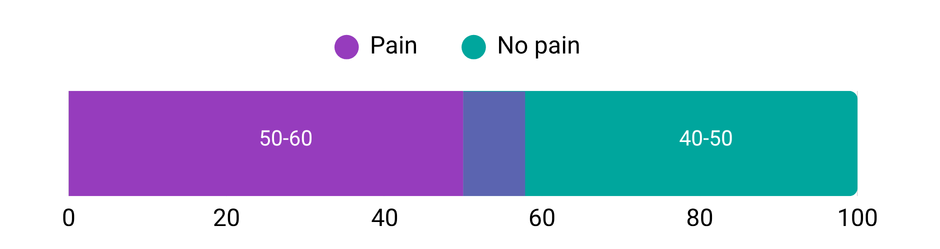
For 100 adults with mild to moderate gallstone pain who don’t have treatment:
after 1 year:
- 50-60 had pain
- 40-50 had no pain
When choosing a treatment, think about the benefits, risks, and alternatives. Also, consider what might happen if you do nothing.
These will be a bit different for everyone so always talk to your medical team for personal advice. You can use the information on this page to help you get the most out of that conversation.
Surgery to remove the gallbladder
The most common treatment for gallstones is an operation to remove the gallbladder. Doctors call this operation a cholecystectomy.
Can someone live without a gallbladder?
You can live totally normally without a gallbladder. People without a gallbladder do not need to eat a special diet after the operation.
Bile is usually kept in the gallbladder until it is needed. But if the gallbladder is removed the bile will go straight from the liver into the intestines.
About 5 in 100 people who have their gallbladder removed will have diarrhoea after the operation. This usually gets better but can sometimes last longer. If it becomes a problem your GP should be able to help with treating and managing it.
Will having the gallbladder removed stop gallstone pain?
Most people with pain from gallstones will stop having pain after they have their gallbladder removed.
But this is not always the case. Sometimes there can be another problem as well and this was causing the pain, not the gallstones. So removing the gallbladder gets rid of the stones but more tests are needed to find out what was causing the pain.
For 100 adults with mild to moderate gallstone pain who had their gallbladders taken out:
after 1 year
- 65 had no pain
- 30 had mild pain that did not affect their everyday life
- 5 had serious pain
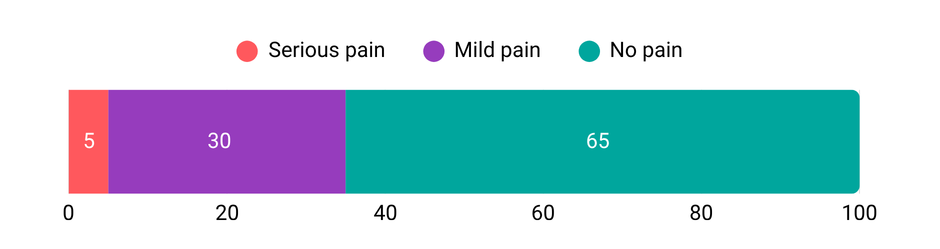
These are just averages. Your medical team should be able to give you personal advice.
Should I have my gallbladder removed?
Benefits of gallbladder surgery:
- it can often stop the pain of gallstones
- if gallstones were affecting everyday life this should stop
- it can prevent rare serious complications from gallstones
- the surgery may be more straight forward and easy to recover from if it is planned and you are well when you have it
Risks of gallstone surgery:
- a general anaesthetic is used, this has some risks
- as with any surgery there is a small risk of infection
- about 1 in 100 people will have a problem that means they need more surgery
- there may be some pain after the surgery
Alternatives to gallstone surgery:
The only way to get rid of gallstones is to have surgery. But some people can reduce how often and how severe their pain is by:
- changing their diet and avoiding foods that trigger the pain
- taking pain killers to manage the pain
Kidney stones can sometimes be broken up and passed out in urine. Unfortunately it is not usually possible to break up gallstones in the same way.
Doing nothing
In some cases it is possible that the problem will go away on its own.
Other people will continue to get pain.
In some cases a more serious complication could happen that needs urgent treatment.
ERCP
ERCP stands for Endoscopic Retrograde Cholangiopancreatography.
This is a type of endoscopy. An endoscopy is a procedure where a thin flexible tube with a camera on it is put down the throat.
An ERCP can be used to:
- remove gallstones that are stuck in the bile ducts
- put a small tube called a stent into a bile duct to open it up or make it wider
- take a small sample of tissue (a biopsy) that can be looked at in a lab
Pain relief
Pain medicines can help with the pain of gallstones. But always talk to your doctor if:
- The pain is very severe, and the pain medicine does not help.
- You are sick a lot (vomiting) when you have an attack and can not keep pain medicines down.
- Another liver condition means you are not sure which pain killers are safe.
- Pain killers are needed regularly and for more than a few days.
The doctor might be able to give you a prescription for stronger pain medicines.
Antibiotics
Antibiotics cannot treat gallstones. But they might be needed if the stones cause an infection.
Medicines
There are no medicines that can get rid of gallstones. But some medicines can help with the symptoms. For example pain medicine. Or medicines called antispasmodics. These can help reduce the squeezing in the gallbladder that causes pain.
Diet
There are no specific foods that should be eaten or avoided If someone has gallstones. But some people find that changing their diet can reduce or manage pain.
Overall, aim for a healthy balanced diet with lots of fruit and vegetables and plenty of fibre.
Loosing weight can help to prevent gallstones symptoms. But it is important not to loose weight very quickly as this can cause gallstones to form.
If you have another liver condition always talk to your GP or liver specialist before making big changes to your diet. It could be more difficult to make changes if you need a special diet for other medical conditions. You could ask to be referred to a dietician for specialist advice.
Food triggers for gallstones
Some people find that certain types of food trigger an attack of pain from their gallstones. For example fatty or spicy foods.
You could try avoiding these foods to see if it helps gallstone pain. It is ok to eat some fat. Try to swap to healthier alternatives like things made with olive oil, oily fish or nuts.
Eating big meals can also be a problem for some people. Having smaller meals more often can sometimes help.
Weight loss and gallstones
Anyone can get gallstones, but they are more common in people who are overweight.
Losing weight can lower the chance of getting more gallstones. But losing weight very quickly can actually make things worse.
If you have lost a lot of weight recently and get symptoms of gallstones, talk to your doctor before trying to lose more.
If you want to try losing weight to help with gallstones then aim to lose 1-2 pounds a week. (0.5-1kg).
Losing weight is hard. But there is evidence that getting support can help. Your GP surgery may be able to tell you about local support services.
Keeping active can also help with gallstones. And help to make sure the weight you lose doesn’t come back.
Find out more about eating drinking and keeping active
Weight loss drugs
Weight loss medicines can be very helpful. Especially for people at risk of metabolic conditions such as type 2 diabetes. But they can also increase the chance of developing gallstones. If you are thinking about trying these medicines, it is important to talk to a doctor for personal advice so you can weight up the risks and benefits for you.
Questions to ask your doctor about gallstones treatments
- What are the treatment options?
- What are the risks and benefits of the treatment?
- Are there any alternatives?
- What could happen without treatment?
- How long is the wait for treatment?
Support
How Liver UK can help
A diagnosis of liver disease can be worrying, and you may have a lot of questions.
We're here for you and for your family and friends. Whether you have questions or just need someone to listen, we can help.

Your feedback
This content was last reviewed: June 2026
Our expert reviewers:
We would like to thank everyone who helped with creating and reviewing this page. Including Professor Stephen Ryder, consultant hepatologist at Nottingham University Hospitals NHS trust. And all our patient reviewers.
Find out how we make our patient information.
Everyone’s experience of liver disease will be different. Always talk to your specialist medical team for personal advice.
More from Liver UK

Check your risk
Find out more

Support us
Find out more
Keep up to date
Find out more