
What causes MASLD?
MASLD is a common condition where fat builds up in the liver. It is often linked to being overweight and conditions like type 2 diabetes and heart disease.
The information on this page is for:
- Adults with MASLD or at risk of MASLD.
- Family, friends, carers, and healthcare professionals.
MASLD can also affect children and young people. See our information for parents and families.
MASLD happens when something goes wrong with how the body uses and stores energy. This is called metabolism.
On this page:
What happens in a healthy liver?
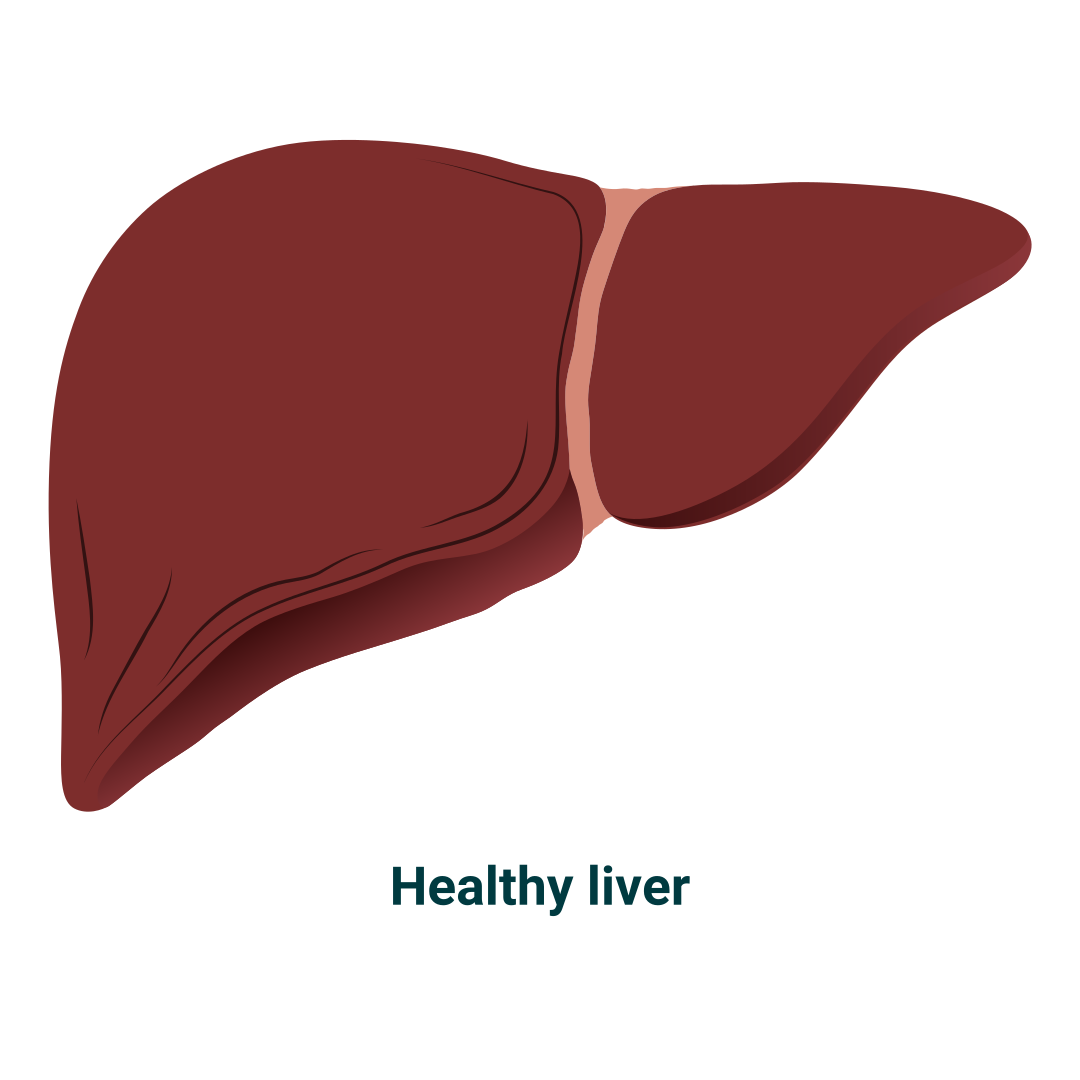
A healthy liver is smooth, soft, and dark reddish-brown in colour. It contains very little fat. The liver has a very good repair system for dealing with worn out, dead and damaged cells. To repair damage, the liver uses a protein called collagen. Collagen works like temporary scaffolding, supporting the area while it heals. Once the repair is finished, the collagen is removed so the liver can return to its normal healthy structure.
How is fat used in the body?
Fats are an important part of your diet, and your body needs them to stay healthy. They give you energy, help your body absorb vitamins and are important for overall health. However, if you eat more fat than your body needs, the extra is stored as body fat. Over time, this can lead to health problems if too much fat builds up.
What happens in MASLD?
In MASLD, something goes wrong with how the body uses and stores energy. This can cause fat to build up inside liver cells. These fat droplets are usually large, and they fill up the inner part of the cell. When more than 5% of liver cells contain fat, it is called MASLD or fatty liver.
The fat droplets cause damage and inflammation in the liver cells. This means the liver becomes irritated and tries to repair itself. Because this repair process keeps happening, collagen builds up in the liver instead of being removed.
Over time, this extra collagen forms scar tissue. As the scarring (fibrosis) increases, healthy liver cells are replaced by scar tissue, making it harder for the liver to work properly.
The scarring can change the shape of the liver and make it harder for blood to flow through it. As scarring builds up the liver becomes hard and bumpy.
What increases the risk of MASLD?
MASLD is linked to being overweight or obese. But people who are not overweight can also develop it. It is also linked to some other medical conditions. Things like genes, the environment and hormones can also play a part.
Different things affect how much fat builds up in the liver and how your body handles this fat. This may include:
- your genes
- your environment
- your lifestyle, including diet and physical activity levels
- your hormones – menopause can increase the risk in women
- your ethnic background – people of Asian descent may be at higher risk
- your age – risk tends to increase as we age
- your sex – the risk is higher in men
- other health conditions – some diseases can lead to a fatty liver. Your doctor may check if any apply to you. Remember, it’s possible to have more than one cause of liver damage at the same time.
- medicines for other conditions – about 2% of MASLD cases are linked to prescribed medicines. Medicines linked to MASLD include nonsteroidal anti-inflammatory drugs, amiodarone, corticosteroids, diltiazem, methotrexate and tamoxifen. But do not stop taking any medicine your doctor has prescribed. Speak to your doctor if you have any questions or concerns.
We still don’t fully understand why fat builds up in the liver in some people but not in others. We also don’t know why some people develop more severe liver disease. Research into this is ongoing.
MASLD and BMI
MASLD is often linked to being overweight, but you can still develop it if your body mass index (BMI) is in the healthy range. Research shows that up to 1 in 5 people with MASLD have a healthy body weight. You may hear this called “lean” MASLD.
The term “lean” MASLD can be misleading because BMI does not show where fat is stored in the body. This means that someone can have a healthy BMI but still carry extra fat around their waist and internal organs. This type of fat can increase the risk of MASLD, heart disease and other metabolic conditions. This is more common in people with a South Asian, Chinese, other Asian, Middle Eastern, Black African, or African-Caribbean family background.
A useful way to check whether you may have excess fat around your waist is to measure your waist-to-height ratio. The NHS has a helpful online tool you can use.
Is MASLD linked with other medical conditions?
MASLD is linked with other metabolic conditions. You may be more likely to get MASLD if you have:
- type 2 diabetes or pre-diabetes
- overweight or obesity
- high cholesterol or fats in your bloodstream (hyperlipidaemia)
- high blood pressure (hypertension)
- other conditions linked to insulin resistance (such as polycystic ovary syndrome)
MASLD also happens alongside other medical conditions. This can include metabolic conditions, other liver diseases, or unrelated illnesses. Having another condition may make MASLD harder to manage. They can also make each other worse and speed up liver damage.
During your assessment, your doctor will look for other causes of liver disease. They will also consider how any health issues you have may affect your MASLD and how it is treated. Your doctor can help you manage other conditions alongside your MASLD.
Can what I eat cause MASLD?
What we eat and how active we are plays a big part in how much fat ends up in the liver. You are more at risk of MASLD if you have:
- a weight in the overweight or obese range
- a larger waist
- a diet high in sugar and fats
- low levels of physical activity or spend a lot of time sitting down
But losing weight or sticking to a healthy diet can be very difficult. No one chooses to get MASLD. And everyone with the condition deserves help and support. It’s important to remember that our weight is affected by many things, not just personal choices. While the choices we make about food and activity do matter, our environment also plays a part. For example, where we live and work, the support we have, the cost of food, and the time we have to cook or exercise can all make it easier or harder to eat well and stay healthy.
You can use our free confidential quiz to find out more about how your diet could affect your liver.
Can MASLD be prevented?
MASLD often develops in people who are overweight or obese. The location of fat in the body matters too. This means you can take steps to lower your risk of developing MASLD. To lower your chances of developing MASLD, try:
- keeping a healthy weight or losing weight (if needed)
- eating a healthy, well-balanced diet
- being physically active and reducing time spent sitting
- managing conditions such as type 2 diabetes, high blood pressure and high cholesterol
Other changes to your everyday life, like cutting back on alcohol and quitting smoking, can also support liver health. Improving your overall health can also lower your risk of other conditions linked to MASLD.
How we can help
Support for you
We’re here to support anyone affected by liver disease, as well as their families and loved ones.

Your feedback
This content was last reviewed: July 2026
Our expert reviewers:
We would like to thank everyone who helped with creating and reviewing this page. Including Dr Jeremy Cobbold, Consultant Hepatologist, Oxford University Hospitals, Professor Stuart McPherson, Consultant Hepatologist, Newcastle upon Tyne Hospitals and Dr Helen Jarvis, GP, Newcastle University. And all our patient reviewers.
Find out how we make our patient information.
Everyone’s experience of liver disease will be different. Always talk to your specialist medical team for personal advice.

More from Liver UK

Check your risk
Find out more

Support us
Find out more
Keep up to date
Find out more