
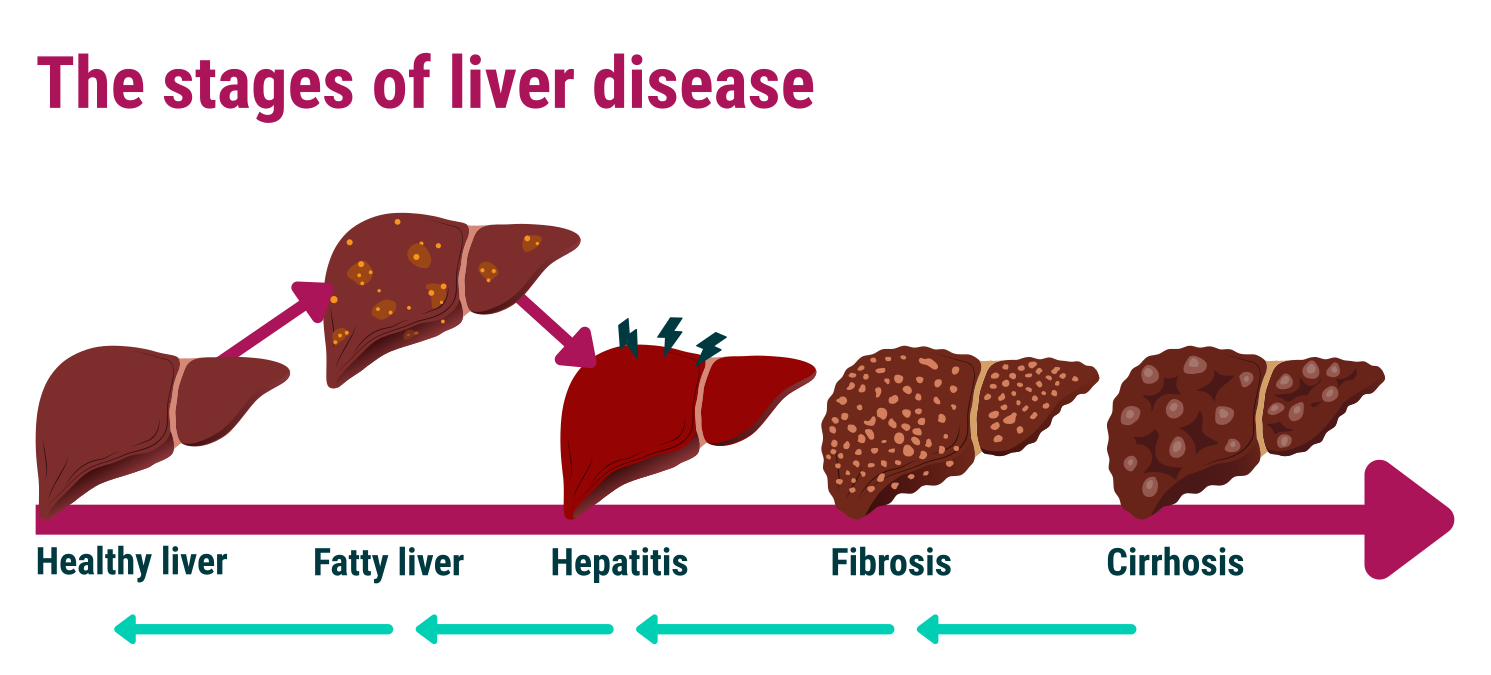
A healthy liver has very little fat in it. If too much fat builds up this is called fatty liver.
The information on this page is for:
- Adults and children with long term liver disease
- Family, friends, carers, and healthcare professionals.
Fatty liver is an early stage in some types of liver disease. At this point there is no serious damage or scarring in your liver. Fatty liver can be completely reversed if the cause of the fat is taken away.
But if the fat continues to build up, your liver can move on to the next stage of liver disease (hepatitis) where there is fat and inflammation.
This page is about fatty liver as a stage of long term liver disease. For information about acute fatty liver of pregnancy click here.
On this page:
What causes fatty liver?
The liver naturally has some fat cells in it. But the amount of fat can increase if someone:
- is overweight
- eats a lot of high fat and high sugar foods
- has type 2 diabetes
- drinks too much alcohol
- is taking certain medications
Fatty liver can be caused by one of these things or a combination of them.
Fatty liver is most commonly associated with a condition called MASLD (metabolic dysfunction-associated steatotic liver disease), previously called NAFLD (non-alcohol related liver disease).
But it is also an early stage in a number of other liver conditions. Including alcohol-related liver disease (ARLD).
What happens if I have fatty liver?
The liver can carry on working even if it has a lot of fat in it. So most people do not notice a problem unless the condition gets worse.
Over time the fat can start to cause inflammation. The condition can then move on to the next stage. This is called steatohepatitis. You might also hear it called hepatitis.
Can I stop fatty liver?
Fatty liver can be completely reversed.
The best way to do this is to take away the things that are causing the fat to build up by:
- loosing weight or keeping to a healthy weight
- eating a healthy balanced diet
- being more active
- giving up or cutting down on drinking alcohol
- quitting smoking
None of these things are easy. But it is well worth making these changes before the liver condition can get worse.
The liver has an amazing ability to repair itself. But it can only take so much. Eventually the damage will be so severe that it cannot get back to normal. Many people have liver disease for years with no symptoms. They only find out when they develop cirrhosis and suddenly become seriously ill. At that stage there can be very few treatment options.
There’s support available to help you make changes, find out more below.
You can find out about your risk factors using our free and confidential at-risk checker.
Getting help
You are more likely to make the changes you need to if you get help. You can ask at your GP surgery to find out what support services are available in your area.
We also have lots of information and links to support on our website:
Eating, drinking and keeping active.
You can also use the link below to find out more about our support services.
Support
How Liver UK can help
A diagnosis of liver disease can be worrying, and you may have a lot of questions.
We're here for you and for your family and friends. Whether you have questions or just need someone to listen, we can help.
Your feedback
This content was last reviewed: June 2024
Our expert reviewers:
We would like to thank everyone who helped with creating and reviewing this page. Including Professor Jonathan Fallowfield, Chair of Translational Liver Research & Principal Investigator, Institute for Regeneration & Repair, University of Edinburgh. And all our patient reviewers.
Find out how we make our patient information.
Everyone’s experience of liver disease will be different. Always talk to your specialist medical team for personal advice.
More from Liver UK

Check your risk
Find out more
Support us
Find out more
Keep up to date
Find out more